AI Development in Durham, North Carolina | Orbilon Tech
The World's Largest Clinical Research Company Just Built an Agentic AI Platform From Durham. That Tells You Where the Bar Sits.
In March 2026, IQVIA, the global clinical research giant headquartered in Durham, rolled out IQVIA.ai at NVIDIA GTC. It’s a unified agentic AI platform, built on NVIDIA Nemotron, NeMo Agent Toolkit, and LangChain, aimed to work across clinical, commercial, and real-world life sciences, while still staying close to healthcare regulatory, privacy, and quality requirements. The company’s Global R&D Trends 2026 report pointed to a measurable signal: AI-enabled drug development programs at emerging biopharma firms are showing better clinical success rates. This is exactly the kind of work that feels like it’s happening inside Durham right now, and it becomes the baseline that every local AI buyer brings into a vendor talk.
Artificial intelligence here isn’t just a “marketing layer”; it’s more like operational infrastructure in one of the densest life sciences corridors across the United States.
Duke is right in the middle of that pressure. The Duke Institute for Health Innovation has helped shepherd more than 600 frontline project proposals since 2013, put more than 85 into motion, and spun out around a dozen companies. Sepsis Watch, a deep learning model that reads real-time electronic health record data to flag sepsis early, has been running in Duke University Hospital’s routine clinical care since 2018. Beyond that, Duke AI Health and the Duke University School of Medicine operate cross-disciplinary AI programs that cover discovery, clinical research, governance, and education. And Michael Pencina, Duke Health’s chief data scientist, has helped shape the institution’s public reputation around what they call trustworthy health AI.
On the public biotech’s side, Durham has names like BioCryst Pharmaceuticals, Humacyte, and Precision BioSciences, and they embed machine learning across discovery and manufacturing. Then there’s the BioLabs North Carolina startup layer—Codetta Bio, Tavros Therapeutics, Aerami Therapeutics, Altis Biosystems, StrideBio—bringing seed-stage AI demand into the very same talent ecosystem.
If an organization is looking for the best AI development company in Durham, the kind that can ship AI that survives Duke-adjacent clinical scrutiny, IQVIA-grade regulatory expectations, and real biotech research discipline, Orbilon Technologies delivers custom AI solutions in Durham with end-to-end ownership. We build production LLM systems, retrieval pipelines rooted in scientific and clinical knowledge, machine learning models for discovery and biomarker work, agentic systems that operate inside regulated workflows, plus the governance, observability, and cost-control infrastructure those systems need—so they can stay functional in healthcare and life-sciences environments for years, not just prototypes.
What Separates an AI Pilot From a System Duke and IQVIA Buyers Will Actually Deploy?
Most AI work dies in the gap between a convincing demo and a system that survives a year of real operation. Durham buyers know this gap intimately, because they sit next to organizations that have crossed it. IQVIA describes its own standard as “the high standards of trust, scalability, and precision demanded by the industry.” Duke describes it as a trustworthy health AI. Clinical AI development in Durham has to satisfy both framings before procurement signs.
These are the operational realities that decide whether your AI ships or stalls.
- Deterministic behavior matters more than peak accuracy. A model that scores brilliantly in a sandbox but produces different answers on identical inputs across deployments cannot be trusted in a clinical or regulatory setting. Production systems lock model versions, freeze embedding models, version the vector store, and make retrieval ordering predictable. DIHI’s own infrastructure philosophy applies DevOps discipline to achieve reproducible, monitored, and tested AI deployments, and that expectation has spread across the metro. Hire AI engineers in Durham who shrug at reproducibility, and the system fails its first audit.
- Subgroup performance gets examined, not just headline numbers. Duke researchers have published extensively on algorithmic bias in healthcare, and that scholarship shapes how local buyers evaluate AI. A single aggregate accuracy figure is no longer acceptable. Production clinical AI ships with performance broken out across demographic subgroups, documented disparities, and concrete mitigation plans where gaps appear.
- Workflow fit decides adoption. A model nobody uses delivers no value, regardless of its benchmark scores. The AI projects that succeed in the Triangle arrive with an integration plan for the clinician or researcher workflow, an alerting strategy that respects cognitive load, feedback channels for the people using it, and change management that drives actual usage after launch. This is implementation science, and it is half the job.
- Live monitoring runs continuously, not just at acceptance testing. Concept drift detection, performance tracking on representative cohorts, regression testing whenever upstream models shift, and dashboards that surface quality decay before users feel it. Top AI developers in Durham, NC, team instrument these layers from sprint one, not as an afterthought once the system is live.
- Regulatory classification shapes the build from the start. Clinical decision support, predictive risk scoring, and any AI that influences treatment can fall under FDA software-as-medical-device rules, which drive validation depth and review pathway. AI supporting drug development faces 21 CFR Part 11 audit-trail and validation expectations. Biotech AI development in Durham projects that ignore this until late discovery, when the architecture needs rebuilding.
- Governance artifacts are deliverables, not afterthoughts. Model cards documenting training data and known limitations, NIST AI Risk Management Framework alignment, retained prompt and decision logs, and audit-ready records that hold up under both engineering and regulatory review. Buyers raised in life sciences compliance culture expect this packet to be ready before sign-off.
Matching the AI System Shape to the Durham Problem
The architecture of an AI system, far more than the underlying model, determines whether it solves the problem or creates new ones. Generative AI Durham projects stumble most often on a mismatch between the system shape and the actual need. Three architectural patterns recur across serious Triangle work, and the best systems blend them deliberately.
- Knowledge-grounded answering through retrieval. When the AI must respond from the organization’s own clinical protocols, regulatory filings, scientific corpus, or institutional knowledge, retrieval-augmented generation is the foundation. The build combines a vector store (Pinecone, Weaviate, Qdrant, Chroma, or pgvector for teams wanting a single Postgres surface), hybrid search blending dense vectors with keyword retrieval, reranking through Cohere or cross-encoder models, document-aware chunking tuned to the source material, and citation trails the user can verify. For biomedical and clinical text, domain embeddings such as BioBERT, SciBERT, or PubMedBERT routinely outperform general-purpose alternatives.
- Action-taking through agents. When the AI needs to execute rather than merely answer, calling APIs, querying systems, scheduling, and orchestrating multi-step work, agentic architecture is the right shape. The engineering centers on structured tool calling against defined schemas, sandboxed execution, authority boundaries the model cannot exceed, human review on consequential actions, and a complete audit trail on every tool invocation, exactly the discipline IQVIA built into IQVIA.ai’s regulated-domain design.
- Domain depth through fine-tuning. When base models cannot reliably produce the terminology, formatting, or behavior a use case demands, fine-tuning earns its cost. Custom training on annotated clinical notes, regulatory text, peer-reviewed literature, or proprietary datasets, paired with smaller task-specialized models (Phi, Gemma) for high-volume classification and routing at lower per-call cost. Triangle biotech teams with curated annotated corpora and Duke research groups with specialized datasets are the natural users.
Real production systems in Durham rarely use one pattern alone. A capable reasoning model anchors the system, retrieval grounds it in owned knowledge, agents carry out the downstream work, and specialized embeddings and small models slot in where each pipeline stage benefits. Teams that commit to a single pattern and bend every problem to fit it usually rebuild within a year and a half.
The Compliance Stack Behind HIPAA-Grade AI in Bull City
AI compliance in Durham stacks several regimes on top of one another. HIPAA governs protected health information at rest and in motion. 21 CFR Part 11 governs electronic records and signatures in regulated research. FDA guidance shapes how clinical-decision AI gets classified. NIST’s framework supplies the shared language procurement uses to discuss risk. Each demands explicit engineering, and HIPAA AI Durham work treats all of them as architecture, not paperwork.
- Keeping PHI out of the wrong places. Protected health information never enters base-model training. Inference runs through BAA-covered endpoints, whether Azure OpenAI under BAA, AWS Bedrock under BAA, or self-hosted models inside the customer’s VPC. Every prompt, retrieval, response, and downstream action is logged for audit. PII and PHI detection through Microsoft Presidio, AWS Comprehend Medical, or custom rule engines runs before context reaches the model and again before output reaches the user.
- Records and signatures under 21 CFR Part 11. AI supporting clinical research that produces records for FDA submission needs tamper-evident audit trails, role-based access, system validation, change control, and electronic signature handling that traces to the signer. IQVIA-adjacent CRO engagements, sponsor-side biotech operations, and Duke clinical research routinely operate under this regime.
- Adversarial testing before deployment. Healthcare-adjacent AI faces real attempts to manipulate behavior through user input, document content, and retrieved context. Layered defenses include input filtering, structured-output enforcement, sandboxed tool execution, output validation against business rules, and authority limits on what the model may invoke. Production systems entering Duke-adjacent environments go through adversarial prompt testing as part of the security review.
- Bias evaluation as a standing practice. Performance assessment across demographic subgroups before launch, and continuous fairness monitoring afterward, with documented mitigation where disparities surface. Duke’s published work on healthcare AI bias has made this a default expectation across the metro.
- Cost discipline that prevents bill shock. Production AI running thousands of daily inferences accumulates a token cost quickly. PromptBatch, our cost-governance platform, exists for precisely this layer, enforcing per-user, per-feature, and per-tenant ceilings, routing easy requests to cheaper models, caching semantically duplicate calls, and surfacing anomalies before they reach the invoice. Duke AI consulting Durham engagements increasingly treat cost governance as a first-class requirement rather than a later optimization.
Picking the Model: Cloud APIs, Self-Hosting, and the BAA Question
Model selection carries consequences for cost, latency, regulatory posture, and roadmap that persist for years. For Durham’s clinical and biotech work, the decision hinges on reasoning quality, hallucination behavior, fine-tuning needs, data residency, and whether protected health information forces a Business Associate Agreement into the architecture. Machine learning Durham, NC, teams weigh all of these before committing.
- OpenAI through Azure under BAA. When broad reasoning strength and ecosystem maturity (function calling, structured outputs, vision, reasoning models) accelerate delivery, the GPT family is a strong pick. For healthcare workflows, Azure OpenAI under a Business Associate Agreement provides the HIPAA-compatible path that direct API access cannot.
- Anthropic Claude through Bedrock or directly. When the work demands long-context reasoning across hundreds of pages of clinical or scientific documentation, careful instruction adherence, and lower hallucination tendency, Claude fits well. It is particularly suited to clinical summarization, regulatory document analysis, and any setting where a confidently wrong answer causes more harm than a carefully hedged one. AWS Bedrock provides a BAA-eligible deployment route.
- Self-hosted open models inside the VPC. When data sensitivity rules out external calls, when contracts mandate on-premise deployment, when inference volume makes self-hosting economically dominant, or when fine-tuning on proprietary data delivers compounding gains, self-hosted Llama, Mistral, or Qwen deployments behind the organization’s own infrastructure become the answer. Durham biotech teams handling unpublished trial data or proprietary chemistry libraries lean here.
- Domain and small models are layered into the pipeline. Biomedical embedding models (BioBERT, SciBERT, PubMedBERT), small language models for high-volume classification (Phi-3, Gemma), and embedding providers like Cohere and Voyage are layered into retrieval, where general-purpose embeddings underperform on specialized literature.
The mistake that costs the most is choosing a model from last quarter’s benchmark headline. The reliable approach is benchmarking candidate models against your own data, your prompts, and your evaluation criteria before signing a production contract. We run that benchmarking as part of the engagement, not as an upsell.
AI Service Lines Built for Durham's Industry Mix
Durham AI demand clusters tend to sort themselves into buyer groups you can actually recognize, like clinical care and Duke-adjacent health systems, biotech plus drug discovery teams, contract research and pharma services, B2B SaaS orgs, and then consumer brands too. We end up shaping delivery around how each group frames the whole “problem”, not just the tech.
Clinical AI, Drug Discovery, and Research Intelligence
- AI Development & Integration: Production LLM systems for clinical summarization and document understanding, retrieval pipelines that stay grounded in scientific literature, machine learning models for drug discovery and biomarker analysis, plus computer vision for lab and pathology imaging. Then the evaluation harnesses, too, the kind of Triangle buyers expect before procurement even begins. The drug discovery AI work Durham does tends to be built with the reproducibility and audit posture that life-sciences review folks really look for.
- Agentive AI Apps: Autonomous agents for prior authorization, clinical documentation, literature search, claims routing, and regulatory submission prep. Built with human oversight on consequential actions (kinda unavoidable), sandboxed tool execution, and the audit infrastructure that clinical and biotech compliance teams want, even when timelines are tight.
Surfaces That Put AI in Front of Real Users
- Web Development: Web platforms with smart search across institutional knowledge, AI personalization for patient-facing portals, document understanding for clinical operations, and research dashboards that put models where the actual users sit day to day.
- Mobile App Development: Mobile apps with on-device machine learning using Core ML and TensorFlow Lite, Apple Intelligence integration when data sensitivity basically rules out external calls, and AI features launched cleanly across App Store and Google Play, with rating-protective launch sequencing.
- SaaS Product Development: AI-native SaaS for clinical research, biotech informatics, and biomanufacturing analytics—plus Duke spinout commercialization. Multi-tenant architecture, billing, access control, and observability are done seriously because B2B SaaS buyers won’t forgive hand-wavy implementations.
- Custom CRM Development: CRM platforms with AI lead scoring, churn prediction, pipeline forecasting, and conversation intelligence tuned to life-sciences sales cycles that can last years, not weeks.
- E-commerce Development: Commerce platforms with AI product discovery, demand forecasting, and fraud prevention for Durham consumer brands—think breweries and DTC operators—are still trying to keep up with national players.
Infrastructure That Makes AI Defensible
- Cloud Infrastructure / DevOps: MLOps on AWS and Azure with model versioning, automated retraining, drift detection, audit logging, and hosting that’s aware of HIPAA, SOC 2, and 21 CFR Part 11. It’s that validation-friendly baseline, so clinical and biotech buyers can move from sprint one without panic.
- UI/UX Design: Interfaces that make AI behavior legible to clinicians, researchers, and regulators—confidence scores, citation trails, model-card style surfaces, and the explainability patterns that build trust in regulated settings.
AI Systems That Already Left the Prototype Stage
Conceptual diagrams prove nothing about whether AI survives production. Two systems already serving real users make the point better.
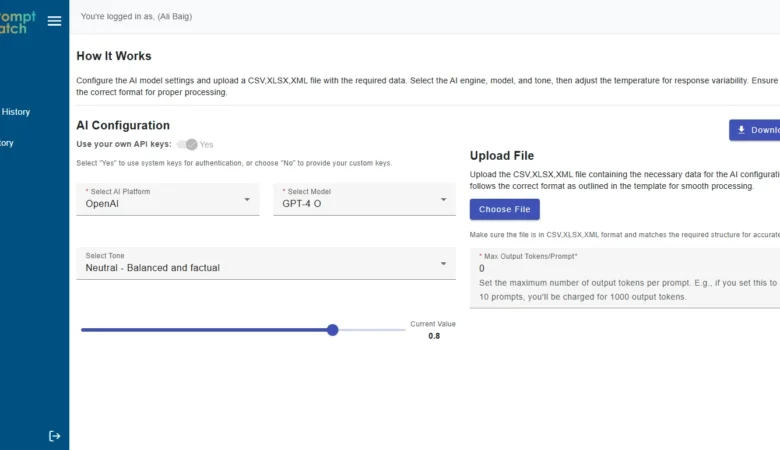
- PromptBatch: The Governance Layer Production AI Eventually Demands – A SaaS platform built for organizations running thousands of AI prompts daily across teams, with per-call cost tracking, real-time usage dashboards, role-based access, batch processing optimization, semantic caching to eliminate duplicate inference, and audit-ready logging that satisfies enterprise procurement. Why it speaks to Durham: every biotech, clinical research group, or Duke-adjacent SaaS startup that scales AI across multiple use cases eventually hits the cost and governance wall. PromptBatch is the layer that converts AI from an exciting pilot into a production system that finance and compliance will approve. The reproducible, monitored, audited approach DIHI applies to its own deployments shows up directly in PromptBatch’s design.
- Rep360 AI: An Agent Operating Inside a Live Sales CRM – An AI integration embedded in GoHighLevel CRM workflows that runs sales conversations end to end, qualifying inbound leads through natural dialogue, booking appointments against real calendar availability, escalating to human reps when complexity demands it, and writing clean, structured data back into the CRM. Why it speaks to Durham: the same agent-shaped engineering, including webhook reliability, idempotent retries, prompt-injection resistance, structured tool calling, and authority-bounded execution, transfers directly to clinical operations agents, prior authorization agents, and biotech business development agents. Rep360 demonstrates the rigor that Triangle buyers expect when AI acts on the world rather than just describing it.
Work Highlights
Some of our best works from many
SeaBee – The Best Navy
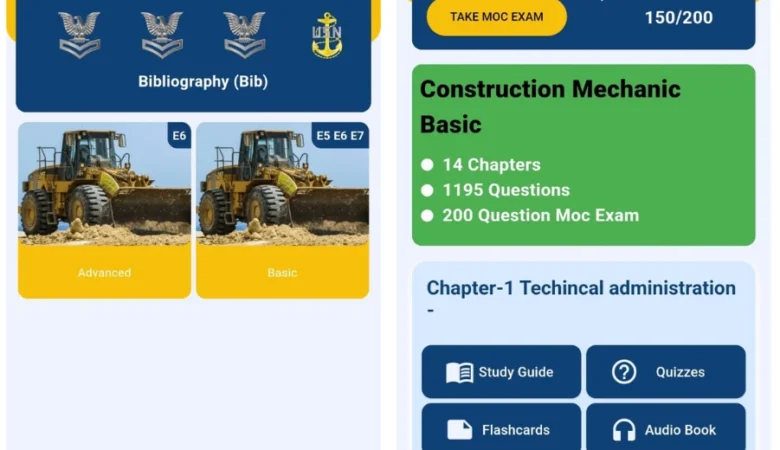
SeaBee – The Best Navy Exam Study App Built for US Navy Seals Project Overview SeaBee is a free, comprehensive
PromptBatch: Save 50% with AI
PromptBatch: The Best AI Batch Prompt Processing Web App | Orbilon Tech Project Overview PromptBatch Portal is a powerful AI
Spheres – The Revolutionary AI
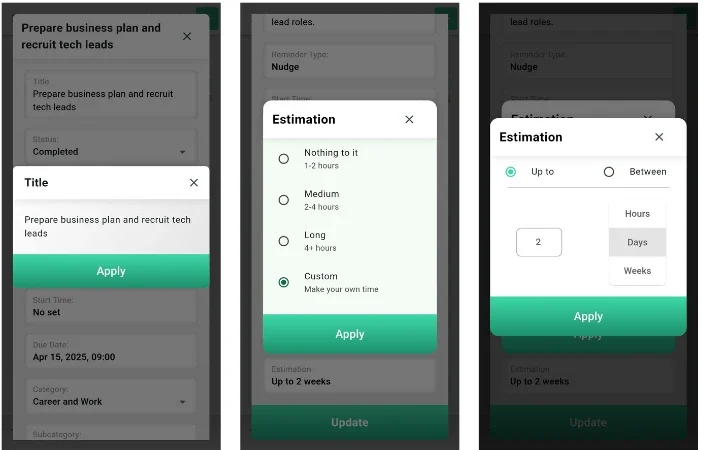
Spheres – The Best AI Life Manager Mobile App That Actually Knows You Project Overview Spheres – Life Simplified is
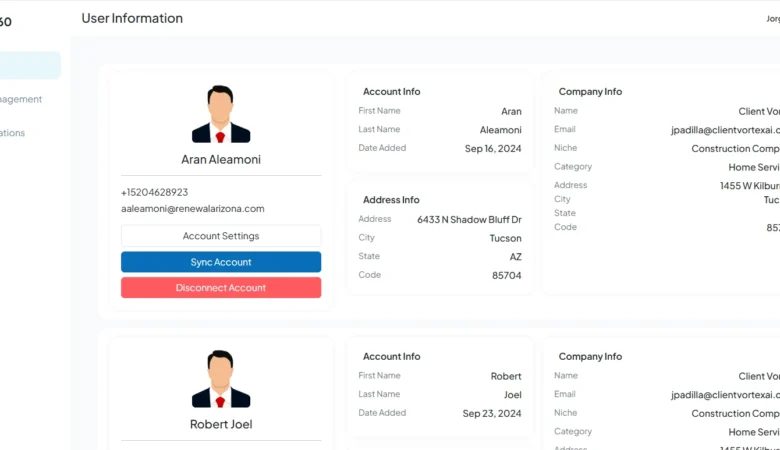
Rep360 AI – AI Bot
Rep360 AI – AI Bot Integration for GHL Workflows That Automates Sales Conversations Project Overview Rep360 AI is a fully
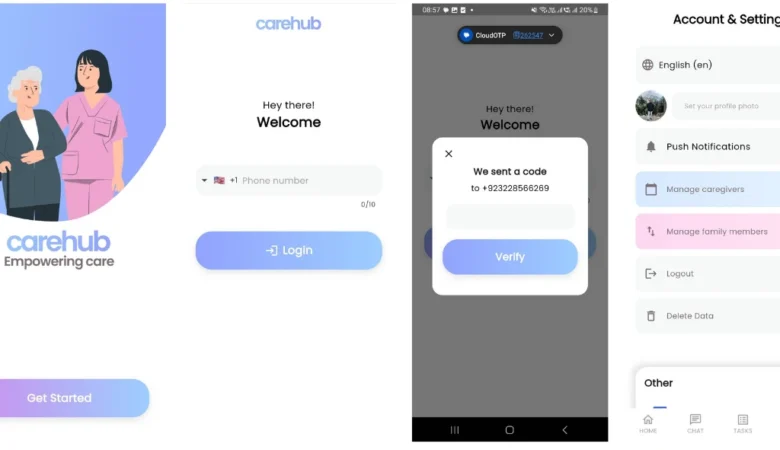
CareHub – Powerful Caregiver Communication
CareHub – Caregiver Communication App With Auto Translation CareHub App – Empowering Care CareHub is a powerful caregiver communication app
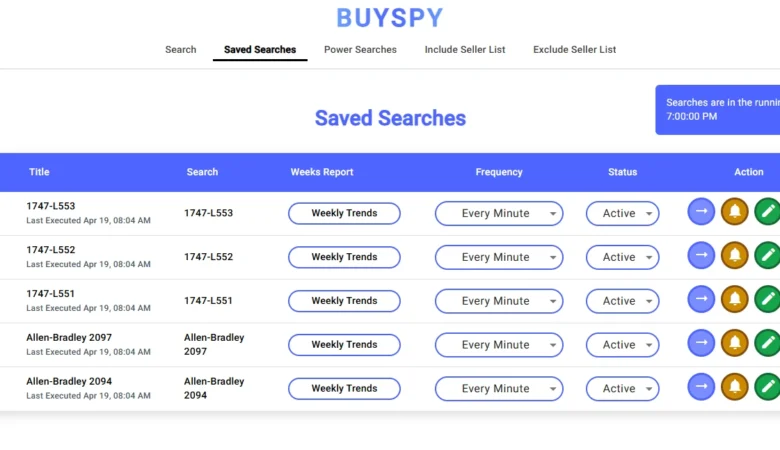
BuySpy – Ultimate Real-Time eBay
BuySpy — A Powerful Real-Time eBay Search Alerts App for Web & Mobile BuySpy is a real-time eBay search alerts
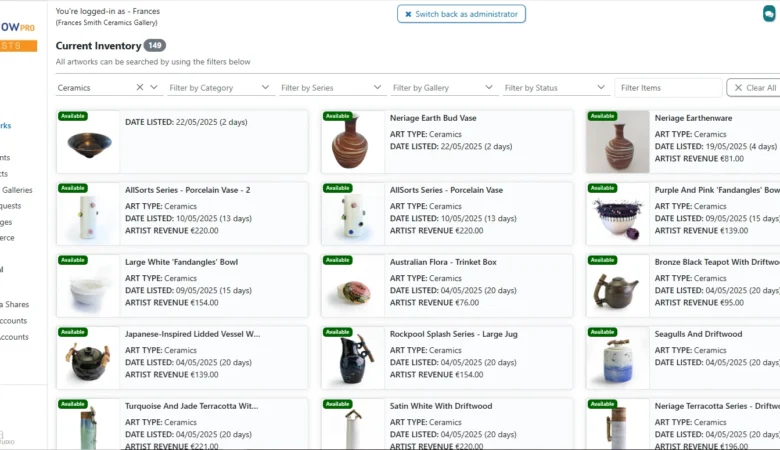
ArtFlow Pro — The Art
ArtFlow Pro — Full-Stack Art Gallery SaaS Platform for Artists & Galleries ArtFlow Pro – Streamline the Artwork Sales ArtFlow
Client Reviews, Verified Through Clutch
Here’s what some of our clients have to say:
Want to Hire Us?
Are you ready to turn your ideas into a reality? Hire Orbilon Technologies today and start working right away with qualified resources. We will take care of everything from design, development, security, quality assurance, and deployment. We are just a click away.