AI Development in Bethesda - Maryland | Orbilon Tech
AI Already Runs 15.9% of the NIH Portfolio. Bethesda Is Where That Number Gets Set.
AI development in Bethesda is no longer a forward-looking conversation. It is a present-day reality measured in funding, deployment, and policy.
A 2025 analysis of NIH-funded biomedical research projects examined 58,746 active grants and found that artificial intelligence already constitutes 15.9% of the NIH portfolio, with a 13.4% funding premium for AI-engaged projects. Approximately 79% of that portfolio still sits in research and development stages — meaning the deployment wave is still ahead. Bethesda is where the policy, the budgets, and the deployment standards for that wave will be written.
Layer on the broader healthcare AI economy. Independent forecasts project that AI applications will save the United States approximately $150 billion in annual healthcare expenses by 2026 — a number anchored heavily by research and clinical decision-support work happening in and around Bethesda.
The local AI roster reflects that gravity. The University of Maryland 3 — Institute for Health Computing (UM-3-IHC) is being built into a North Bethesda life sciences hub, serviced by the Metro Red Line and powered by HIPAA-compliant data sets from the 12 hospitals that comprise the University of Maryland Medical System. Montgomery County committed $40 million over six years (starting 2023), with a parallel commitment from the MPower partnership, including an initial $25 million MPower investment.
The private biotech AI base is just as real. BrainScope integrates AI into noninvasive EEG-based brain assessment for traumatic brain injury, with diagnostic insights generated through machine learning. GlycoMimetics applies computational chemistry to advance uproleselan and a portfolio of glycomimetic drugs targeting cancer and inflammatory disease. Altimmune runs clinical-stage immunotherapeutics for liver disease and obesity with AI-supported research operations. United Therapeutics and Vanda Pharmaceuticals round out the list of clinical-stage Bethesda companies with active AI dependencies.
Around them sits the federal-medical complex, unlike anywhere else. The NIH operates 27+ institutes and centers in Bethesda. Walter Reed National Military Medical Center anchors the U.S. military medical ecosystem. The Naval Medical Research Center, the Uniformed Services University of the Health Sciences (USU), and the Agency for Healthcare Research and Quality (AHRQ) all sit within the same federal-medical corridor.
This is not a generic AI services market. The buyers your work has to satisfy here are clinicians, researchers, regulators, and federal program officers — people who evaluate AI against scientific peer review and NIH grant standards.
For businesses looking for the best AI development company in Bethesda — one that builds for clinical-grade rigor, federal-adjacent compliance, and biotech-grade scientific validation — Orbilon Technologies delivers custom AI solutions in Bethesda from architecture through deployment. LLM integrations, machine learning models, predictive analytics, autonomous AI agents, and intelligent automation are built to integrate with your existing platforms.
Where Most Bethesda AI Pitches Fail?
The AI vendor conversations in Bethesda follow a pattern. Vendors arrive with a generic OpenAI integration story, a chatbot demo, and a pitch deck full of vertical agnostic case studies. The conversation ends quickly because the buyer in this room — whether at NIH, at UMMS, at Altimmune, or at a Bethesda clinical research organization — is asking three different questions the vendor never anticipated. This is exactly the gap that serious AI development in Bethesda has to close from the first meeting.
- Question one — what does this AI do that an existing NIH-funded model doesn’t? Bethesda buyers regularly know about specific NIH-funded models, peer-reviewed AI research, and academic baselines that already address their use case. Vendors who can’t position their solution against that existing scientific landscape lose the conversation immediately. Real AI development in Bethesda starts with reading the room: what’s already published, what’s already deployed, what’s already being evaluated.
- Question two — how does this hold up to peer review and FDA scrutiny? The 79% of NIH AI projects still in research and development don’t move forward without surviving review. Bethesda buyers expect AI vendors to think the same way. Reproducibility. Decision logging. Bias evaluation. Validation documentation. Citation trails. These aren’t enterprise compliance theater — they are the gate that determines whether your AI ships or sits on a shelf.
- Question three — where does the data live, who owns it, and what happens when models change? Healthcare AI in Bethesda routinely involves PHI from UMMS-system hospitals, federal research data, and clinical trial information. Data ownership, retention, deletion, and the swap path when underlying foundation models change either get answered cleanly in week one or surface as deal-breakers in month four.
When you hire AI developers in Bethesda, Maryland, the vendor that thinks in those three questions before the first sprint is the vendor whose work survives the first review.
How Bethesda Sectors Actually Use AI?
Generic AI marketing fails here because the use cases are too sector-specific. What clears review at NIH does not clear review at UMMS. What works at Altimmune is not what BrainScope needs. Real AI consulting in Bethesda starts from the sector outward.
- Drug discovery and clinical-stage AI. GlycoMimetics, Altimmune, United Therapeutics, and Vanda Pharmaceuticals run AI inside discovery, computational chemistry, biomarker analysis, and clinical operations. The work demands reproducible outputs, audit-grade documentation, and validation-friendly architecture from sprint one.
- Clinical decision support and ambient AI. Walter Reed clinicians, USU researchers, and the broader federal medical workforce evaluate AI for clinical documentation, diagnostic support, and decision augmentation. The bar is set by what survives FDA review and what passes IRB committees — not by what wins a demo.
- NIH-funded research AI. The 15.9% of the NIH portfolio that already uses AI sets the technical standard for vendors entering this market. Healthcare AI in Bethesda projects need to reference NIH FAIR data principles, integrate with NIH-funded data infrastructure, and produce outputs that NIH program officers recognize as scientifically defensible.
- Healthcare imaging and diagnostics AI. BrainScope’s AI-driven EEG analysis for brain injury is the local benchmark for diagnostic AI. The Bethesda imaging and diagnostics ecosystem expects vendors to understand the scientific validation pipeline that turns “interesting model” into “deployable diagnostic tool.”
- Federal-adjacent AI. Federal contractors operating in Bethesda face Section 508 accessibility, FedRAMP-aware deployment patterns, supply chain security documentation, and CMMC-aligned development workflows. Generic commercial AI providers usually fail these requirements out of the box.
- Population health and computational epidemiology. The forthcoming UM-3-IHC, with its access to de-identified data from 12 UMMS hospitals, is positioning Bethesda as a national hub for population health AI. Vendors entering this space need expertise in de-identification, privacy-preserving computation, and federated analytics.
These sectors don’t share a single AI playbook. The best AI development companies in Bethesda are the ones that know which playbook applies to which buyer.
The Architecture We Bring to Every Bethesda AI Build
We do not list every AI tool that exists. We list the layers that consistently determine whether an AI system survives a Bethesda-grade review.
- Foundation models. OpenAI, Anthropic Claude, open-source LLMs (Llama, Mistral), and custom fine-tuned models — chosen by data sensitivity, latency requirements, on-premise versus API constraints, and the specific reasoning patterns the use case demands.
- Predictive modeling and ML. TensorFlow, PyTorch, scikit-learn, XGBoost — chosen by data volume, pattern complexity, accuracy thresholds, and how much explainability the audit reviewers expect.
- Data pipelines. Python, Apache Airflow, Pandas, custom ETL — turning raw clinical, biological, and operational data into clean inputs production AI can actually use without contamination.
- RAG infrastructure. Pinecone, Weaviate, ChromaDB, pgvector — letting the AI reference your protocols, scientific literature, and proprietary research with citation trails compliance reviewers can follow.
- MLOps and deployment. AWS SageMaker, Azure ML, Docker, Kubernetes, CI/CD — production deployments with model versioning, automated retraining, drift detection, and audit logging that satisfy regulatory reviewers.
- Specialized integrations. EHR via FHIR, NIH data infrastructure, laboratory information systems, biotech procurement platforms, and the custom enterprise connectors that Bethesda projects always need.
Our Clutch profile — verified 4.96 rating from real client interviews — shows what this architecture produces in active production work.
AI and Software Services for Bethesda
- AI Development and Integration is about creating systems like custom LLM systems. These systems use Natural Language Processing and computer vision to understand things. They also use analytics to make good guesses about what will happen. They have intelligent document processing that can explain how they work.
- We also make Agentive AI Apps. These apps have AI agents that can do things on their own. They can route claims and schedule appointments. They can even review documents. Get approval from people. We make sure that people are always in charge.
- We do Web Development, too. We make websites that’re smart and can find things easily. They can also change the content to suit the person using the website. And they have automated workflows that make things easier.
- We make Mobile App Development fun. Our mobile apps are powered by AI. Can do things on the device itself. They use authentication to keep things safe. They have predictive features that try to guess what you will do next.
- We also do E-commerce Development. We make platforms that use AI to suggest things you might like. They can even predict how much of something will be sold. They have fraud prevention to keep you safe.
- Custom CRM Development is another thing we do. We make CRM systems that use AI to score leads and predict if someone will stop using our service. They can also automate the pipeline to make things easier.
- SaaS Product Development is about making platforms that use machine learning to drive the product. This means that the product gets better and better over time.
- We care about UI/UX Design. We make interfaces that are easy to use and explain how the AI makes decisions. You can see the confidence scores and audit trails. The outputs are explainable, so you know what is going on.
- Finally, we do Cloud Infrastructure and DevOps. We use MLOps on AWS or Azure to host our models. We keep track of the versions and monitor them. We make sure that the hosting is safe and follows the rules, like HIPAA and SOC 2.
Two AI Products Worth Inspecting
We won’t fill this section with five portfolios. Two real AI builds tell the story better than a deck full of logos.
- Rep360 AI — Autonomous Workflow Bot: A web-integrated AI system that ingests leads from multiple channels, applies qualification logic, generates contextual multi-step follow-up sequences, and routes high-value prospects without human intervention. Built with production-grade infrastructure: failure recovery, observability, audit logging, and graceful degradation when third-party APIs throttle. What it shows for Bethesda: hands-off intelligent automation that holds up under enterprise load. The same architectural pattern serves clinical research operations, federal contractor sales pipelines, and biotech business development teams managing relationship-driven cycles into NIH, Walter Reed, and academic medical centers.
- Spheres — Consumer-Grade AI on Real App Stores: A consumer mobile product powered by OpenAI that converts natural language input into organized daily plans, prioritized task lists, and goal tracking. Built with Flutter, deployed to App Store and Google Play, with verified user ratings and active retention metrics. What it shows for Bethesda: we ship consumer AI products that hold up against well-funded competition on real distribution channels. Useful proof for Bethesda consumer brands, healthcare consumer apps, and any AI product where polish, performance, and retention determine whether the work succeeds in the market.
Work Highlights
Some of our best works from many

SeaBee – The Best Navy
SeaBee – The Best Navy Exam Study App Built for US Navy Seals Project Overview
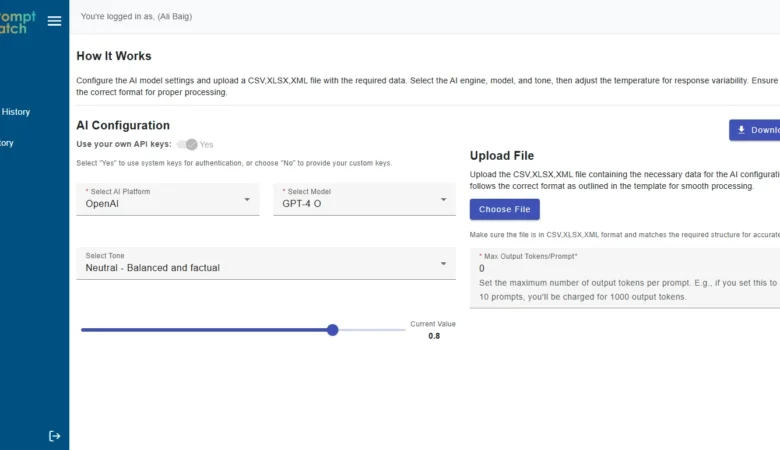
PromptBatch: Save 50% with AI
PromptBatch: The Best AI Batch Prompt Processing Web App | Orbilon Tech Project Overview PromptBatch
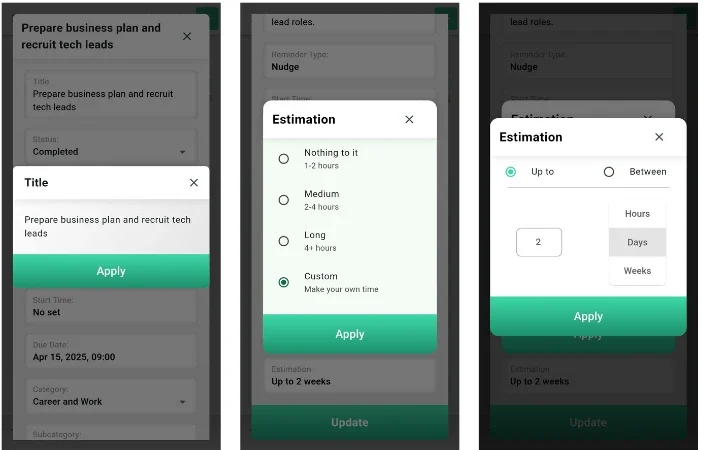
Spheres – The Revolutionary AI
Spheres – The Best AI Life Manager Mobile App That Actually Knows You Project Overview
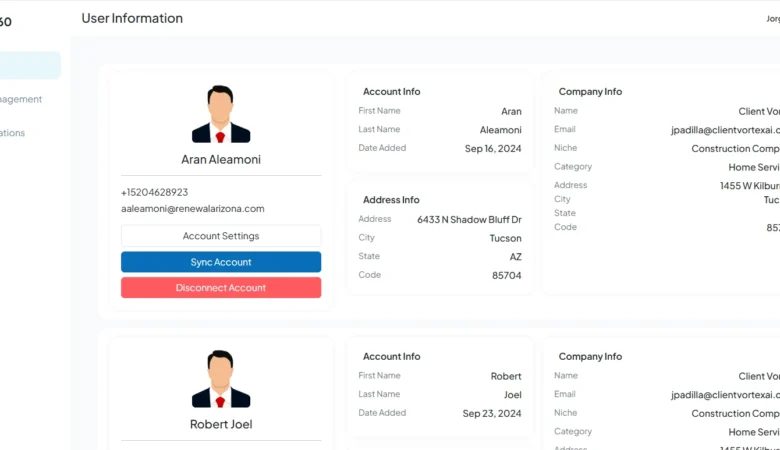
Rep360 AI – AI Bot
Rep360 AI – AI Bot Integration for GHL Workflows That Automates Sales Conversations Project Overview
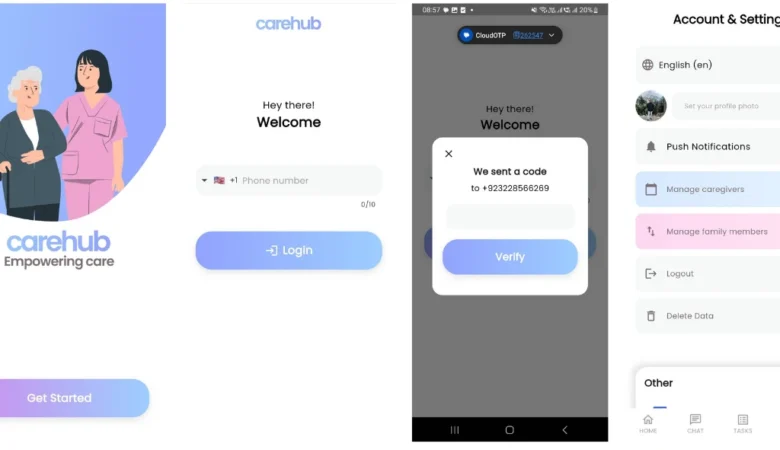
CareHub – Powerful Caregiver Communication
CareHub – Caregiver Communication App With Auto Translation CareHub App – Empowering Care CareHub is
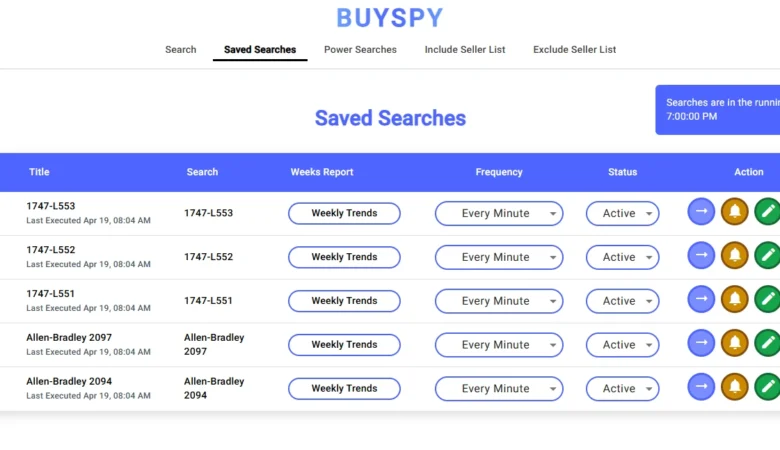
BuySpy – Ultimate Real-Time eBay
BuySpy — A Powerful Real-Time eBay Search Alerts App for Web & Mobile BuySpy is
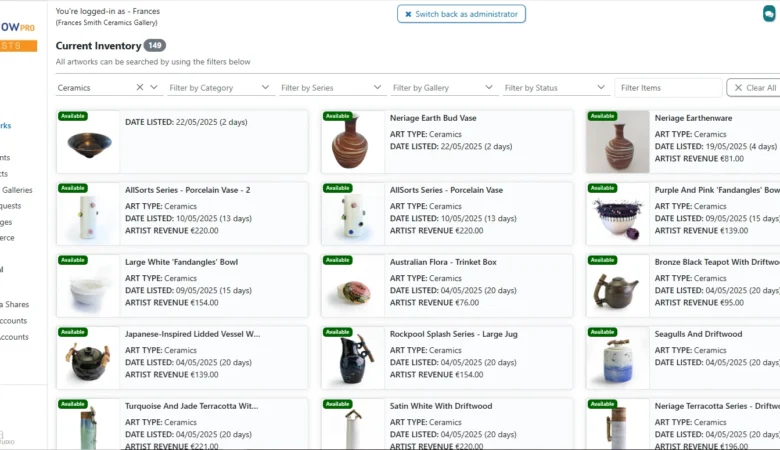
ArtFlow Pro — The Art
ArtFlow Pro — Full-Stack Art Gallery SaaS Platform for Artists & Galleries ArtFlow Pro –
Reviews on Clutch — Independent, Verified, Public
Here’s what some of our clients say:
Want to Hire Us?
Are you ready to turn your ideas into a reality? Hire Orbilon Technologies today and start working right away with qualified resources. We will take care of everything from design, development, security, quality assurance, and deployment. We are just a click away.