Mobile App Development in Bethesda - Maryland | Orbilon Tech
Why Apps Built for Bethesda Get Held to a Different Standard Than Apps Built Anywhere Else?
App development in Bethesda answers to an audience that does not exist in most U.S. cities. The user opening your app at 9 AM is more likely to hold a PhD than not. The user installing your tool at lunchtime works for the largest biomedical research agency on the planet. The user clicking “uninstall” at 8 PM compares your interface, performance, and reliability to apps built by teams of 50 engineers at Apple, Microsoft, and the most polished consumer brands in America.
This is the practical reality of building mobile software for a city anchored by the National Institutes of Health (27+ institutes and centers), Walter Reed National Military Medical Center, the Naval Medical Research Center, the Uniformed Services University of the Health Sciences (USU), and the Agency for Healthcare Research and Quality (AHRQ).
Around that federal-medical core sits a private biotech ecosystem that does not tolerate generic vendors. BrainScope develops a noninvasive brain assessment with AI-driven EEG analysis. GlycoMimetics advances uproleselan and a portfolio of glycomimetic drugs targeting cancer and inflammatory disease. Altimmune runs clinical-stage immunotherapeutics for liver disease and obesity. United Therapeutics develops therapies for life-threatening diseases. Vanda Pharmaceuticals advances treatments for psychiatric and neurological disorders.
AGED Diagnostics is building noninvasive blood tests for the $108 billion U.S. liver disease market. Otomagnetics designs noninvasive drug delivery using magnetic forces. Precision Biologics develops therapeutic and diagnostic products. Knowledge to Practice serves the medical education and continuing CME market with digital learning platforms. Gardyn brings indoor agriculture to consumer mobile experiences.
What’s coming next is just as serious. The University of Maryland 3 — Institute for Health Computing (UM-3-IHC) is being built into a North Bethesda life sciences hub serviced by the Metro Red Line. The Institute will become a new epicenter for AI, machine learning, and clinical analytics research, powered by HIPAA-compliant data sets from the 12 hospitals that comprise the University of Maryland Medical System.
Montgomery County committed $40 million over six years (starting 2023) to fund the Institute, with partner universities in the MPower strategic partnership matching that commitment with an initial $25 million MPower investment. This is the buyer landscape your Bethesda app actually has to satisfy. Federal program officers checking app behavior on managed-device fleets. Biotech VPs of Operations are evaluating whether your app handles regulatory documentation correctly. Walter Reed contracting officers are running automated security scans on every download. Affluent consumers in one of America’s most educated ZIP codes (population 63,374) are comparing your app’s polish to anything built in Cupertino.
Most agencies pitch Bethesda the same way they pitch Frederick or Hagerstown. The mismatch is exactly why so many local apps fail to retain their first 1,000 users. The buyer here is sophisticated, federally connected, and trained to evaluate vendors against research-grade rigor.
When you’re looking for the best mobile app development company in Bethesda — one that actually understands NIH-adjacent, Walter Reed-adjacent, and biotech-grade buyers — Orbilon Technologies builds for that audience. Native iOS and Android, cross-platform Flutter and React Native, and AI-integrated mobile platforms — handled end-to-end from product strategy and UI/UX design through development, testing, and App Store deployment.
What Actually Determines App Success in Bethesda's Market?
Build any mobile app long enough, and you discover the silent failure modes that don’t show up in marketing slides. Bethesda amplifies several of these because of the specific industries that drive its mobile economy. Here are the factors that actually determine whether your app survives 12 months in production.
- Network reality at NIH and Walter Reed. Federal medical campuses run on managed networks with restricted port ranges, certificate pinning at the network level, and inconsistent guest WiFi quality. Apps assuming reliable, fast connectivity get uninstalled within weeks. Offline-first sync, intelligent caching, and graceful degradation are baseline architecture, not premium features.
- Compliance posture before launch, not after. Custom mobile app development in Bethesda for healthcare and biotech buyers means HIPAA, GxP, FDA AI/ML guidance awareness, and audit logging baked into the codebase from sprint one. Retrofitting compliance after launch typically costs three to five times the original budget. Federal-adjacent buyers can detect retrofitted compliance immediately. This is exactly why custom mobile app development in Bethesda commands different engineering standards than generic regional app work.
- Performance against Apple-grade benchmarks. Bethesda’s affluent, tech-fluent consumer audience compares your app to Spotify, Notion, Linear, and the most polished products on the App Store. Sub-2-second cold start, 60 FPS animations, native-feeling navigation, and accessibility scores above 95 are entry-level expectations.
- Multilingual UX for international users. Bethesda’s diversity, embassy adjacency, and international biotech partnerships generate substantial non-English app traffic. Real localization — language-switcher UX, locale-correct date and number formats, RTL text support, translated error messages — moves retention numbers measurably.
- Privacy positioning that survives App Store review. Both Apple and Google have intensified privacy review for healthcare-adjacent apps. Apps that misstate data collection, fail to disclose tracking, or don’t implement App Tracking Transparency correctly get rejected. Healthcare app development Bethesda projects need privacy-first architecture, not privacy-as-afterthought.
- Hardware integration with medical-device adjacency. BrainScope’s EEG technology, Otomagnetics’ magnetic drug delivery, and the broader Bethesda biotech-device ecosystem regularly need mobile companion apps that talk to specialized hardware. Bluetooth Low Energy expertise, MFi (Made for iPhone) protocols, and hardware-software co-design experience separate biotech app developers in Bethesda who can serve this market from those who can’t.
These aren’t edge cases. They’re the actual standards that top app developers in Bethesda, MD, design for from the first sprint. This is also where serious app development in Bethesda differs from generic “we ship to the App Store” pitches — the architectural decisions get made early, with knowledge of the audience, not bolted on before launch.
The Mobile Buyer Profile — Six Audiences You're Actually Trying to Convert
When you try to market an app in Bethesda, it does not work because the people you are trying to sell to are different, and they all want different things. If you know which group your app is for, it changes everything about how you make it. Here is what you need to know.
- The researcher who works at the NIH or USU. This person uses apps on their iPhone when they are not in meetings. They want apps that are easy to use, let them enter information quickly, work with FHIR, and can make reports that are ready to use. They also want to be able to use the app when the WiFi is not working in the lab.
- The person in charge of operations at a company like Altimmune, GlycoMimetics, or BrainScope. This person looks at apps to see if they can be used in their workflow. They want apps that follow the rules like 21 CFR Part 11. Have things like audit trails and electronic signatures. They also want to know that the app is safe and has the documentation.
- The doctor who works at Walter Reed. This person uses apps when they are with patients. They have to follow strict rules about how they use their devices. They want apps that work with the hospital’s system, let them log in with their fingerprint, and keep information safe. They also want apps that work well when the internet is slow.
- The project manager who works with the government. This person looks at apps to see if they can be used by their team on government devices. They want apps that are easy for everyone to use, even people with disabilities, and that follow the government’s rules like Section 508. They also want to know that the app is safe and has security.
- The person who lives in Bethesda and has a lot of money. This person expects apps to be really good and look nice, like the apps that Apple makes. They want apps that open quickly, are easy to use, and respect their privacy. They also want apps that have a few features that make them fun to use.
- The person who buys education platforms for schools. This person wants platforms that follow the rules, like SCORM and xAPI. These are easy for everyone to use. They also want platforms that work offline, have analytics, and can track what students are learning.
When you hire someone to make an app development in Bethesda, Maryland, you should not ask if they can get the app into the App Store. You should ask if they know which of these six groups you are trying to reach with your app.
Real Engineering Trade-offs We Make on Every Bethesda App Project
Every app build is a series of trade-offs. The vendors that pretend otherwise sell a fantasy that breaks during the first sprint. Here are the actual decisions we make — out loud, with you — on every Bethesda mobile project.
- Native versus cross-platform. When your app needs deep iOS or Android integration (HealthKit, secure enclave, advanced camera features, hardware accessory protocols), we build native — Swift on iOS, Kotlin on Android. When your app’s platform-specific surface area is small and time-to-market matters, Flutter or React Native delivers two platforms with one codebase. Healthcare and federal apps in Bethesda tend to push us toward native more than consumer apps elsewhere.
- Backend choice. Node.js, Python, FastAPI, and Firebase serve different problem shapes. Latency, data model, regulatory environment, and your team’s existing language preferences all factor in. We don’t pretend “one stack fits everything.” We pick what fits your project.
- Cloud provider. AWS dominates federal-adjacent and biotech projects in Bethesda. Azure tends to fit Microsoft’s healthcare practices. Google Cloud excels at AI-heavy workloads and analytics. The right choice depends on your existing infrastructure, compliance requirements, and team expertise — not vendor marketing.
- Data storage architecture. PostgreSQL for relational integrity, MongoDB for document flexibility, Redis for caching and session state, and Firestore for offline-first sync. Healthcare-adjacent apps add encryption-at-rest, audit logging, and PHI segregation patterns that consumer apps don’t need.
- MLOps and AI integration. When your app embeds AI features (clinical decision support, document scanning, predictive analytics), we architect with model versioning, drift monitoring, and explainability from the start. The Hopkins Data Science and AI Institute, the Malone Center, and the upcoming UM-3-IHC have set the regional bar for what “responsibly engineered AI” means in healthcare apps.
- Specialized integrations. Stripe and Plaid for payments, Twilio for messaging, Apple HealthKit and FHIR APIs for healthcare interoperability, Bluetooth Low Energy for medical device communication, and MDM platforms for enterprise deployment. Biotech app developers in Bethesda need to know which integrations matter, when, and why — not just which logos to put in a proposal.
Our Clutch profile shows what these trade-offs look like in real projects. The 4.96 rating reflects work, not promises.
Mobile and Software Services for Bethesda's Federal-Medical-Biotech Economy
Bethesda’s economy is really into biotech and life sciences. Also has a lot of federal medical research, healthcare, federal contracting, professional services, and consumer brands that serve people with a lot of money. Each of these areas needs things from mobile devices.
- Mobile App Development: We make apps for iOS and Android, and also cross-platform apps using Flutter or React Native. These apps are made with HIPAA rules in mind. Are also aware of mobile device management. We build them to be good enough for the standards of buyers in Bethesda.
- Web Development: We make websites that work with mobile products so people can use them on different devices. We use React and Node.js to build these websites and make sure they look consistent.
- E-commerce Development: We make shopping apps that have secure checkout, real-time inventory, and payment processing that meet PCI rules.
- AI Development & Integration: We use AI to make predictions, documents, and help with medical decisions. We also add AI features to apps.
- Custom CRM Development: We make customer relationship management platforms that track patient acquisition, biotech sales, and federal contracting relationships.
- Agentive AI Apps: We make AI apps that handle appointments, claims, and approvals. These apps have oversight where it is needed.
- UI/UX Design: We design interfaces for the technical people in Bethesda, like clinicians, researchers, and federal staff. We make these interfaces accessible, fast, and easy to use.
- SaaS Product Development: We make apps that work with software as a service platforms. These apps have push notifications, offline sync, and role-based dashboards.
- Cloud Infrastructure / DevOps: We set up backend systems on AWS or Azure with integration and delivery monitoring and auto-scaling. We also make sure these systems meet HIPAA and SOC 2 rules for hosting data.
Apps in Production. Inspect Them. The Pitch Is Just the Setup.
We could write paragraphs about engineering quality. The faster path: open the three apps below and judge for yourself. Each one is in active production. Each one was built by the same team that would handle your Bethesda project.
- CareHub — Healthcare Care Team Coordination: A cross-platform healthcare app where distributed care teams coordinate through encrypted real-time messaging, automatic language translation, and role-based access controls across multiple facilities. Built on Flutter, Node.js, and AWS. What it shows for Bethesda: HIPAA-aware engineering from sprint one. Multi-facility coordination patterns. Bilingual real-time messaging. Audit-ready communication logs. The architectural posture Walter Reed clinicians, MedStar-adjacent practices, and Bethesda biotech operations would recognize as professional-grade work.
- SeaBee — Navy Exam Study Platform: A content-rich mobile platform with structured learning paths, chapter-based study materials, quizzes with persistent scoring, audiobook integration, and full offline access for environments where connectivity isn’t reliable. What it shows for Bethesda: structured-content app architecture and offline-first design. Useful proof for medical education buyers (Knowledge to Practice and similar Bethesda-area continuing-education platforms), military medicine training programs, and any product where content delivery and progress tracking matter more than novelty features.
Work Highlights
Some of our best works from many
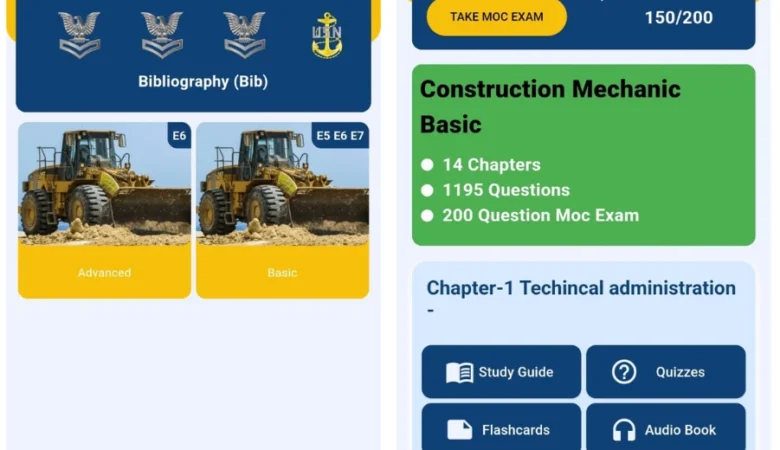
SeaBee – The Best Navy
SeaBee – The Best Navy Exam Study App Built for US Navy Seals Project Overview
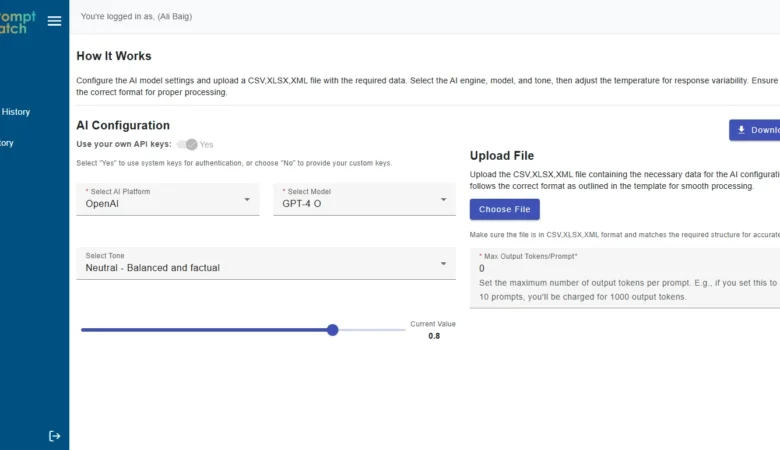
PromptBatch: Save 50% with AI
PromptBatch: The Best AI Batch Prompt Processing Web App | Orbilon Tech Project Overview PromptBatch
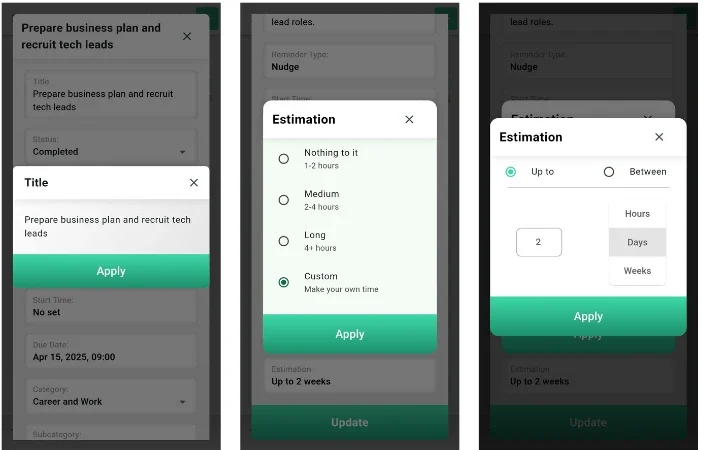
Spheres – The Revolutionary AI
Spheres – The Best AI Life Manager Mobile App That Actually Knows You Project Overview
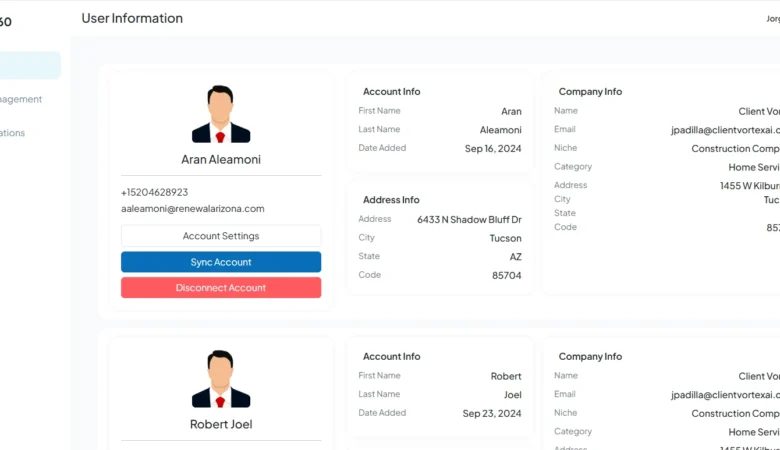
Rep360 AI – AI Bot
Rep360 AI – AI Bot Integration for GHL Workflows That Automates Sales Conversations Project Overview
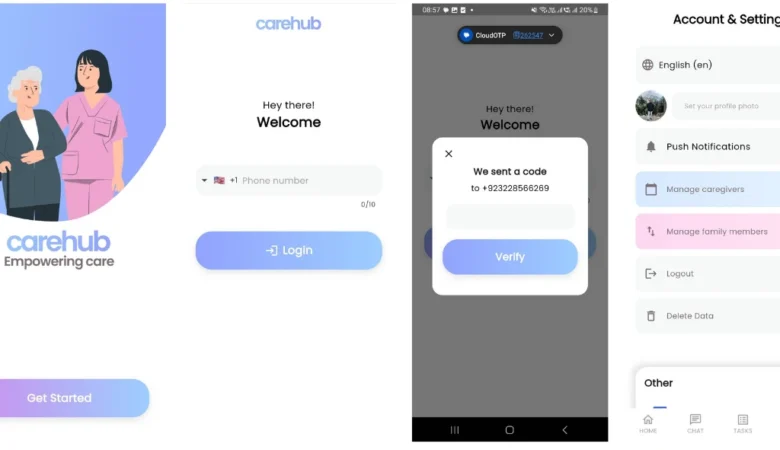
CareHub – Powerful Caregiver Communication
CareHub – Caregiver Communication App With Auto Translation CareHub App – Empowering Care CareHub is
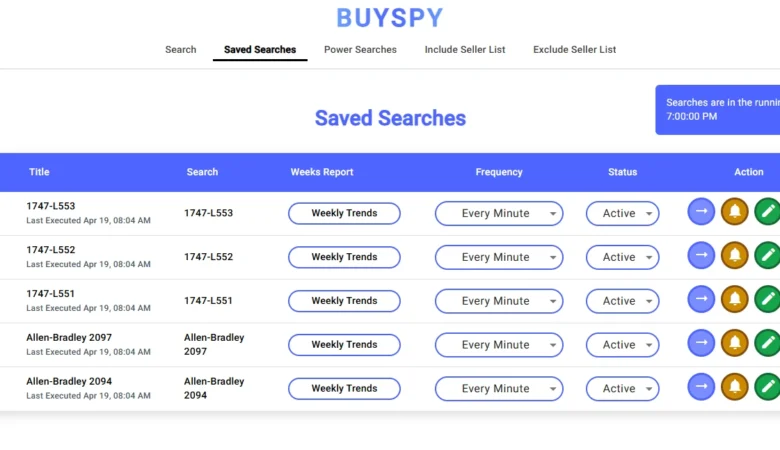
BuySpy – Ultimate Real-Time eBay
BuySpy — A Powerful Real-Time eBay Search Alerts App for Web & Mobile BuySpy is
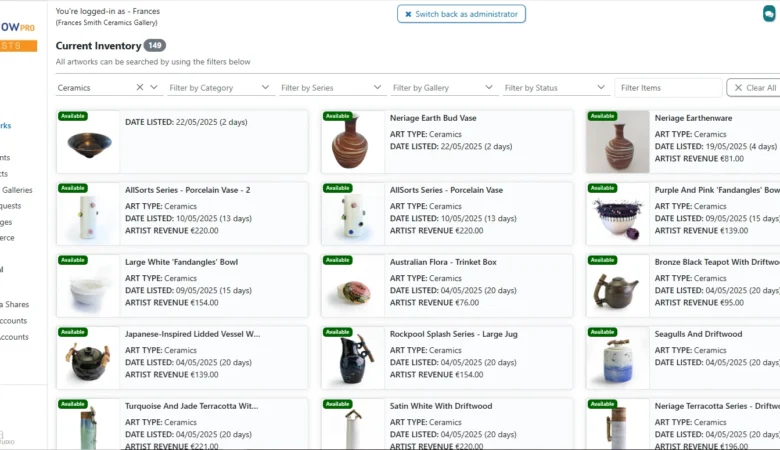
ArtFlow Pro — The Art
ArtFlow Pro — Full-Stack Art Gallery SaaS Platform for Artists & Galleries ArtFlow Pro –
Reviews on Clutch — Independently Verified by Third-Party Analysts
Here’s what several of our clients have to say:
Want to Hire Us?
Are you ready to turn your ideas into a reality? Hire Orbilon Technologies today and start working right away with qualified resources. We will take care of everything from design, development, security, quality assurance, and deployment. We are just a click away.