
Web Development in Bethesda - Maryland | Orbilon Tech
What Does It Mean to Build Websites in a ZIP Code Where the NIH, Walter Reed, and the Naval Medical Research Center All Sit Within a 10-Minute Drive?
Web development in Bethesda is not a generic regional service. The buyers here come from a federal-medical complex unlike anywhere else in the United States — and the websites that succeed in this market are the ones built for that specific reality. Consider what’s clustered into this city. The National Institutes of Health (NIH) — the largest medical research agency on the planet — anchors Bethesda with operations spanning more than 27 institutes and centers across the campus. Walter Reed National Military Medical Center, the flagship medical institution serving the U.S. Armed Forces, operates here. The Naval Medical Research Center is here. The Uniformed Services University of the Health Sciences (USU) is here. The Agency for Healthcare Research and Quality (AHRQ) is here.
Outside the federal footprint, the private biotech base is just as serious. BrainScope develops noninvasive brain assessment technology from Bethesda. GlycoMimetics applies proprietary glycomimetic chemistry to oncology and inflammation. Altimmune is a clinical-stage immunotherapeutics company advancing therapies for liver disease and obesity. United Therapeutics develops therapies for life-threatening diseases. Vanda Pharmaceuticals advances treatments for psychiatric and neurological disorders. These aren’t startups looking for marketing partners — they’re companies with research budgets, regulatory submissions, and clinical trial infrastructure that demand vendors who understand that environment.
Then there’s what’s coming next. The University of Maryland 3 — Institute for Health Computing (UM-3-IHC) is being built into a North Bethesda life sciences hub. The Institute is a new epicenter for artificial intelligence, machine learning, and clinical analytics research, empowered by HIPAA-compliant data sets from the 12 hospitals that comprise the University of Maryland Medical System.
Montgomery County committed $40 million over six years starting in 2023 to support the Institute, with partner universities in the MPower strategic partnership committing a similar amount, including an initial $25 million MPower investment. The North Bethesda site, served by Metro, is being redeveloped into a “collision space” for researchers from the FDA, NIH, NIST, USAMRIID, AHRQ, Walter Reed, Naval Medical Research Center, and adjacent University of Maryland institutions.
Layer in Maryland’s broader life sciences ecosystem — 80-plus federal labs, $18.6 billion in life sciences economic activity, and the highest concentration of PhDs per capita in the United States — and you have what the BioHealth Capital Region announced as the third-largest life sciences cluster in the world.
Most local agencies pitch Bethesda buyers the same way they pitch a small-town clinic. That mismatch is exactly why so many Bethesda websites underperform. The buyer here is sophisticated, federally connected, and trained to evaluate vendors against research-grade rigor.
If you’re looking for the best web development company in Bethesda — one that understands NIH-adjacent, Walter Reed-adjacent, and biotech-grade buyers — Orbilon Technologies builds for that audience. Custom websites and web applications on React, Node.js, Python, and cloud platforms — handled end-to-end from UI/UX design through testing and production deployment.
A Map of the Audience — Who's Actually Visiting Your Bethesda Website Tomorrow?
Most agencies design websites for a generic “small business owner” persona. Bethesda doesn’t reward that approach. Effective web development in Bethesda requires understanding that the audience visiting your site is far more specific — and far more discerning. Here’s the realistic map.
- The federal program officer. Visiting your site between meetings at the NIH campus. Looking for indicators of regulatory awareness, security posture, and contractor capacity. Spends maybe 90 seconds before deciding whether to forward your URL to a colleague.
- The biotech VP of Operations. Coming from BrainScope, Altimmune, GlycoMimetics, United Therapeutics, or Vanda Pharmaceuticals. Evaluating whether you understand clinical-stage company workflows, regulatory documentation, or research data handling.
- The Walter Reed contracting officer. Looking for Section 508 compliance signals, security positioning, and federal contracting language. Filters out vendors whose sites can’t pass automated accessibility audits.
- The clinician at the Naval Medical Research Center or USU. Visiting on the phone between rounds. Mobile-first performance and clean information architecture either earn the next click or end the visit.
- The university researcher from UMD or the upcoming UM-3-IHC. Reading your site like a research paper — looking for citations, technical depth, accuracy in claims. Marketing fluff collapses immediately.
- The upper-middle-class consumer. Bethesda is one of the most affluent ZIP codes in America. Consumer brands, professional services, restaurants, and retail businesses serve buyers who compare your website against the polish of national consumer brands every day.
- The international visitor. Bethesda’s diversity and proximity to embassies, international biotech partnerships, and global research collaborations mean a substantial portion of your traffic arrives from non-English-speaking countries.
When you hire web developers in Bethesda, Maryland, the first question isn’t “do they make pretty websites?” It’s “do they understand which of these audiences your business actually depends on?”
What Your Bethesda Buyer Notices First (And Where Most Local Sites Fall Short)?
Bethesda buyers run silent diagnostics on every vendor website before contacting anyone. After enough vendor evaluations, you start to see what they’re checking — and where local sites consistently fail. Here’s the diagnostic list.
- SSL configuration and security headers. A federal program officer’s first instinct is to check your site’s security signals. Expired certs, weak TLS versions, missing HSTS headers, and absent Content Security Policy headers eliminate vendors instantly. Most local Bethesda sites still ship with default hosting configurations that fail these checks.
- Privacy policy depth and language. A clinical-stage biotech VP scans your privacy policy for data handling specifics. Generic boilerplate copy signals you’ve never worked with HIPAA-adjacent or research-data clients. Real policy language signals that you have.
- Performance scores against research-grade audiences. A UMD researcher running Lighthouse audits casually expects sub-2-second load times, Core Web Vitals scores above 90, and Time-To-Interactive that doesn’t betray underbuilt JavaScript. Most local sites fail at least one of these silently.
- Accessibility compliance signals. Walter Reed and federal contractor buyers run automated accessibility audits before scheduling sales conversations. Color contrast failures, missing ARIA labels, keyboard-navigation gaps — these get flagged automatically and silently filter out vendors.
- Citation and source linking. Researchers and federal-adjacent buyers respect sites that link to primary sources, cite specific data, and provide verifiable claims. Marketing copy without citation reads as untrustworthy in this market.
- Mobile experience for a phone-on-the-go audience. Clinicians, researchers, and federal staff browse on phones between commitments. Mobile-first design isn’t a checkbox — it’s the primary experience.
This is where custom website development in Bethesda differs from generic builds. The agencies that succeed here architect every layer — security, privacy, performance, accessibility, content depth, mobile UX — for an audience that runs diagnostics. Most don’t. That’s the gap your project either fills or falls into.
Working With Bethesda Clients In Practice (How This Actually Looks Day to Day)?
People often ask what working with us actually looks like once a project starts. Here’s the honest version.
- Communication runs on US Eastern Time. Our engineering team operates from Pakistan but covers the Bethesda business day. Slack and Teams stay active when your office is open. Daily commits land in your repository. Sprint demos happen biweekly with software you can install and test on your real devices.
- You work with the same engineers throughout. Continuity matters more than any other factor in shipping projects on schedule, so we treat it as fundamental. The senior developer who joins your kickoff is the senior developer who delivers your launch.
- Pricing reflects real engineering, not Class A office overhead. Senior full-stack developer rates that fit Bethesda biotech budgets, federal contractor budgets, and consumer business budgets — without the premium that pushes Wisconsin Avenue and Bethesda Row agency rates into the $165-$285 per hour range.
- Reviews live on a third-party platform. Our Clutch profile hosts every review we’ve received. Each one was conducted through a verified client interview by Clutch directly. The 4.96 rating is real because the reviews are real.
- Onboarding takes about two weeks of meaningful effort from your side. After that, the daily-commit rhythm and biweekly demo cadence give you more visibility into the build than most local agency retainer relationships ever provide.
That’s how top web developers in Bethesda, MD, actually deliver — not the marketing version, the operational version.
The Stack Behind Every Baltimore Project
Each tool on this list is here because it solves a specific problem that often pops up in our projects, like those for healthcare, finance, biotech, and consumer businesses in Baltimore.
- Frontend tools like React, Next.js, TypeScript, and Tailwind CSS. These help us build user interfaces that are quick, easy to get to, and designed for mobile first. That’s what healthcare and academic buyers in Baltimore always look for and check very carefully.
- Backend technologies such as Node.js, Python, Django, FastAPI, and Express. We choose these based on how your data is structured, how quickly things need to respond, and what your team already knows.
- Data storage options like PostgreSQL, MongoDB, Redis, and Firebase. We select these to handle the large amounts of clinical records, financial transactions, and research data that Baltimore businesses produce.
- Content management systems like WordPress, Strapi, Sanity, and custom setups without a fixed front end. This means your marketing team can update content on their own without having to bother the engineering team with requests.
- For cloud services and getting your software running, we use things like AWS, Azure, Google Cloud, Docker, Kubernetes, and automated deployment tools. When we launch something, we make sure it’s secure, watched closely, and keeps records that will satisfy anyone checking for compliance.
- When it comes to understanding your visitors, getting found online (SEO), and making your site easy for everyone to use (accessibility), we include tools like Google Analytics 4, Search Console integration, special coding for search engines, making pages load quickly, checking for accessibility problems, and confirming it meets Section 508 standards from day one.
The Web Stack Behind Every Bethesda Project
Each tool that I am going to mention is useful because it helps to solve a specific problem that we have seen many times in our work with Bethesda biotech, federal-adjacent, healthcare, and consumer projects. The right tools are what make a web development project in Bethesda different from a basic project that cannot handle the high standards of this market.
- Frontend frameworks. We use React, Next.js, TypeScript, and Tailwind CSS to make accessible interfaces that work well on mobile devices, which is what the research and federal-adjacent buyers in Bethesda expect.
- Backend technologies. We choose from Node.js, Python, Django, FastAPI, and Express based on the kind of data we are working with, how fast we need the system to be, and what our team is good at.
- Data storage. We use PostgreSQL, MongoDB, Redis, and Firebase to store the kind of data that Bethesda businesses generate, such as research records, regulatory documents, and biotech data.
- Content management. We use WordPress, Strapi, Sanity, and custom headless architectures so that the marketing team can update content without needing to ask the engineering team for help.
- Cloud and deployment. We use AWS, Azure, Google Cloud, Docker, Kubernetes, and CI/CD pipelines to deploy our projects in a way that meets the requirements of compliance reviewers with monitoring and logging.
- Analytics, SEO, and accessibility. We use Google Analytics 4 Search Console integration, schema markup, Core Web Vitals optimization, accessibility scanners, and Section 508 compliance verification to make sure our projects are accessible and meet the standards from the start.
Web and Software Services for Bethesda's Federal-Medical-Biotech Economy
Bethesda’s economy is mainly based on biotech and life sciences, medical research, healthcare, and professional services. These areas need web features.
- Web Development: We create custom websites using React and Node.js. They are optimized for search engines, work well on devices, and have strong security. We also ensure they meet Section 508 standards, which is important for research in Bethesda.
- E-commerce Development: Our online platforms have secure payment options, update inventory in a timely mannerupdated, and offer product recommendations. They are designed for both business-to-business and consumer commerce. Meet PCI compliance standards.
- Mobile App Development: We build apps for iOS and Android as well as cross-platform apps. These apps extend your web product to devices and are designed to meet the high standards of Bethesda’s professional users.
- * AI. Integration: We add features to websites, such as chatbots, document processing, and predictive analytics. These features use intelligence and meet compliance standards for biotech and healthcare.
- Custom CRM Development: Our web-based CRM platforms are designed for sales, federal contracting, and healthcare workflows. They help manage relationships and sales pipelines.
- Agentive AI Apps: Our AI agents can handle tasks such as routing, document review, and regulatory submission tracking. They work with oversight to ensure compliance with regulations.
- UI/UX Design: We design interfaces for Bethesda’s academic audience. Our designs are accessible, fast and professional. Meet the needs of sophisticated buyers.
- SaaS Product Development: We build subscription platforms with tenant architecture, billing systems, and cloud backends. These platforms are designed for biotech, healthcare, and federal-adjacent SaaS workflows.
- Cloud Infrastructure / DevOps: We deploy applications on cloud platforms, like AWS, Azure, or GCP. Our deployments include integration and delivery pipelines, monitoring, auto-scaling, and HIPAA/SOC 2-aware hosting.
Live Web Products. Inspect Them. Make Your Own Call.
Pitch decks describe what an agency claims it can do. Live products show what it actually built. Open the three below — each is in active production, each was built by the same engineers who would handle your Bethesda project.
- ArtFlow Pro — Multi-Tenant SaaS Web Platform: A full-stack web application with role-based access controls, tiered subscription billing, comprehensive admin dashboards managing hundreds of accounts, and integrated payment processing. The architectural pattern matters specifically for Bethesda. The UM-3-IHC Institute will manage data partitions across UMMS hospital systems. Biotech research platforms serve hundreds of clinical trial sites. Federal contractor platforms isolate data across agency boundaries. ArtFlow Pro proves we ship the multi-tenant, role-isolated, audit-ready infrastructure Bethesda projects require.
- Rep360 AI — AI Sales Workflow Bot: An autonomous web-integrated AI system that ingests leads from multiple channels, applies qualification logic, generates contextual follow-up sequences, and routes high-value prospects without human intervention. For Bethesda’s professional services firms, biotech vendors, and federal-adjacent technology companies, this kind of intelligent automation closes deals while sales teams focus on relationship-driven NIH, Walter Reed, and biotech accounts. Speed of follow-up determines whether enterprise opportunities close locally or drift to competitors along Wisconsin Avenue.
Work Highlights
Some of our best works from many
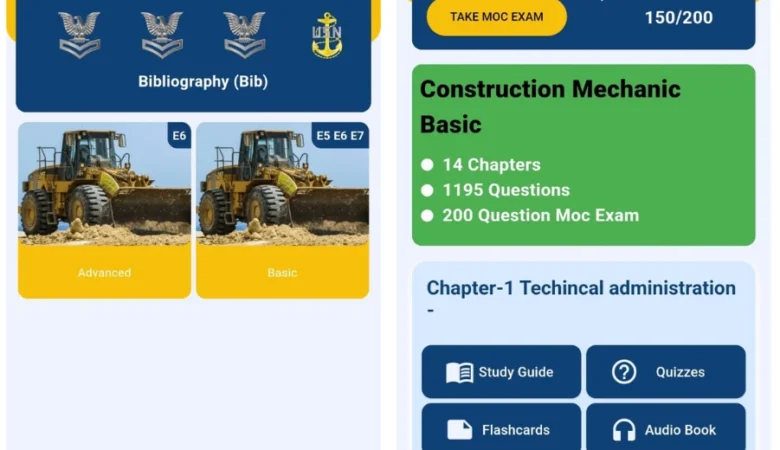
SeaBee – The Best Navy
SeaBee – The Best Navy Exam Study App Built for US Navy Seals Project Overview
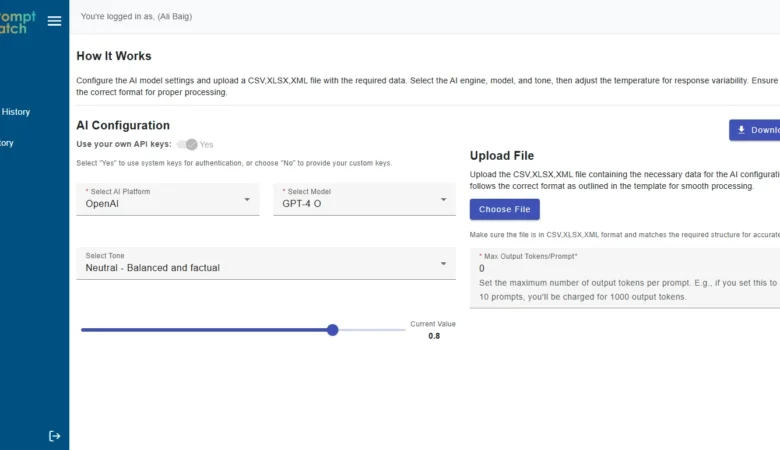
PromptBatch: Save 50% with AI
PromptBatch: The Best AI Batch Prompt Processing Web App | Orbilon Tech Project Overview PromptBatch
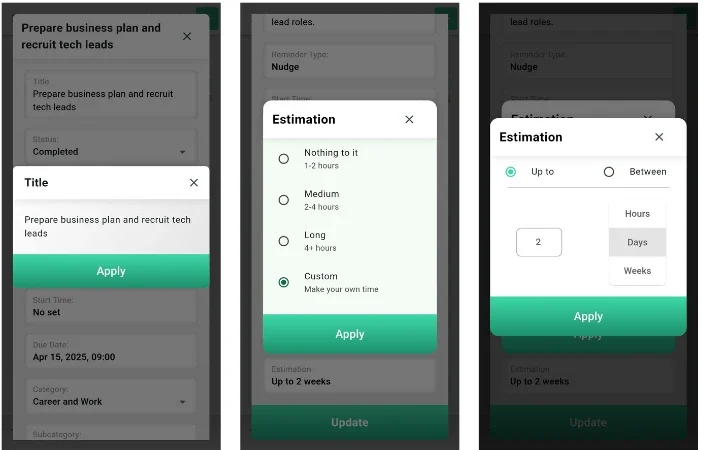
Spheres – The Revolutionary AI
Spheres – The Best AI Life Manager Mobile App That Actually Knows You Project Overview
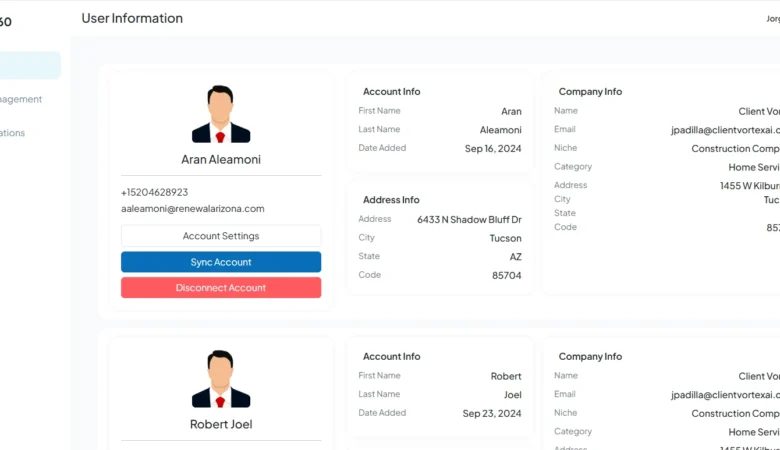
Rep360 AI – AI Bot
Rep360 AI – AI Bot Integration for GHL Workflows That Automates Sales Conversations Project Overview
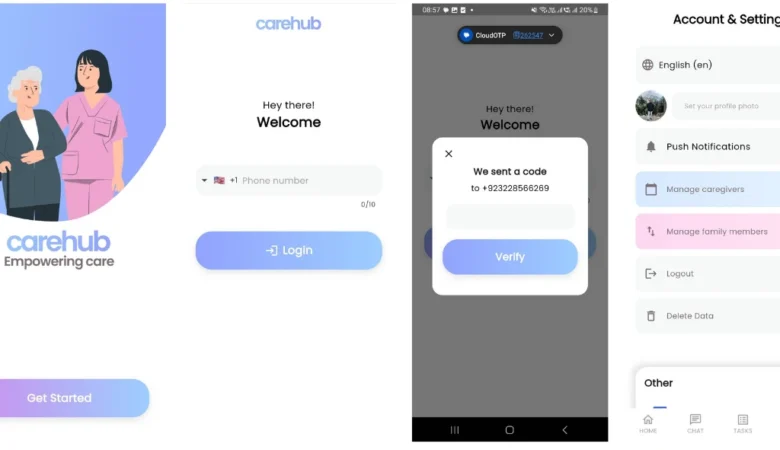
CareHub – Powerful Caregiver Communication
CareHub – Caregiver Communication App With Auto Translation CareHub App – Empowering Care CareHub is
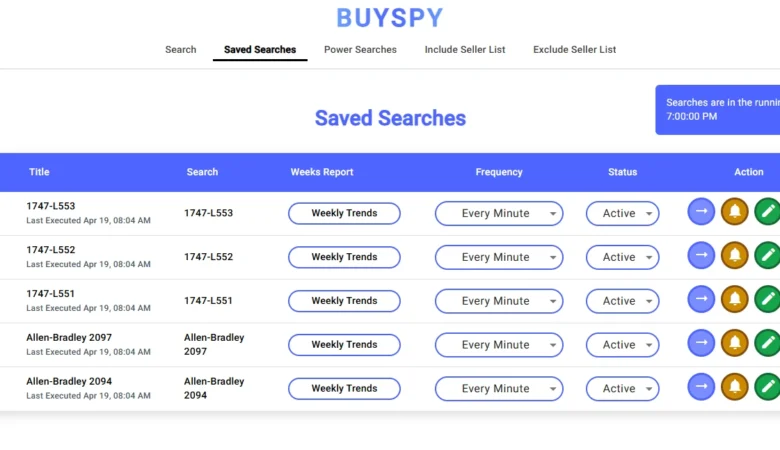
BuySpy – Ultimate Real-Time eBay
BuySpy — A Powerful Real-Time eBay Search Alerts App for Web & Mobile BuySpy is
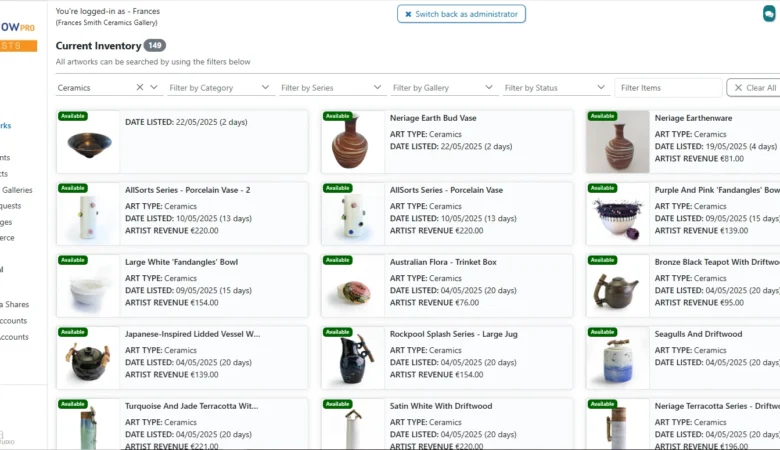
ArtFlow Pro — The Art
ArtFlow Pro — Full-Stack Art Gallery SaaS Platform for Artists & Galleries ArtFlow Pro –
Reviews on Clutch — Independently Conducted, Not Edited
Here’s what some of our clients say:
Want to Hire Us?
Are you ready to turn your ideas into a reality? Hire Orbilon Technologies today and start working right away with qualified resources. We will take care of everything from design, development, security, quality assurance, and deployment. We are just a click away.