AI Development in Baltimore - Maryland | Orbilon Tech
A 14-Month Timeline That Reshaped Baltimore's AI Landscape — and Why Most Local Vendors Haven't Caught Up Yet
AI development in Baltimore looks very different in 2026 compared to just 18 months ago. Things changed fast, in quick bursts, and they’re reshaping what serious AI companies should be focusing on in this market. If you’re looking into AI development in Baltimore now, here’s a quick rundown of how the city has shifted.
March 2025. Techstars started its first AI Health Baltimore accelerator class with Johns Hopkins University and CareFirst BlueCross BlueShield. Founders working on solutions for IVF, cancer detection, and mental health services came to Baltimore, bringing AI healthcare ideas from places like Delaware and Buenos Aires.
February 2026. The Greater Baltimore Committee announced a bigger partnership. The University of Maryland Medical System, the University of Maryland, Baltimore, and MedStar Health joined CareFirst and Hopkins as main partners for Techstars AI Health Baltimore. This was the first time in the region’s history that the four largest healthcare institutions in Maryland teamed up for a single accelerator.
Ongoing 2025-2026. Johns Hopkins Medicine sped up construction on its new Life Sciences Building at the corner of Broadway and East Monument Street in East Baltimore. The two main investments in this building are both about AI: a tech hub for new computer methods, and well-funded interdisciplinary spaces that help different teams collaborate across the Hopkins Data Science and AI Institute.
April 2026. The City of Baltimore sued xAI, SpaceX, and X in the Baltimore City Circuit Court over content generated by Grok. No matter how that case turns out, the message to local AI companies was clear: Baltimore plans to be a city that holds AI responsible, and AI companies working here should expect public scrutiny of their products and the data they use to train them.
Continuous through 2025-2026. The Hopkins Artificial Intelligence and Technology Collaboratory for Aging Research, funded by the National Institute on Aging, made progress on engineering new ways to combine AI with wearable tech, smart devices, remote patient monitoring, and AI-powered data analysis for older adults. The Malone Center for Engineering in Healthcare continued its multi-year effort to find cancer early using CT scans with AI.
The trend in all these developments is obvious. Baltimore is becoming a hub for AI focused on healthcare and aging, very precise AI engineering linked to research at Hopkins and the University of Maryland, and a public stance that takes AI accountability seriously.
For local businesses building AI products, that combination changes everything. The buyers your AI sells to — like practices connected to Hopkins, CareFirst, UMMS, MedStar, Maryland-based insurers, and biotech firms — are now part of a citywide AI environment that expects top-notch clinical standards, scientific openness, and responsible engineering. Choosing the best AI development company in Baltimore right now isn’t about picking the flashiest chatbot maker. It’s about finding a partner who can genuinely join the important conversations and work with the institutions the city has just publicly brought together.
Orbilon Technologies builds AI for businesses ready to work at that level — things like LLM integrations, machine learning models, predictive analytics, autonomous AI agents, and smart automation that fit with your current systems. When you hire AI developers in Baltimore through us, you get experienced engineers focused on building AI that’s ready for real-world use and can pass inspections.
Three Questions to Ask Before Hiring Any AI Vendor in Baltimore
Most AI agency conversations get sidetracked by feature lists. Ours don’t, because the questions that actually predict project success are different from the questions buyers usually start with.
If you’re evaluating AI vendors for a Baltimore project — healthcare, finance, biotech, defense-adjacent, consumer, or anything else — these are the three questions that surface what really matters.
- What review or audit does this AI eventually face? If your AI ends up reviewed by FDA staff, Hopkins IRB committees, CareFirst medical directors, or Maryland Insurance Administration examiners, the engineering choices made in sprint one shape whether the system survives that review. Decision logging, output explainability, bias detection documentation, data lineage tracking, model versioning, and retention-friendly architecture either exist from the first commit or get bolted on later at three to five times the original cost. A vendor who can’t tell you what review pattern your project faces hasn’t thought hard enough about the project.
- Who actually owns the data this AI sees? Baltimore healthcare AI projects routinely involve PHI from Hopkins, MedStar, or UMMS systems. Financial AI projects touch T. Rowe Price-grade data. Research AI projects work with Hopkins-controlled datasets. The data ownership, retention, deletion, and Business Associate Agreement structure either gets clarified before any code ships, or it surfaces as a blocker three months in.
A vendor who waves off the data question and rushes to build is the vendor whose project gets paused before launch. - What happens to this AI when the underlying model changes? OpenAI deprecates models. Anthropic releases new versions. Open-source AI models update monthly. AI projects built on a single foundation model with no abstraction layer break the moment that model changes. Real production AI systems include model versioning, A/B testing infrastructure, fallback paths, and the ability to swap models without rewriting the application. A vendor whose architecture assumes today’s model lasts forever is building you a maintenance bill, not a product.
How Baltimore's Sectors Actually Use AI (and What Each Buyer Group Cares About)?
Generic AI consulting fails in Baltimore because the buyer landscape is too sector-specific. What clears procurement at a Hopkins-affiliated practice fails at T. Rowe Price. What works at a CareFirst-adjacent startup gets ignored by Hopkins APL.
- Real AI development in Baltimore understands these differences from the first conversation, not the third. Healthcare AI lives at the center of Baltimore’s AI economy. Hopkins Medicine’s Malone Center for Engineering in Healthcare, the Hopkins AITC for aging research, and the four-institution Techstars AI Health collaboration have made Baltimore the national epicenter of clinical AI partnerships. The top AI solutions in Baltimore, MD, now include cancer detection, IVF, mental health services, aging-related cognitive monitoring, and care coordination. Compliance with HIPAA, FDA AI/ML guidance, and clinical validation pathways isn’t optional — it’s table stakes for healthcare AI services Baltimore buyers will actually pay for.
- Financial services AI runs against T. Rowe Price-grade compliance frameworks. SOC 2 readiness, audit-trail architecture, model risk management documentation, and SR 11-7-aligned governance shape how AI gets evaluated. Custom machine learning in Baltimore for portfolio recommendations, risk modeling, fraud detection, and customer service automation must operate inside frameworks that regulators recognize.
- Biotech AI serves Maryland’s broader life sciences ecosystem — the 1,800-plus life sciences companies operating across the state, Hopkins research outputs, and the broader biotech corridor. AI for drug discovery, computational chemistry, multi-omics analysis, and clinical trial optimization must produce reproducible, citation-trail-friendly outputs that hold up to scientific peer review.
- Defense-adjacent AI flows through Hopkins APL relationships and the broader Baltimore-Washington defense corridor. AI products in this space face air-gapped deployment requirements, FIPS-validated cryptography, supply chain security documentation, and CMMC-aware development workflows. Generic commercial AI offerings rarely pass these requirements.
- Cybersecurity AI operates in an environment where Blackpoint Cyber’s $190 million growth round, BlueSteel Cybersecurity’s CMMC-focused work, and Maryland’s broader cybersecurity industry are setting the technical bar. AI products serving this market need to defend against the same threat models the buyers themselves are protecting against.
- Consumer-facing AI in Baltimore serves a population where the third-highest concentration of advanced-degree holders in the country sits next to neighborhoods with substantial Spanish-speaking, Korean-speaking, and other multilingual communities. Real consumer AI for Charm City reflects that diversity in language coverage, accessibility, and design.
The pattern across all six sectors: Baltimore’s buyers expect AI vendors to know which sector they’re selling into, and to architect accordingly.
The AI Architecture We Build (and Why Each Layer Earns Its Place)
We could list every AI tool that exists. We don’t, because every project we ship ends up using a small set of well-chosen tools — not the long catalog most agencies present in proposals.
- For language and reasoning models, we use OpenAI API, Anthropic Claude, LangChain, and custom fine-tuned models — chosen by data sensitivity, latency requirements, and the specific reasoning patterns your use case actually needs. As LLM developers in Charm City serving healthcare, finance, and biotech projects, we tend to push toward stricter privacy controls and on-premise options. Consumer projects tend to go API-first.
- For predictive modeling and machine learning, we use TensorFlow, PyTorch, scikit-learn, and XGBoost — chosen by data volume, pattern complexity, accuracy thresholds, and how much explainability your audit reviewers expect. Generative AI consulting in Maryland increasingly means choosing the right combination of foundation model and custom fine-tuning, not picking the model with the biggest marketing budget.
- For data pipelines, we use Python, Apache Airflow, Pandas, and custom ETL workflows — the plumbing that turns raw operational data into clean inputs production AI can actually use without contamination.
- For retrieval-augmented generation, we use Pinecone, Weaviate, ChromaDB, and pgvector — letting your AI reference your own documents, knowledge bases, and proprietary content with citation trails the audit reviewer can actually follow.
- For MLOps and deployment, we use AWS SageMaker, Azure ML, Docker, Kubernetes, and CI/CD pipelines — production deployments with model versioning, automated retraining, drift detection, and audit logging that satisfy regulatory reviewers.
- For enterprise integrations, we connect to Salesforce, HubSpot, EHR systems via FHIR, banking APIs, laboratory information systems, and the custom enterprise connectors that Baltimore healthcare and finance projects always need.
Our Clutch profile shows what audit-aware AI work produces in real production. The 4.96 rating reflects projects, not promises.
AI and Software Services for Baltimore's Sectors
- We do a lot of work with AI Development and Integration. This includes building custom systems that use something called LLM, which is a type of computer program. We also work with NLP pipelines, computer vision, predictive analytics, and intelligent document processing. The best part is that we make sure our systems are transparent and explainable so people can trust them.
- We also build Agentive AI Apps. These are like robots that can handle tasks on their own, like routing claims, scheduling appointments, and reviewing documents. But we also make sure that humans are involved in the process so everything runs smoothly.
- When it comes to websites, we use AI to make them smarter. We use something called React and Node.js to build websites that can search for things on their own, personalize content, and automate workflows.
- We also build Mobile Apps that use AI. These apps can do things like recognize faces, make predictions, and help people in healthcare, finance, and biotech.
- For people who sell things online, we build E-commerce platforms that use AI to recommend products, predict demand, and prevent fraud. We also help them with pricing so they can stay competitive.
- Some companies in Baltimore need help with sales, so we build Custom CRM systems that use AI. This helps them score leads, predict when someone might stop being a customer, and analyze how people feel about their products.
- We also build SaaS products that use AI. This means that the product is powered by machine learning, which is a type of computer program that can learn and improve on its own.
- When we design interfaces, we make sure that people can understand how AI is making decisions. We show them things like confidence scores, audit trails, and explanations so they can trust the system.
- Finally, we work with Cloud Infrastructure and DevOps. This means we use something called MLOps to host our models on cloud platforms like AWS or Azure. We make sure that our models are up to date, secure, and follow all the rules, like HIPAA and SOC 2.
What We Build. What We Won't Build. (And Why That Distinction Matters in Baltimore.)
Most agencies show what they’ve shipped and stay quiet about what they refuse. We’re more direct, partly because Baltimore’s buyers respect that honesty more than the alternative.
What we won’t build. AI that generates non-consensual sexualized imagery of any kind. AI optimized for engagement-maximizing addictive loops without user-wellbeing safeguards. AI that obscures decisions from the people affected by them. AI for use cases where the business model conflicts with patient, customer, or worker well-being. The Baltimore lawsuit against xAI in April 2026 isn’t an outlier opinion in this city — it reflects how seriously the local government and institutions take AI accountability. Our refusal list aligns with that reality.
What we have built. The three products below are in active production. Each one was built by the same engineers who would handle your Baltimore AI project.
- Rep360 AI — Autonomous Lead Routing: A web-integrated AI system inside GoHighLevel that ingests leads from multiple channels, applies qualification logic, generates personalized multi-step follow-up sequences, and routes high-value prospects without human intervention between trigger and action. What it shows: hands-off intelligent automation built on production-grade infrastructure. Useful for Baltimore’s healthcare networks, fintech vendors, and B2B technology firms managing relationship-driven sales cycles into Hopkins, T. Rowe Price, CareFirst, and CFG Bank accounts. Speed of response often determines whether an enterprise deals close locally or drifts to competitors.
- ArtFlow Pro — Multi-Tenant Enterprise AI Platform: A full-stack web application with role-based access controls, tiered subscription billing, comprehensive admin dashboards managing hundreds of accounts, and integrated payment processing — the architectural pattern enterprise AI platforms require when serving multiple departments, research groups, or institutional clients. What it shows: multi-tenant, role-isolated, audit-ready infrastructure. Useful proof for Baltimore healthcare networks running AI across multiple facilities, biotech research platforms serving multiple institutions, and AI products that need to scale across departmental boundaries.
- Spheres — Consumer-Grade AI on Real App Stores: A consumer mobile product powered by OpenAI that converts natural language input into organized daily plans, prioritized task lists, and goal tracking. Built with Flutter, deployed to App Store and Google Play, with verified user ratings and active retention. What it shows: we don’t only ship enterprise AI hidden behind procurement firewalls. We ship consumer AI products that compete on real app stores against well-funded products. Useful proof for Baltimore consumer brands evaluating whether we can match coastal-tech polish in AI features.
Work Highlights
Some of our best works from many
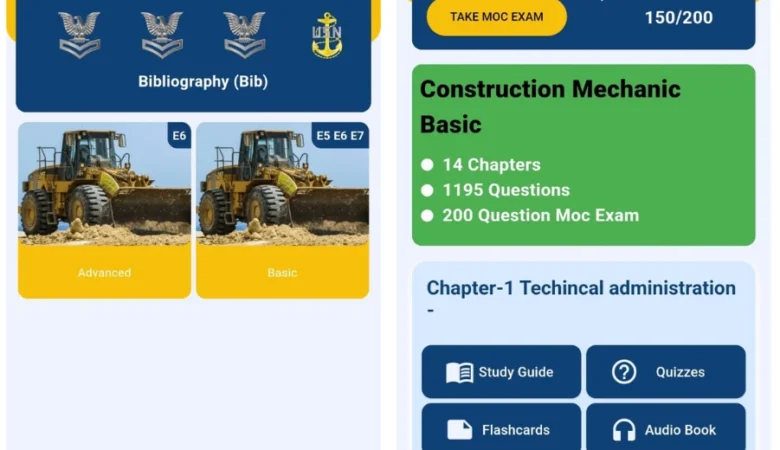
SeaBee – The Best Navy
SeaBee – The Best Navy Exam Study App Built for US Navy Seals Project Overview
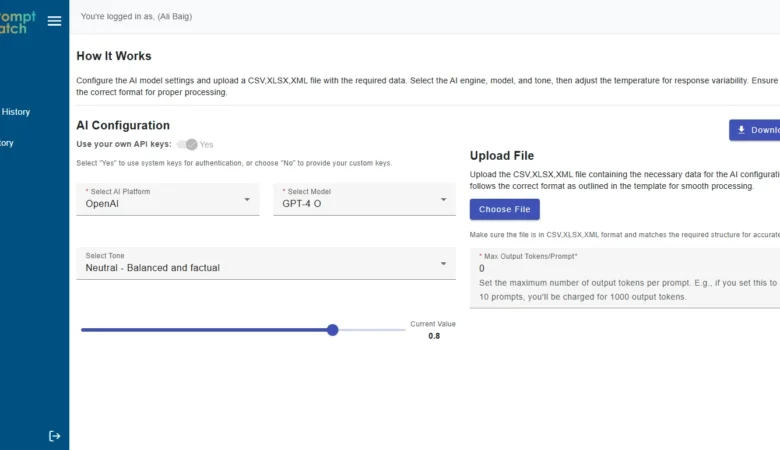
PromptBatch: Save 50% with AI
PromptBatch: The Best AI Batch Prompt Processing Web App | Orbilon Tech Project Overview PromptBatch
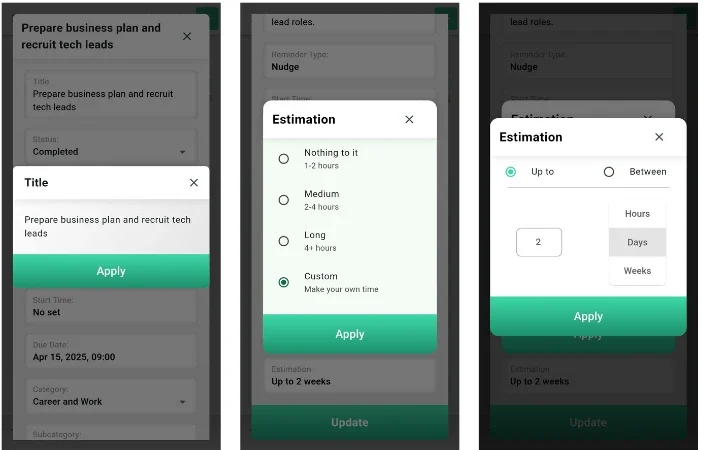
Spheres – The Revolutionary AI
Spheres – The Best AI Life Manager Mobile App That Actually Knows You Project Overview
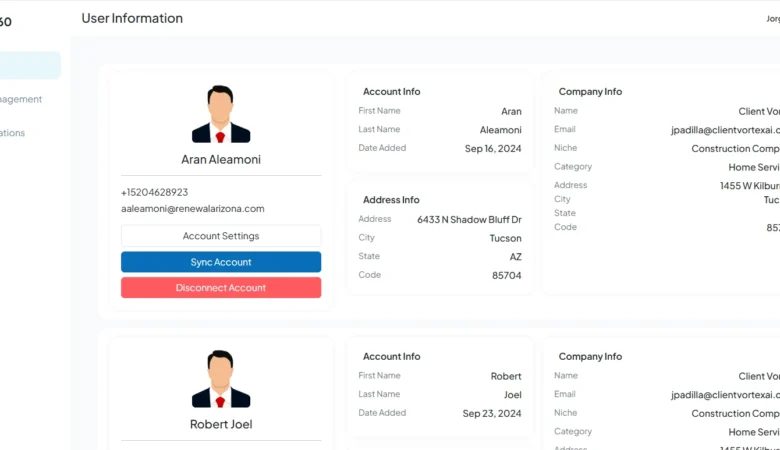
Rep360 AI – AI Bot
Rep360 AI – AI Bot Integration for GHL Workflows That Automates Sales Conversations Project Overview
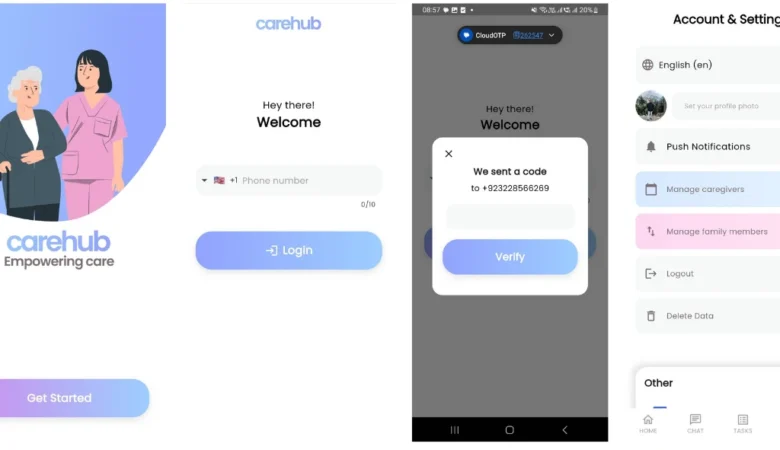
CareHub – Powerful Caregiver Communication
CareHub – Caregiver Communication App With Auto Translation CareHub App – Empowering Care CareHub is
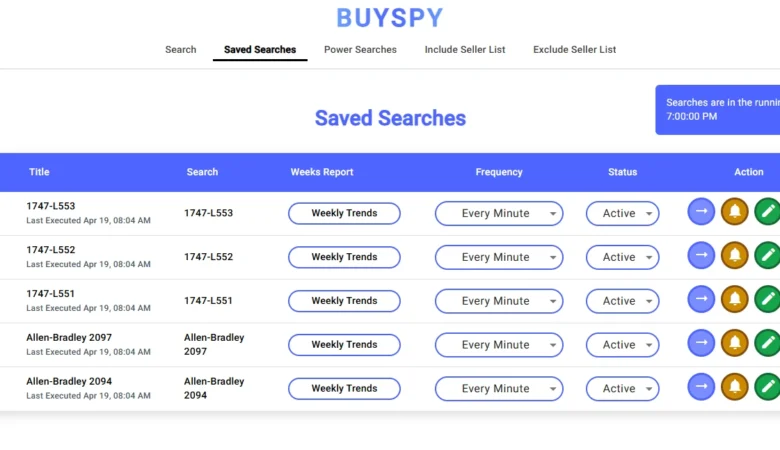
BuySpy – Ultimate Real-Time eBay
BuySpy — A Powerful Real-Time eBay Search Alerts App for Web & Mobile BuySpy is
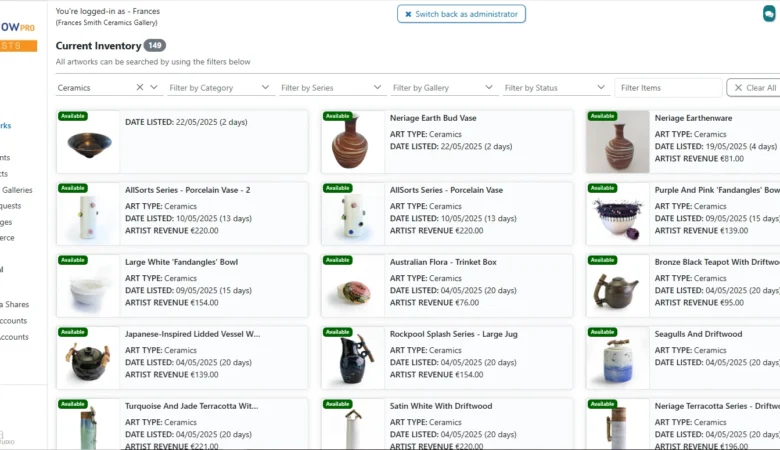
ArtFlow Pro — The Art
ArtFlow Pro — Full-Stack Art Gallery SaaS Platform for Artists & Galleries ArtFlow Pro –
Reviews on Clutch — Conducted by Clutch, Not Curated by Us
Here’s what several of our clients have to say about our services.
Want to Hire Us?
Are you ready to turn your ideas into a reality? Hire Orbilon Technologies today and start working right away with qualified resources. We will take care of everything from design, development, security, quality assurance, and deployment. We are just a click away.