
AI Development in Charlotte, North Carolina | Orbilon Tech
The Bank That Spends $13 Billion a Year on Tech Is Running Production AI From Your Backyard
AI development in Charlotte happens inside the most aggressively AI-driven banking corridor in the United States. Bank of America, headquartered in Uptown Charlotte, announced a $13 billion technology budget for 2026, with 44% of that spending growth focused on new capabilities, including AI.
The bank now runs more than 270 AI and machine learning models in production across its operations, with 213,000 employees gaining structured access to AI tools and 18,000 developers equipped with GitHub Copilot, generating productivity gains of 20%. Erica, the bank’s AI virtual financial assistant launched from Charlotte in 2018, has now surpassed three billion client interactions, serves nearly 50 million users, and resolves 98% of customer inquiries without human escalation.
This is the operating context for any AI vendor pitching into the Queen City. The bar has been set by an institution that spends more on AI infrastructure in a single year than most cities spend on their entire technology budget combined.
The same dynamic plays across the rest of the metro. Truist runs its own enterprise AI initiative from Charlotte. Wells Fargo’s East Coast division headquarters operates inside this same AI-driven banking layer. Atrium Health and Novant Health, the metro’s largest and fifth-largest employers, deploy AI across clinical workflows, patient experience platforms, and back-office automation.
PwC, Sia Partners, Capco, EY, and Deloitte run dedicated AI consulting practices serving Charlotte’s financial services market. Specialist Charlotte AI firms, including AICG, Atando Technologies, Stratifyd, Quarule, Fastbreak AI, and Trailhead Technology Partners, serve credit unions, healthcare, sports analytics, and compliance automation, respectively. Coinbase, Credit Karma, Vanguard, JPMorgan Chase, and Honeywell add deep enterprise AI demand layered on top of the city’s banking core.
For businesses looking for the best AI development company in Charlotte, one that ships AI cleared for bank-grade procurement review, HIPAA-aware healthcare compliance, and the engineering scrutiny Bank of America and Truist tech teams bring to every vendor evaluation, Orbilon Technologies delivers custom AI solutions in Charlotte end-to-end. LLM-powered systems, retrieval-augmented generation (RAG) pipelines, machine learning models, autonomous AI agents, and the production observability and cost-governance infrastructure these systems need to run for years instead of weeks.
What "Production AI" Actually Means When the Buyer Spent the Last Five Years Watching Erica Scale?
Most national AI vendor pitches treat Charlotte as a friendly mid-market for AI. That assumption breaks the moment a Bank of America technology director, a Truist enterprise architect, or an Atrium Health clinical AI lead opens the build. The Queen City’s AI buyer base has been shaped by watching one of the most successful enterprise AI rollouts in financial services history happen in its backyard, and the expectations have hardened accordingly.
Here is what serious fintech AI development Charlotte and HIPAA AI healthcare Charlotte work actually has to clear.
- Hallucination rates have to be measured, not assumed. Bank-tech and healthcare AI buyers expect documented hallucination rates on representative test sets, retrieval grounding metrics, citation accuracy scores, and refusal rates verified against the customer’s own data. Hire AI engineers in Charlotte who cannot tell you their measured hallucination rate on your specific corpus, and you have hired a demo team. Bank of America trained Erica on a library of more than 700 responses with over 75,000 system updates since launch. That is the operational rigor Charlotte AI buyers benchmark against.
- Evaluation harnesses ship with the system, not after launch. Production AI shipped into Charlotte arrives with Ragas, DeepEval, Promptfoo, or custom evaluation frameworks built around the actual use case. Continuous evaluation runs in production, with drift detection, regression testing on prompt changes, A/B testing of model versions, and quality dashboards that flag decay before users complain. Buyers shaped by financial services SLA culture expect this level of observability from day one.
- Prompt-injection defenses are a required posture, not a bonus. Apps that take untrusted input and feed it to an LLM, including customer support bots, document analyzers, and agentic systems, face active prompt-injection attempts in production. Layered defenses, including input filtering, output validation, structured-output schemas, sandboxed tool calls, and explicit authority boundaries, are baseline. Procurement reviewers who have read the OWASP LLM Top 10 ask about every one of these.
- AI governance documentation is now part of vendor packets. Bank-tech procurement requires AI vendors to demonstrate alignment with the NIST AI Risk Management Framework, document model selection rationale, and explain how the system handles edge cases, refusals, and human escalation. Vendors who treat governance as a launch-week PDF lose deals to vendors who built it in from sprint one.
- Cost governance is the new cloud cost governance. AI systems running thousands of inferences per day burn real money fast. Production Charlotte builds a ship with per-user, per-feature, and per-tenant cost ceilings, intelligent model-routing that uses cheaper models for easier requests, semantic caching that prevents duplicate calls, and dashboards that flag cost anomalies before the monthly bill arrives. Our PromptBatch platform was engineered specifically for this layer.
- Model versioning and rollback work the same way as code deployments. Production AI pins model versions, runs shadow deployments of new versions against old ones, A/B tests prompt changes, and rolls back instantly when quality regresses. Without this discipline, every upstream model update from OpenAI or Anthropic becomes a surprise incident.
The Three AI Architectures That Hold Up in a Charlotte Engineering Review
When you’re building an AI project in Charlotte, the most important decision you’ll make is how the whole system is structured. The best AI teams in Charlotte always start by figuring out which of three main approaches their project needs, because picking the wrong one can lead to months of extra work.
- Pattern 1: Retrieval-Augmented Generation (RAG). This is the right approach when the AI needs to answer questions by looking through a customer’s own documents. Think company protocols, scientific papers, code, or product guides. Special databases (like Pinecone, Weaviate, Qdrant, ChromaDB, pgvector) store these documents in a particular way. The system uses a mix of smart searching and keyword searches to find information, and then other tools (like Cohere Rerank or cross-encoders) help pull out the most relevant bits. You can even trace every answer back to its source. For AI projects in Charlotte focused on banking tech, healthcare, legal, and scientific fields, RAG is often the first choice.
- Pattern 2: AI Agents and Tool-Using Systems. This option is best when the AI needs to actually do things, not just give information. This could mean it calls other software (APIs), searches databases, kicks off workflows, schedules tasks, or manages bigger, multi-step operations. These systems are set up so the AI can use tools in a structured way, run in secure environments, and have clear limits on what they can do. For important actions, a human can check things over, and there’s a record of every tool use. They’re really handy for automating sales processes, routing claims, checking documents, scheduling appointments, and handling all kinds of back-office tasks that Charlotte’s fintech and healthcare companies are increasingly using.
- Pattern 3: Fine-tuned and Specialized Models. This is the best choice when a regular AI model struggles with very specific industry terms, needs to format its answers in a particular way, or just doesn’t behave quite right, even with careful instructions. Here, you’ll specifically train the AI using your own annotated documents, like banking papers, medical notes, legal contracts, or other private data. You might also use smaller, specially tweaked models (like Phi or Gemma) for high-volume jobs like sorting information or classifying things. Biotech teams in the Triangle area and clinical research groups in Charlotte often find this pattern useful when they’re building very specific analysis systems.
Most AI systems that are actually used day-to-day combine all three of these approaches. They might use a main, powerful AI for complex thinking, RAG to ensure it’s using the right information, agents to take action, and then special models added in for specific tasks. Teams that try to use just one pattern for everything and force it to work often find themselves rebuilding the whole thing within a year.
Choosing Between OpenAI, Anthropic, and Open-Source Models for Your Charlotte Build
The model selection decision is its own engineering discipline. LLM development Charlotte, NC teams have to weigh reasoning quality, latency, cost per call, data residency, fine-tuning needs, and regulatory posture all at once. There is no universal right answer, only the right answer for your data and your buyer.
- OpenAI (GPT-4.1, GPT-4o, GPT-4o mini). The right choice when broad reasoning quality matters most, when the team needs the strongest off-the-shelf coding and math performance, and when ecosystem maturity (function calling, structured outputs, vision, real-time API) outweighs other concerns. Higher per-token cost balanced against shorter time to working product. Strong fit for general-purpose customer support, document understanding, and content generation use cases.
- Anthropic Claude (Sonnet 4, Opus). The right choice when long-context reasoning, careful instruction following, and lower hallucination rates matter most. Strong fit for healthcare-adjacent AI where careful, hedged answers beat confident wrong ones, for legal and compliance analysis where precise instruction following is critical, and for agentic workflows where Claude’s tool use and reasoning quality have been engineered as primary features.
- Open-source models (Llama, Mistral, Qwen, DeepSeek). The right choice when data sensitivity rules out external API calls, when on-premise deployment is a regulatory or contractual requirement, when workload volume makes self-hosted inference economically dominant, and when fine-tuning on proprietary data produces compounding gains. Charlotte bank-tech buyers operating under strict data residency requirements increasingly default to self-hosted Llama or Mistral deployments.
- Specialty and small models. Embeddings (OpenAI text-embedding-3, Cohere, Voyage), reranking (Cohere Rerank), and small task-tuned models (Phi, Gemma) layered into systems where a flagship model would be overkill or too slow. Cost-aware Charlotte buyers running thousands of inferences per day demand this layered architecture, not single-model deployments.
- Custom fine-tuned models. The right choice when domain-specific terminology, output formatting, or behavior cannot be reliably elicited from a base model with prompting. Triangle Biotech and Charlotte clinical research teams running specialized analysis pipelines, and fintechs with proprietary annotated datasets, are typical users. Generative AI development in Charlotte for banking and fintech increasingly uses fine-tuning on regulatory documents, internal policies, and historical transaction data.
The wrong move is picking a model based on whichever benchmark trended last week. The right move is benchmarking models on your data, your prompts, and your evaluation criteria before signing the production contract.
Safety, Compliance, and Governance Built for Bank-Adjacent AI
AI compliance is its own category. It is not web compliance with a chatbot bolted on, and it is not generic SOC 2 with an AI clause appended. The threat model is different, the failure modes are unique, and the procurement reviewers asking questions in Charlotte have learned to look in specific places.
- HIPAA-aware AI architecture is non-negotiable for Atrium and Novant-adjacent products. With Charlotte’s hospital systems actively building AI into clinical workflows, AI vendors face Business Associate Agreements (BAAs), encrypted data flows, audit logging that meets HIPAA standards, and deployment patterns that keep Protected Health Information out of training pipelines and external API calls. Self-hosted models or HIPAA-eligible cloud AI services (AWS Bedrock with BAA, Azure OpenAI under BAA) are baseline.
- Bank-tech procurement layers SOC 2, PCI DSS, and GLBA on top. Financial services AI vendors face SOC 2 Type II expectations, PCI DSS scope considerations where payment data is in scope, OFAC sanctions screening on user-facing flows, and Gramm-Leach-Bliley Act safeguards on customer financial data. Machine learning development in Charlotte for bank-tech has its own procurement runway, often measured in months rather than weeks.
- PII detection and redaction run inline. Regulated AI workflows, including clinical notes, customer support tickets, and internal documents, pass through PII scrubbing before context reaches the model and again before output reaches the user. Microsoft Presidio, AWS Comprehend, and custom rule-based filters are all in the toolbox.
- NIST AI Risk Management Framework alignment is now standard procurement language. The AI RMF defines the language that federal agencies, regulated industries, and increasingly state agencies use to describe AI risk. Charlotte buyers shaped by financial services compliance culture expect AI systems to map cleanly to the core functions (Govern, Map, Measure, Manage). Vendors who cannot speak this language lose deals to vendors who can.
- Audit trails are designed in, not added later. Every AI decision in a production Charlotte system gets logged with input, retrieved context, model used, output, confidence signals, and downstream actions. Reviewers can trace any answer back to its source data and its decision path. This is what makes AI systems explainable in the regulatory sense, not just technically.
- Prompt-injection resistance gets pen-tested. Healthcare-adjacent AI, government-touching AI, and financial AI all face active manipulation attempts through user input. Defense layers, including instruction hierarchy enforcement, user-input quarantining, structured-output schemas, tool-call authority boundaries, and output filtering, get tested directly by the buyer’s security team before procurement signs off.
The teams that win Charlotte AI deals treat safety, privacy, and governance as engineering problems with engineering solutions, not policy documents written after launch.
AI Service Stack Organized for Charlotte's Industry Mix
Charlotte’s AI demand spans several overlapping markets, including banking and fintech, healthcare and clinical, B2B and SaaS, and consumer-facing brands. We organize our work around how the buyers actually think about it rather than offering a single AI template.
Core AI Services, the intelligence itself:
The deliverables that put production AI into the customer’s hands.
- AI Development & Integration: Custom LLM systems, NLP pipelines, computer vision, predictive analytics, intelligent document processing, and the RAG infrastructure that grounds AI in your actual data. We build with evaluation harnesses, hallucination measurement, prompt-injection defenses, and the audit-grade documentation Charlotte buyers expect.
- Agentive AI Apps: Autonomous AI agents for claims routing, appointment scheduling, document review, research synthesis, and approval workflows. Built with human-in-the-loop oversight, structured tool calling, sandboxed execution, and audit-grade logging that holds up under regulatory and engineering review.
Product Surfaces Where AI Lives: How users meet the model
AI rarely ships as a standalone product. It lives inside an app, a website, a SaaS platform, or a CRM workflow. The surface matters as much as the model.
- Web Development: AI-enhanced web platforms with intelligent search, content personalization, document understanding, and chat interfaces engineered to hold up under real production load. We build sites where AI feels integrated rather than bolted on.
- Mobile App Development: Mobile apps with on-device machine learning through Core ML and TensorFlow Lite, LLM-powered features, Apple Intelligence integration, and AI-driven personalization deployed cleanly to App Store and Google Play. The mobile AI surface Queen City consumer and enterprise users have already been trained to expect.
- SaaS Product Development: AI-native SaaS platforms where machine learning drives the product engine, with subscription billing, role-based access control, multi-tenant data isolation, and the kind of observability that lets B2B SaaS founders prove ROI to fintech and healthcare buyers.
- Custom CRM Development: CRM platforms with AI-powered lead scoring, churn prediction, conversation summarization, sentiment analysis, and pipeline automation. Built to slot into the workflows fintech sales teams selling into Bank of America and Truist already run.
- E-commerce Development: E-commerce platforms with AI-driven product recommendations, demand forecasting, fraud prevention, and conversational search. The retail AI surface Charlotte consumer brands and DTC operators need to compete against well-funded national competitors.
Foundations, what AI actually runs on:
Production AI is not a model behind an API key. It is an infrastructure stack with cost governance, observability, and a design system that makes AI decisions transparent.
- Cloud Infrastructure / DevOps: MLOps on AWS and Azure with model versioning, automated retraining, drift detection, audit logging, and HIPAA and SOC 2-aware hosting. The boring, defensible plumbing that turns AI from a science experiment into a defensible production system Charlotte procurement teams can actually approve.
- UI/UX Design: Interfaces that make AI decisions transparent, including confidence scores, citation trails, explainable outputs, and the patterns that earn user trust over time. The design layer that determines whether your AI feels intelligent or feels broken.
AI Builds Already Running for Real Users
We won’t pad this section with research-paper mockups. Two real AI systems already running for actual customers tell the story better than a deck of logos.
- PromptBatch: Enterprise AI Cost Governance at Real Scale – A SaaS web platform engineered for organizations running thousands of AI prompts daily across multiple departments, including granular cost tracking per API call, real-time usage dashboards, role-based access controls, batch processing optimization, semantic caching, and audit-ready logging that satisfies enterprise procurement. What it shows for Charlotte: the production AI cost-governance layer that Bank of America-grade enterprises, Atrium clinical AI initiatives, Truist enterprise AI programs, and Charlotte fintech founders scaling AI workflows across multiple teams all need. The boring, defensible plumbing that turns AI from a pilot project into a defensible production system reviewers will actually sign off on.
- Rep360 AI: AI Agents Inside Real Sales Workflows – An AI integration that sits inside GoHighLevel CRM workflows and automates sales conversations end-to-end, qualifying leads through natural-language interaction, booking appointments, handing off to humans where the conversation requires it, and feeding clean, structured data back into the CRM. What it shows for Charlotte: agentic AI that actually closes the loop with downstream systems. Webhook reliability, idempotent retries, prompt-injection-aware design, structured tool calling, and the observability that lets revenue teams trust AI with high-stakes interactions. The same architecture pattern healthcare AI agents, document-review agents for legal and compliance, and operations-automation agents for Charlotte back offices need from sprint one.
Work Highlights
Presenting some of our most impactful projects.
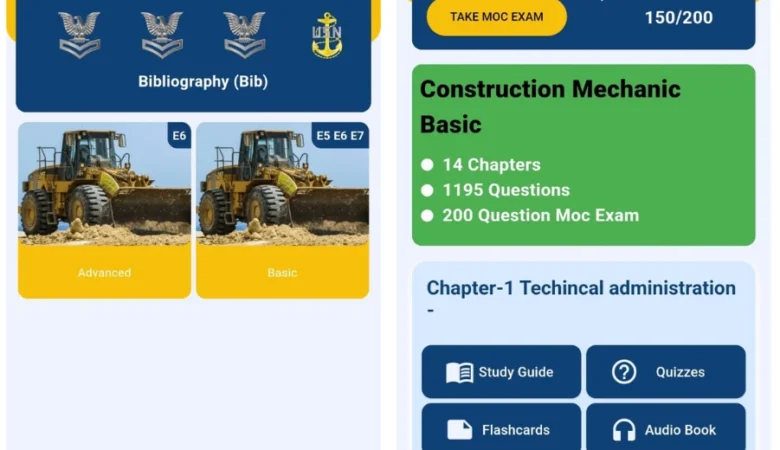
SeaBee – The Best Navy
SeaBee – The Best Navy Exam Study App Built for US Navy Seals Project Overview SeaBee is a free, comprehensive
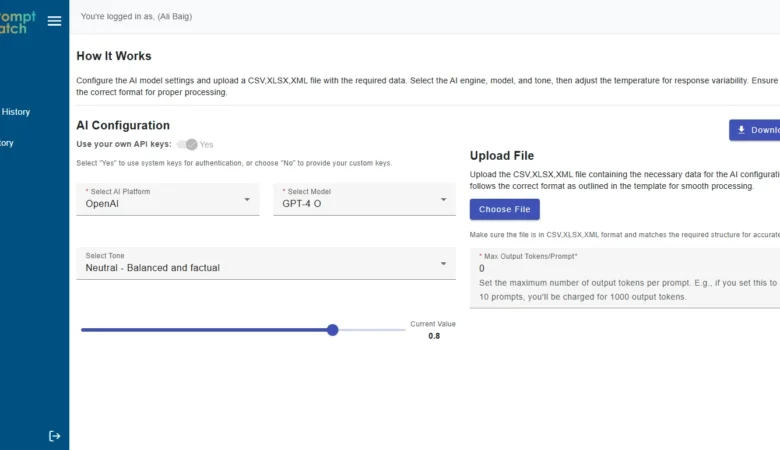
PromptBatch: Save 50% with AI
PromptBatch: The Best AI Batch Prompt Processing Web App | Orbilon Tech Project Overview PromptBatch Portal is a powerful AI
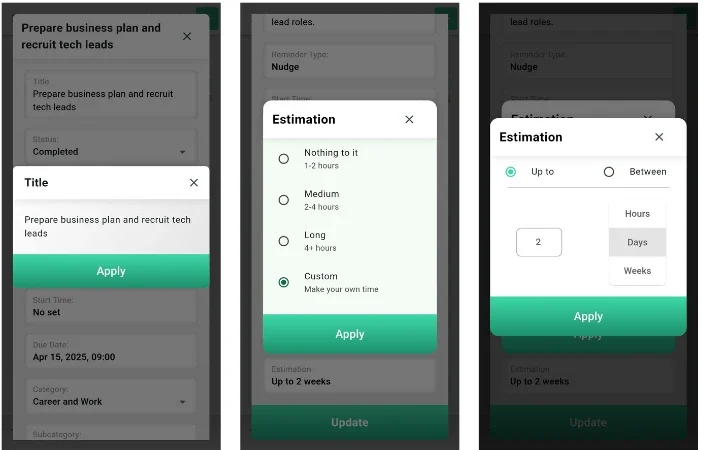
Spheres – The Revolutionary AI
Spheres – The Best AI Life Manager Mobile App That Actually Knows You Project Overview Spheres – Life Simplified is
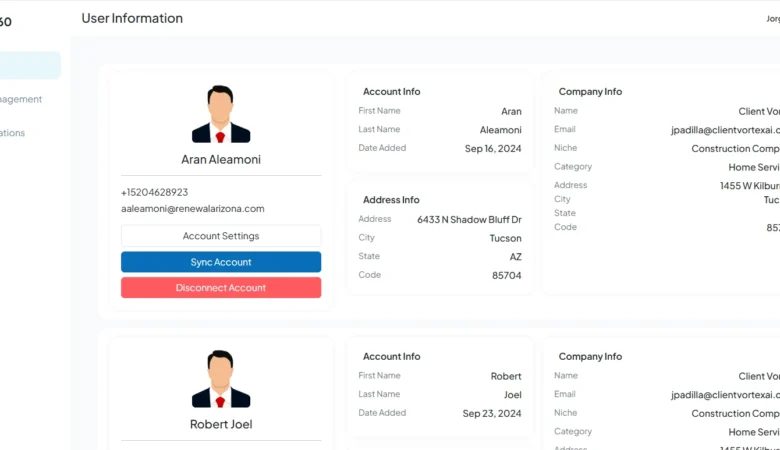
Rep360 AI – AI Bot
Rep360 AI – AI Bot Integration for GHL Workflows That Automates Sales Conversations Project Overview Rep360 AI is a fully
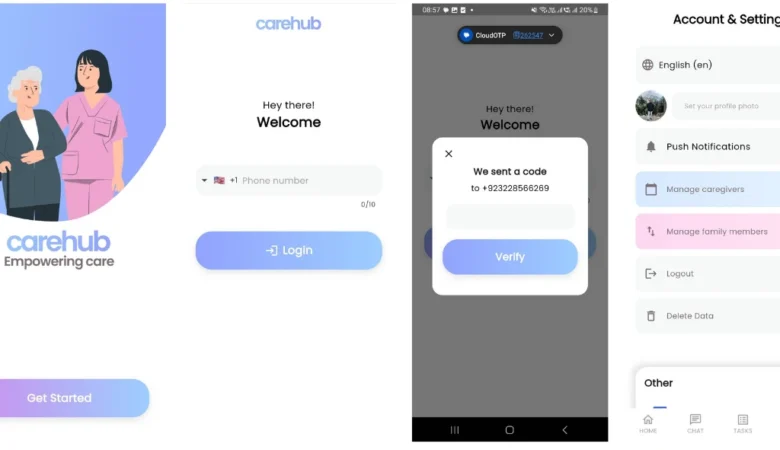
CareHub – Powerful Caregiver Communication
CareHub – Caregiver Communication App With Auto Translation CareHub App – Empowering Care CareHub is a powerful caregiver communication app
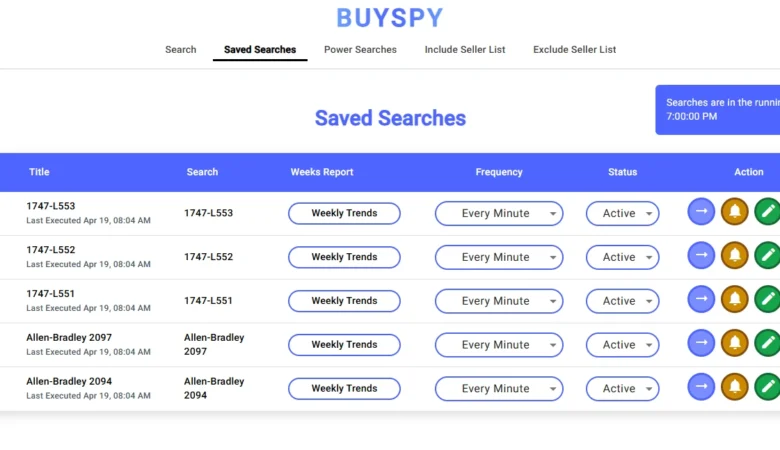
BuySpy – Ultimate Real-Time eBay
BuySpy — A Powerful Real-Time eBay Search Alerts App for Web & Mobile BuySpy is a real-time eBay search alerts
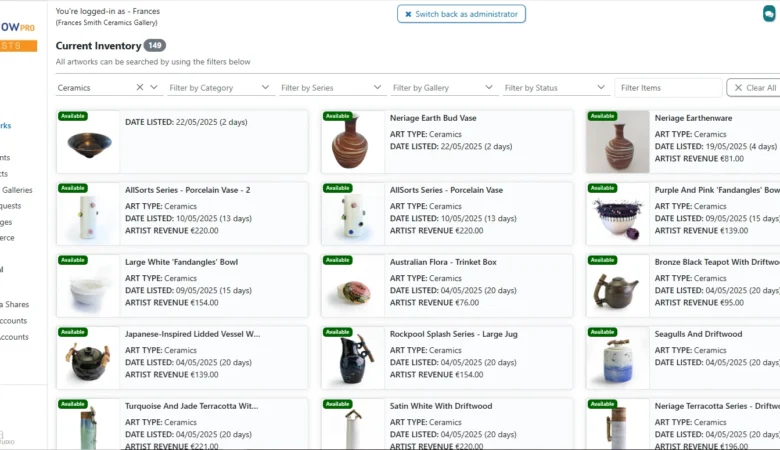
ArtFlow Pro — The Art
ArtFlow Pro — Full-Stack Art Gallery SaaS Platform for Artists & Galleries ArtFlow Pro – Streamline the Artwork Sales ArtFlow
Genuine Client Feedback on Clutch
Here’s what some of our clients have to say:
Want to Hire Us?
Are you ready to turn your ideas into a reality? Hire Orbilon Technologies today and start working right away with qualified resources. We will take care of everything from design, development, security, quality assurance, and deployment. We are just a click away.