
Web Development in Charlotte - North Carolina | Orbilon Tech
Ten Billion Dollars in Annual Tech Spending Walks Past Your Website Every Day in Charlotte
Web development in Charlotte does not happen in a friendly mid-sized market. It happens directly inside the second-largest banking center in the United States, where Bank of America alone reports allocating roughly $10 billion per year to technology projects. Charlotte’s tech buyer base has been shaped by that scale of spending for years, and the bar a website is judged against has been pulled up in lockstep.
Consider what surrounds a Charlotte web project on any given day. Bank of America runs its global headquarters here. Truist runs its corporate headquarters here. Wells Fargo operates the East Coast division headquarters here. Honeywell relocated its global headquarters to Charlotte. Lowe’s opened a 23-story technology center in the South End, hiring up to 2,000 tech professionals.
Vanguard, JPMorgan Chase, Coinbase, Credit Karma, and Sumitomo Mitsui Banking Corporation, which selected Charlotte as its second U.S. headquarters with plans to add roughly 2,000 jobs over the next six years, have all expanded into the metro. Truist became the first major U.S. bank to launch a secure open banking integration directly with Mastercard’s open finance platform, redefining how API-driven financial data flows in the region.
The tech footprint underneath this ecosystem is just as serious. Over 100,000 finance professionals work in Charlotte today, making it the third-largest finance talent hub among the 50 largest U.S. metro areas alongside more than 71,000 high-tech workers across the metro and a fintech layer led by AvidXchange (the Charlotte-headquartered, publicly-traded accounts-payable automation company and one of the largest fintech success stories to come out of the Queen City), LendingTree, DebtBook, Foro, Spreedly, and the broader ecosystem nurtured by Queen City Fintech, RevTech Labs, and Falfurrias Capital Partners.
Digital Realty’s $160 million investment in a 155-acre Charlotte data center reinforces the city’s transition from banking capital to an integrated tech-and-finance corridor. The North Tryon Tech Hub in Uptown, anchored by UNC Charlotte’s CO-LAB innovation space, is institutionalizing what the private market already knew.
For businesses looking for the best web development company in Charlotte, one that ships sites cleared for bank-grade security review, fintech engineering scrutiny, and the consumer expectations Queen City users have been trained to hold, Orbilon Technologies delivers custom website development in Charlotte end-to-end. Built with modern stacks like Next.js, React, Node.js, Python, .NET, and Laravel, paired with API integrations and workflow automations that connect your website to the banking, payment, and CRM platforms already running your business marketing sites, e-commerce platforms, SaaS web applications, headless CMS migrations, and fintech-aware redesigns.
Why Open Banking Just Quietly Raised the Floor on Every Queen City Web Project?
The single biggest shift reshaping Charlotte’s web development market is one that most national vendors have not caught up to yet. Truist’s open banking launch, built on Mastercard’s open finance platform with secure, tokenized client access to financial data, signaled a structural change in how Charlotte expects digital products to interoperate. The fintechs and bank-tech vendors orbiting Truist, Bank of America, and Wells Fargo are now building against an API-first reality where customer financial data flows across products with explicit consent, secure tokens, and granular permission controls.
Here is what that means in practice for any serious web project shipping into Charlotte.
- API-first architecture is now the entry ticket, not a nice-to-have. The web platforms succeeding in Charlotte are designed around clean API contracts from sprint one. Static marketing sites that cannot speak to internal data systems, third-party fintech APIs, banking webhooks, or payment processors look out of step the moment a Truist or Bank of America buyer reviews them.
- OAuth 2.0 with PKCE has become the default authentication pattern. Web platforms integrating with banking, payment, or fintech APIs ship with proper authorization code flows, refresh token rotation, scope-limited tokens, and the kind of consent UI that respects open banking standards. Anything that ships with hardcoded API keys or basic-auth integration is rejected at the first security review.
- Webhook reliability is now part of the build, not a launch fix. Charlotte fintechs publish webhook contracts, expect idempotency keys, retry logic, signature verification, and failure-safe queue management. Web platforms that consume these webhooks without proper resilience patterns end up with broken integrations the day the upstream provider has a partial outage.
- Open banking consent UX is its own design discipline. The patterns Truist, Plaid, Mastercard, and bank-tech apps are using explicit data category disclosures, time-bound permissions, easy revocation, and audit trails that users can review are now what Queen City buyers expect every consent interaction to look like. Serious fintech web development in Charlotte treats consent UX as a deliverable, not a checkbox. Hire web developers in Charlotte who do not understand consent UX, and you ship a site that cannot integrate with the banking ecosystem at all.
- Real-time data flow patterns reshape everything. Server-sent events, WebSockets, and modern streaming patterns let banking and fintech sites surface live account data, transaction status, and pricing without page refreshes. The Vanilla web pattern of click-and-wait belongs to an earlier era of finance.
The vendors that succeed here build for the API economy directly. The ones who treat the website as a brochure and the integrations as an afterthought lose to vendors who do the opposite.
What Bank-Tech Procurement Actually Looks at Before They Sign?
The single most underestimated step in any Charlotte web engagement is the procurement and security review. Bank-adjacent buyers, including the fintechs selling to banks, the SaaS platforms used by financial advisors, and the consumer brands processing payment data, operate under compliance regimes that treat web vendor selection as a security-grade decision, not a creative-services decision.
- SOC 2 Type II posture is increasingly a baseline ask. Charlotte buyers regularly require their web vendors to either hold SOC 2 Type II reports or to ship sites onto infrastructure that does. Hosting, monitoring, access controls, change management, and incident response all get reviewed against the Trust Services Criteria.
- PCI DSS scope is reshaping every checkout architecture. Sites that touch payment card data directly or through redirect, iframe, or hosted payment field patterns get scoped against PCI DSS requirements. Sophisticated Charlotte intentionally minimizes PCI scope by using tokenized payment fields (Stripe Elements, Braintree Hosted Fields) rather than collecting card data directly.
- OFAC sanctions screening is now part of customer-facing flows. Fintech sites and any platform onboarding U.S. or international users face Office of Foreign Assets Control sanctions list screening as a baseline. Web vendors who do not understand this layer ship platforms their bank-adjacent buyer cannot legally launch.
- Gramm-Leach-Bliley Act (GLBA) safeguards reshape data handling. Web platforms operated by or for financial institutions face GLBA requirements around how customer financial data is collected, stored, and shared. Encryption at rest, encrypted-in-transit data flows, access logging, and explicit data classification documentation get reviewed before procurement signs off.
- Vendor security questionnaires are exhaustive and cumulative. SIG Lite, SIG Core, CAIQ, and bank-specific questionnaires reach hundreds of questions deep. Vendors who can answer these accurately and quickly close deals; vendors who cannot watch their procurement timeline stretch from weeks to months.
- ADA Title III lawsuits are a real liability in financial services. Banking and financial websites have been the highest-volume target of ADA web accessibility litigation in the U.S. for years. WCAG 2.1 Level AA compliance, with documented audits and accessibility statements, is the only defense that holds up.
The web vendors that win Charlotte deals understand procurement is not a hurdle to clear, it is a parallel deliverable to the build itself, with its own timeline and its own documentation set. Real banking website development in Charlotte treats security, compliance, and procurement documentation as engineering artifacts shipped alongside the code.
Performance, Uptime, and the Two-Second Rule Charlotte Buyers Inherited from Banking
Banking taught Charlotte how to measure web performance. Every retail bank in the U.S. has internal data showing what happens to conversion when a page goes from one second to three. The fintechs, SaaS platforms, and consumer brands operating in the same talent pool now hold their own websites to the same standard.
- Core Web Vitals are measured on the first page load, not at the end of QA. LCP under 2.5 seconds, INP under 200 milliseconds, CLS under 0.1 — Charlotte buyers run real-user monitoring against these targets before signing off. Sites that test cleanly in lab conditions but fall apart on actual user devices in field conditions get sent back for rework.
- Edge delivery has stopped being optional. Cloudflare, Vercel Edge, AWS CloudFront, and Fastly let Charlotte sites serve users from points of presence that minimize round-trip time. The static-server era is over for any site competing for Queen City attention.
- Image and font budgets are enforced in CI. Bundle size budgets, image weight ceilings, font subsetting, and font-display: swap patterns, and lazy-loading on every below-fold image production builds enforce these in continuous integration so they cannot regress between releases.
- Uptime targets borrow from financial services SLA culture. Mid-market Charlotte buyers commonly ask for 99.95% uptime targets and incident response procedures that look more like a SaaS company’s SLA than a typical agency contract. The vendors that meet these targets ship with multi-region failover, monitored health checks, and on-call rotations.
- Real User Monitoring (RUM) replaces synthetic-only testing. Charlotte sites instrument with tools like Datadog RUM, New Relic Browser, or open-source alternatives that surface what actual users experience, broken down by device class, geography, network type, and traffic source. Synthetic Lighthouse scores alone no longer satisfy serious buyers.
- Resilience is designed in, not added during incidents. Graceful degradation when third-party APIs are slow, circuit breakers around banking integrations, fallback content when payment processors are unreachable, and meaningful error states that protect user trust. Charlotte’s bank-tech culture has trained buyers to expect this level of engineering hygiene.
The vendors that win Queen City performance reviews build for production conditions on day one. The ones who optimize at the end ship sites that look great in demos and break under real traffic.
The Stack That Holds Up in a Charlotte Fintech Engineering Review
When it comes to custom website development in Charlotte, the right architecture is what sets professionals apart from those who fail when put to the test. We choose the layers that consistently pass bank-grade security reviews, fintech engineering reviews, and the procurement pipeline that financial services buyers use.
- We use frontend frameworks for different types of websites. For example, we use Next.js 15 with the App Router and React 19 for websites that need server-side rendering, like content-led marketing sites and product surfaces. We use Astro for performance static-first sites where the dynamic surface area is limited. We use Vue 3 with Nuxt when the team prefers it. Our senior React developers in Charlotte have experience working with bank-grade performance budgets and fintech-grade engineering reviews, and our stack reflects that. We use TypeScript across the build so that contracts between the frontend and API are explicit.
- For content management and CMS, we use Headless WordPress paired with a React or Next.js frontend. We also use WordPress when the editorial team prefers a familiar admin. We use Sanity, Strapi, and Contentful when multi-locale or structured-content workflows are needed. Our production-grade WordPress development in Charlotte is built with security, custom Gutenberg blocks, and a caching architecture that can handle real traffic spikes.
- We use backend platforms depending on the project. We use Node.js, Python, Go for performance services, and .NET 9 when the buyer’s existing stack demands it. For bank- fintech projects, we default to TypeScript or Go services with explicit input validation, contract testing, and structured logging.
- Our API and integration layer are designed to meet the needs of banking and payment integrations. We use REST APIs designed against OpenAPI 3.1 specifications, GraphQL when the data graph benefits, gRPC for service-to-service work, and webhook infrastructure with signature verification, idempotency, and retry logic. We build banking and payment integrations against Stripe, Plaid, Dwolla, Mastercard, and direct bank partner APIs.
- For authentication and authorization, we use OAuth 2.0 with PKCE, OpenID Connect, SSO integrations, and explicit role-based access control on every authenticated route. For banking platforms, we add multi-factor authentication, device fingerprinting, and step-up authentication on sensitive operations.
- We use PostgreSQL for data and persistence with row-level security for tenant data isolation. We also use Redis for caching and session storage and event-driven patterns when workloads demand them. We have audit-grade logging across every write path.
- For hosting and edge, we use Vercel, Cloudflare, AWS, and Azure App Service, chosen based on data residency rules, latency targets, and the compliance regime the buyer operates under. For banking projects, we favor providers with an explicit financial services compliance posture.
- We take security and compliance seriously. We use TLS 1.3 strict Content-Security-Policy, Subresource Integrity OWASP Top 10 hardening, DDoS protection, WAF rules tuned to the application surface, and audit logs that satisfy SOC 2, PCI DSS, and GLBA reviewers.
- Finally, we prioritize SEO and analytics. We bake SEO into the build, including structured data, semantic HTML, internal linking, XML sitemaps, and Core Web Vitals tuning. We use GA4 with server-side tagging where privacy laws apply, and conversion tracking that maps cleanly to Salesforce, HubSpot, or whichever CRM the buyer uses.
Our Clutch profile, which has a verified 4.96 rating from client interviews, shows what our custom website development in Charlotte can produce in active production work. Custom website development in Charlotte is what we do. We are proud of our work.
Web Services Organized Around Charlotte's Buyer Mix
Charlotte is not one market. It is markets that overlap. Banking and fintech manufacturing, healthcare and life sciences, professional services, and a thriving consumer sector. Each of these markets has its way of doing things.
We organize our work based on how buyers think about it. Our Charlotte Queen City web design is built around the industry the customer operates in. This is better than using a generic template.
For Banking, Fintech, and Financial Services Teams
- Web Development. We build marketing sites, customer portals, and product platforms. These are engineered to meet fintech standards. Our sites are accessible with WCAG 2.1 AA compliance. We also tune for Core Web Vitals. Use secure infrastructure. Our API integration architecture is clean. This is what Charlotte’s bank-tech buyers look for.
- Custom CRM Development. We build CRM platforms. These have banking-grade audit trails and role-based access controls. They integrate directly with data sources. They also have lead-scoring engines and pipeline automation. Our CRMs are designed to work with workflows that fintech sales teams use. These teams sell into Bank of America, Truist, and Wells Fargo.
- SaaS Product Development. We build B2B SaaS web platforms. These are for fintech founders selling into Charlotte’s banking sector. Our platforms have -tenant architecture and subscription billing. They also have audit logging and observability. This helps them pass a bank’s vendor security questionnaire.
For Manufacturing, B2B, and Professional Services
- E-commerce Development. We build B2B and DTC commerce sites. These use Shopify Plus, WooCommerce, and Magento. We integrate with ERP systems. Build dealer portals. Our sites have custom catalog logic. We build production-grade e-commerce sites for manufacturers, distributors, and brands. They sell to both direct customer channels.
- AI Development & Integration. We integrate search, document understanding, and content personalization. We also automate workflows with AI. Our AI deployments have evaluation harnesses and observability. This helps them run for years.
- Cloud Infrastructure / DevOps. We build AWS, Azure, and Google Cloud architecture. We also build CI/CD pipelines and infrastructure-as-code with Terraform. Our hosting is SOC 2 and HIPAA-aware. This keeps Charlotte’s production systems running.
For Healthcare Consumer Brands and Mobile-First Teams
- Mobile App Development. We build iOS and Android apps. We also build platform apps with Flutter and React Native. We ship apps to the App Store and Google Play. Our launch sequencing protects ratings during issues.
- Agentive AI Apps. We build AI agents. These agents handle scheduling, document review, claims routing, and approval workflows. Our agents have oversight and audit-grade logging. This holds up under review.
- UI/UX Design. We build design systems that survive accessibility audits and brand reviews. Our interfaces have confidence scores and audit trails. They also have outputs where AI is involved.
Production Builds That Match Charlotte Standards
We do not want to fill this section with a list of logos. Two real examples tell the story better.
- ArtFlow Pro. A Web Platform for Art Galleries and Dealers: A web platform built for art galleries and dealers to manage artists, inventory, sales, consignment, and reporting. It has a subscription system, access control, and data isolation for customers. The admin interface can handle hundreds of customer accounts. This shows what Charlotte needs. It is an architecture pattern that fintech companies and B2B web platforms need when working with banks. The platform has data isolation that passes security checks. It also has a billing system that works well as the business grows. There are audit trails that reviewers can follow. The design system stays strong with many customers.
- BuySpy. Real-Time Alerts for Consumers: A web and mobile platform that searches the eBay API for matching items and sends alerts in time. It handles a volume of searches and notifications. This shows what Charlotte needs. It is a way to integrate with third-party APIs that fintech web platforms and consumer brands need. The platform has webhooks, a system that retries failed tasks, and a user interface that works well. It also handles tasks behind the scenes.
Work Highlights
Some of our best works from many
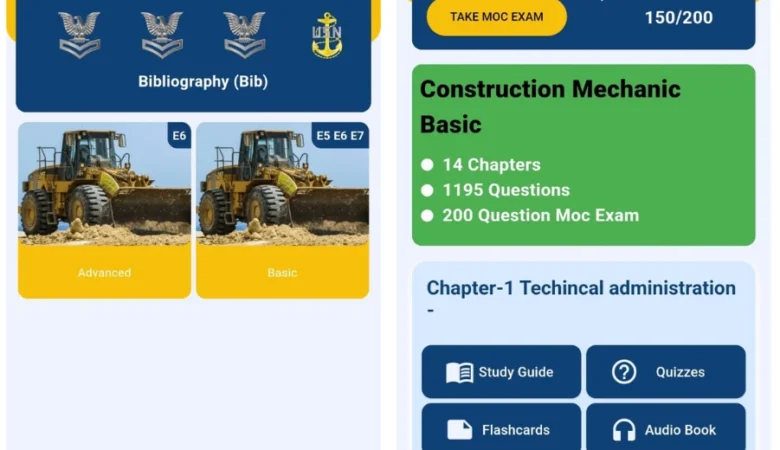
SeaBee – The Best Navy
SeaBee – The Best Navy Exam Study App Built for US Navy Seals Project Overview SeaBee is a free, comprehensive
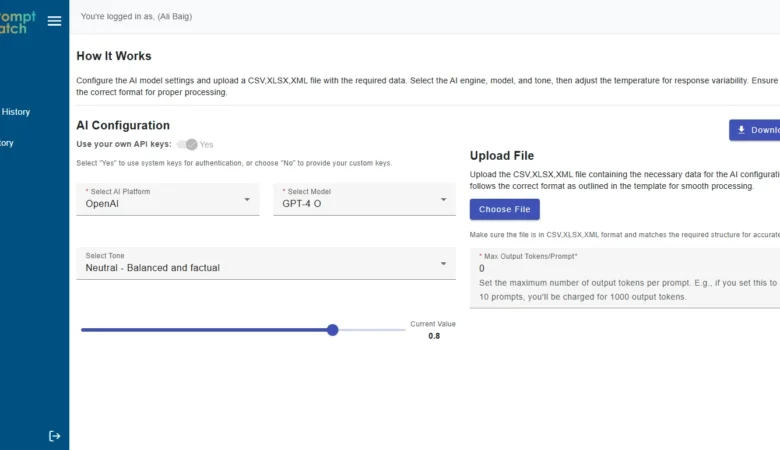
PromptBatch: Save 50% with AI
PromptBatch: The Best AI Batch Prompt Processing Web App | Orbilon Tech Project Overview PromptBatch Portal is a powerful AI
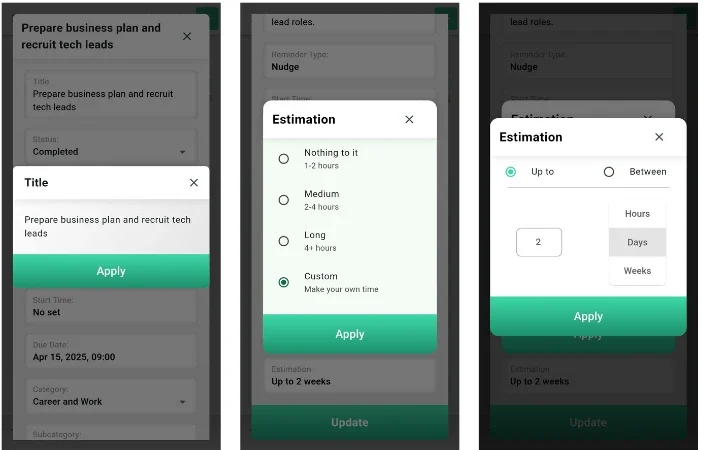
Spheres – The Revolutionary AI
Spheres – The Best AI Life Manager Mobile App That Actually Knows You Project Overview Spheres – Life Simplified is
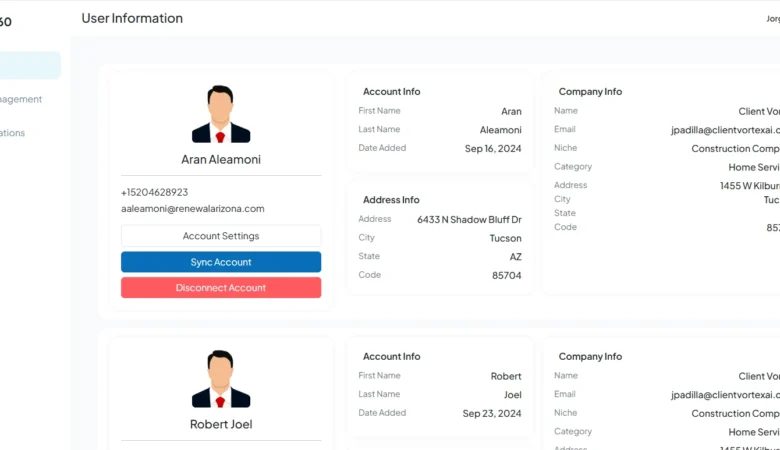
Rep360 AI – AI Bot
Rep360 AI – AI Bot Integration for GHL Workflows That Automates Sales Conversations Project Overview Rep360 AI is a fully
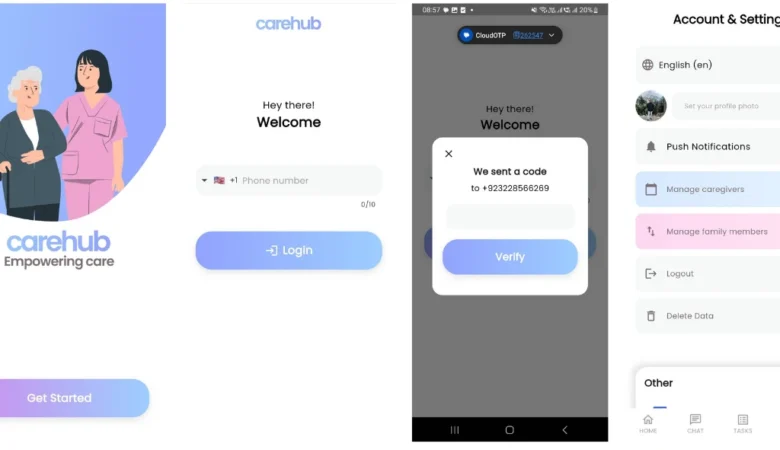
CareHub – Powerful Caregiver Communication
CareHub – Caregiver Communication App With Auto Translation CareHub App – Empowering Care CareHub is a powerful caregiver communication app
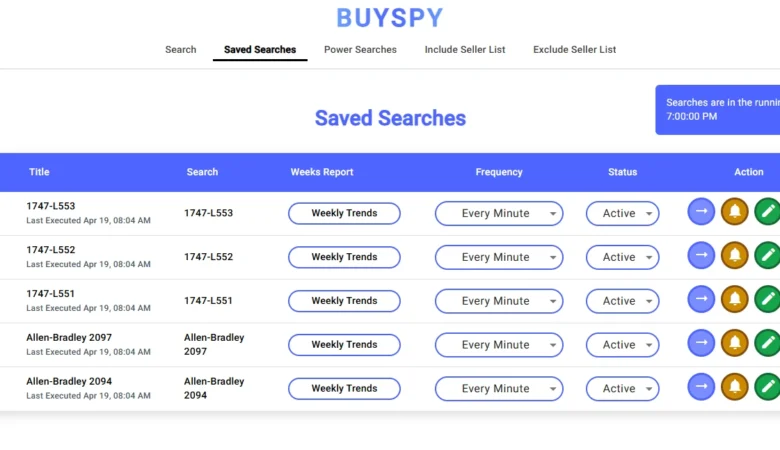
BuySpy – Ultimate Real-Time eBay
BuySpy — A Powerful Real-Time eBay Search Alerts App for Web & Mobile BuySpy is a real-time eBay search alerts
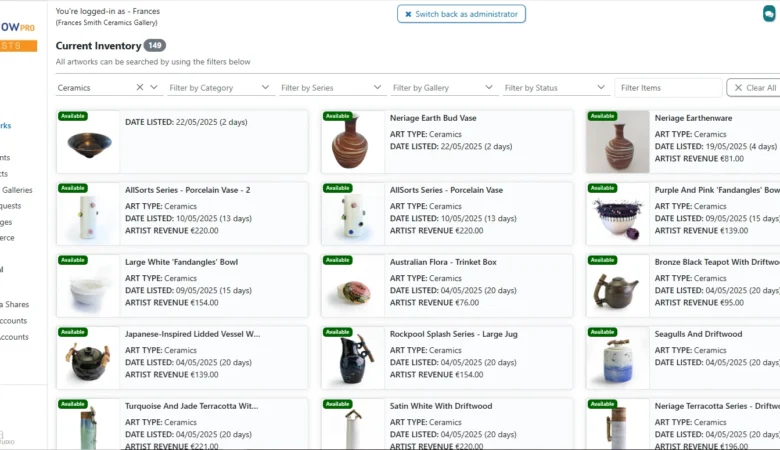
ArtFlow Pro — The Art
ArtFlow Pro — Full-Stack Art Gallery SaaS Platform for Artists & Galleries ArtFlow Pro – Streamline the Artwork Sales ArtFlow
Real Client Reviews on Clutch
Here’s what some of our clients have to say:
Want to Hire Us?
Are you ready to turn your ideas into a reality? Hire Orbilon Technologies today and start working right away with qualified resources. We will take care of everything from design, development, security, quality assurance, and deployment. We are just a click away.