
AI Development in Denver - Colorado | Orbilon Tech
Colorado Wrote One of America's First AI Laws. That Single Fact Reshapes Every AI Project in Denver.
AI development in Denver happens inside the only major metro in a state that passed one of the first comprehensive artificial intelligence laws in the country. Colorado made history when it enacted the Colorado Artificial Intelligence Act, becoming the second US state to adopt sweeping AI consumer-protection legislation focused on high-risk systems that make consequential decisions in employment, lending, healthcare, housing, insurance, and government services.
The legal landscape keeps shifting, too, with the legislature passing a replacement framework that leans toward consumer notice, transparency, and appeal rights. For any organization deploying AI in Denver, this is not some distant policy. It is the regulatory reality every consequential AI system now has to live inside.
And that reality makes Denver a market where AI governance is a first-order matter, not a late add-on. The local AI economy backs that up. Denver-based Checker applies machine learning to background-check decisions at the scale of a 500-plus-person company, operating under exactly the kind of consequential-decision scrutiny Colorado’s law targets.
Meanwhile, aerospace, still the second-largest sector in the nation, runs decision-intelligence systems, computer vision, and reinforcement learning across Lockheed Martin, Boeing, Northrop Grumman, and a growing space-startup layer. There’s also a dense roster of Denver and Boulder AI firms, plus a talent pipeline from the University of Colorado and Colorado State, so the metro isn’t just hype; it’s actual machine learning depth.
So when buyers come from this environment, they tend to ask about algorithmic discrimination, impact assessments, and risk management frameworks first, before they ask about features. Because here those questions carry legal weight, not just best-practice vibes.
For organizations seeking the best AI development company in Denver, one that can ship AI that withstands Colorado’s consequential-decision scrutiny, pass aerospace-grade engineering review, and operate dependably in production rather than in a demo, Orbilon Technologies delivers custom AI solutions in Denver with full lifecycle ownership. This includes production LLM systems, retrieval-augmented generation pipelines, machine learning models, autonomous AI agents, and the governance, observability, and cost-control infrastructure that turns AI from a proof-of-concept into accountable production capability.
Why Colorado's Consequential-Decision Standard Raises the Bar on Every Denver AI Build?
The defining feature of the Denver AI market is a regulatory environment that treats high-risk AI as a matter of consumer protection and legal liability. Colorado’s framework centers on a concept other states are only beginning to grapple with: AI systems that make or substantially influence consequential decisions carry accountability for algorithmic discrimination. That standard, paired with the affirmative defense available to organizations that align with recognized risk-management frameworks, has made governance a competitive requirement rather than a compliance checkbox. Colorado AI Act compliance awareness is now part of how seriously Denver buyers evaluate AI vendors.
These are the dimensions that decide whether your AI earns trust in this market.
- Algorithmic discrimination evaluation is a legal concern, not just an ethical one. AI systems that influence employment, lending, healthcare, housing, insurance, or government services in Colorado operate in a space where bias carries documented legal exposure. Production AI here ships with performance evaluation across demographic subgroups, documented disparities, mitigation strategies, and the impact-assessment-style documentation that demonstrates reasonable care. A single aggregate accuracy figure does not meet this standard.
- Risk-management-framework alignment provides real legal value. Colorado’s framework offers an affirmative defense to organizations that comply with a nationally recognized AI risk management framework. Aligning a system with the NIST AI Risk Management Framework is not just good practice in Denver; it carries tangible legal weight. Hire AI engineers in Denver who cannot map a system to the NIST framework’s core functions, and you lose both the governance benefit and the legal protection.
- Transparency and consumer notice are built into the system, not bolted on. Colorado’s evolving framework emphasizes consumer notice for consequential decisions, appeal rights, and disclosure when AI materially influences an outcome. Production systems shipped into this market build notice mechanisms, appeal paths, and decision transparency into the architecture from sprint one rather than retrofitting them under regulatory pressure.
- Reproducibility and auditability are non-negotiable. A system that produces different outputs on identical inputs cannot demonstrate the reasonable care Colorado expects. Production AI locks model versions, freezes embeddings, versions the retrieval store, logs every decision with its inputs and reasoning path, and makes behavior auditable by a regulator, an attorney, or an internal compliance team.
- Records retention supports the compliance posture. The decision logs, impact assessments, model cards, and audit trails that demonstrate accountability are themselves deliverables. Enterprise AI development in Denver in a regulated environment treats documentation as part of the engineering work, not as paperwork generated after launch.
The vendors that succeed in Denver understand that Colorado’s regulatory environment is an opportunity for those who build correctly. The same governance rigor that protects consumers also protects the organizations deploying AI, and the vendors who deliver it become long-term partners.
Matching the AI System Shape to the Denver Problem
The shape of an AI system, more than the model beneath it, determines whether it solves the problem or creates new ones. Generative AI development Denver projects fail most often from a mismatch between architecture and actual need. Three foundational patterns recur in serious work, and the strongest systems blend them deliberately.
- Knowledge-grounded answering through retrieval. When the AI must respond from the organization’s own documents, policies, technical knowledge, or regulatory content, retrieval-augmented generation is the foundation. The build pairs a vector store (Pinecone, Weaviate, Qdrant, Chroma, or pgvector for teams preferring a single Postgres surface) with hybrid search blending dense vectors and keyword retrieval, reranking through Cohere or cross-encoder models, document-aware chunking tuned to the source material, and citation trails the user can verify. RAG development in Denver for enterprise knowledge bases, regulated-industry documentation, and aerospace technical content is the common starting point, and the citation trails it produces directly support Colorado’s transparency expectations.
- Action-taking through agents. When the AI needs to do things rather than merely answer, calling APIs, querying systems, scheduling work, and orchestrating multi-step processes, agentic architecture is the right shape. The engineering centers on structured tool calling against defined schemas, sandboxed execution, authority boundaries the model cannot exceed, human review on consequential actions, and a complete audit trail on every tool invocation. In a state where consequential decisions carry legal weight, the human-in-the-loop checkpoints and audit logging that good agent design requires are also compliance assets.
- Domain depth through fine-tuning. When base models cannot reliably produce the terminology, formatting, or behavior a use case demands, fine-tuning earns its cost. Custom training on proprietary documents, annotated datasets, or domain-specific corpora, paired with smaller task-tuned models (Phi, Gemma), deployed for high-volume classification and routing at lower per-call cost. Aerospace teams with specialized technical corpora and enterprise teams with curated internal data are the natural users.
- Production systems in Denver rarely rely on a single pattern. A capable reasoning model anchors the system, retrieval grounds it in owned knowledge, agents execute the downstream work, and specialized models slot in where each pipeline stage benefits. Teams that commit to one pattern and force every problem to fit it usually rebuild within a year and a half.
Choosing the Model: Cloud APIs, Self-Hosting, and the Governance Question
Model selection carries consequences for cost, latency, governance posture, and roadmap that persist for years. LLM development Denver, CO teams weigh reasoning quality, hallucination behavior, fine-tuning needs, data residency, and the documentation a regulated environment requires before committing. There is no universal answer, only the right answer for the data and the buyer.
- OpenAI (GPT family). The right pick when broad reasoning quality and ecosystem maturity, including function calling, structured outputs, vision, and reasoning models, accelerate delivery. Azure OpenAI provides a governed, enterprise-grade deployment with the audit and access controls a regulated Denver environment expects.
- Anthropic Claude. The right pick when long-context reasoning, careful instruction following, and lower hallucination rates are core requirements. Particularly strong for document analysis, regulated-industry summarization, and agentic workflows, and well-suited to consequential-decision contexts where a carefully hedged answer beats a confidently wrong one. AWS Bedrock provides a governed deployment route.
- Self-hosted open models (Llama, Mistral, Qwen). The right pick when data sensitivity rules out external API calls, when on-premise deployment is required, when inference volume makes self-hosting economically dominant, or when fine-tuning on proprietary data delivers compounding gains. Aerospace and defense-adjacent teams handling sensitive technical data, and enterprises operating under strict data residency requirements, increasingly favor self-hosted deployments inside their own infrastructure.
- Specialty and small models. Embeddings (OpenAI, Cohere, Voyage), reranking models, and small task-tuned models (Phi, Gemma) layered into systems where a flagship model would be overkill or too costly. Cost-aware Denver buyers running high inference volumes expect this layered architecture rather than routing everything through a single expensive model.
The costliest mistake is selecting a model from last quarter’s benchmark headline. The reliable approach is benchmarking candidate models against your own data, prompts, and evaluation criteria before signing a production contract, which we run as part of the engagement.
Governance, Privacy, and Cost Control Built for Regulated AI
AI governance in Denver is not a compliance checkbox appended at the end. In a state that wrote algorithmic accountability into law, governance is the expectation from the first conversation. Machine learning development in Denver that survives this market treats safety, privacy, and cost as engineering disciplines with engineering solutions.
- Risk-management-framework alignment is the foundation. Mapping AI systems to the NIST AI Risk Management Framework’s core functions of Govern, Map, Measure, and Manage, with the documentation that supports Colorado’s affirmative defense provision. This is governance that carries legal value, not governance theater.
- Algorithmic discrimination testing runs before launch and continuously after. Performance evaluation across demographic and protected-class boundaries, fairness reporting, documented mitigation where disparities surface, and continuous monitoring once the system is live. For consequential-decision systems in Colorado, this is a legal necessity, not an optional best practice.
- Prompt-injection defenses are part of the threat model. Systems that take untrusted input and feed it to a model face active manipulation attempts. Layered defenses include input filtering, structured-output enforcement, sandboxed tool execution, output validation against business rules, and explicit authority boundaries on what the model can invoke.
- Privacy protection runs inline. PII detection and redaction through tools like Microsoft Presidio or custom rule engines, running before context reaches the model and again before output reaches the user. For regulated data and consequential-decision contexts, inference runs through governed endpoints rather than uncontrolled external APIs.
- Cost governance prevents runaway spend. Production AI running thousands of inferences daily accumulates real cost. Our PromptBatch platform exists for this layer, enforcing per-user, per-feature, and per-tenant ceilings, routing easy requests to cheaper models, caching semantically duplicate calls, and surfacing anomalies before they reach the monthly invoice.
- Observability and audit trails run in production. Drift detection, performance monitoring on representative inputs, regression testing as upstream models update, complete decision logging, and dashboards that surface quality decay before users feel it. In a regulated environment, this observability layer is also the evidence base that demonstrates reasonable care.
AI Service Lines Mapped to Denver's Industry Mix
Denver AI demand clusters into those buyer groups that look familiar, like aerospace and defense, regulated enterprise, healthcare, financial services, and also consumer and startup types, kinda grouped by how they see the win. We organize delivery by how each group frames their aims, and the governance layer that Colorado expects, kinda winds through everything like a steady thread.
Core AI for Aerospace, Enterprise, and Regulated Teams
- AI Development & Integration: Production-grade LLM systems, NLP pipelines, computer vision work, predictive analytics, intelligent document processing, and RAG infrastructure grounded in enterprise know-how plus technical context. Built with evaluation harnesses, algorithmic discrimination testing, and documentation that’s NIST-aligned, like Colorado’s environment actually requires, not just “nice to have”.
- Agentive AI Apps: Agentic AI apps for document review, workflow automation, claims handling, and approval workflows, with human-in-the-loop oversight on consequential actions, sandboxed tool execution, and the audit-grade logging that also acts as compliance proof when someone asks later.
Surfaces Where AI Reaches Users
- Web Development: AI-enhanced web platforms with smart search, content personalization, document comprehension, and chat interfaces built to hold up under real production pressure, plus the consumer-notice and transparency mechanisms Colorado’s framework keeps pushing for.
- Mobile App Development: Mobile apps using on-device machine learning via Core ML and TensorFlow Lite, LLM-powered bits, and AI-driven personalization that ships cleanly to App Store and Google Play.
- SaaS Product Development: AI-native SaaS where machine learning really becomes the product engine, using multi-tenant architecture, subscription billing, and the observability plus audit infrastructure that serious B2B SaaS teams take seriously.
- Custom CRM Development: CRM platforms with AI lead scoring, churn prediction, pipeline forecasting, and conversation intelligence, designed with the transparency a decision-heavy market tends to expect, especially when the stakes aren’t small.
- E-commerce Development: Commerce platforms for AI product discovery, demand forecasting, and fraud prevention for Denver consumer brands and direct-to-consumer operators.
Infrastructure That Makes AI Defensible
- Cloud Infrastructure / DevOps: MLOps on AWS and Azure with model versioning, automated retraining, drift detection, audit logging, and hosting that’s SOC 2 and HIPAA-aware, plus FedRAMP-aware infrastructure for aerospace and defense-adjacent AI that has to pass stricter checks.
- UI/UX Design: Interfaces that make AI behavior more visible, with confidence indicators, citation trails, consumer-notice surfaces, and explainability patterns that build trust and match Colorado’s disclosure expectations.
AI Systems That Already Left the Prototype Stage
A conceptual diagram is not enough to tell if AI is going to last in production. Two systems that are actually used by real customers show this point very clearly.
- PromptBatch: The Governance and Cost Layer Production AI Demands PromptBatch is a SaaS platform for enterprises that use thousands of AI prompts every day with different team members, who need to know the costs running with each call, have live usage dashboards, role-based access, batch processing optimization, semantic caching to eliminate duplicate inference, and a logable, audit-ready cloud. It means for Denver: a governance and cost-control layer that any aerospace contractor, regulated enterprise, or Colorado-based organization that is scaling AI across different use cases will finally require. PromptBatch is a tool that enables the transition of AI from an exciting pilot to a production system that is actually governed, compliant, and financially approved, which is exactly the accountable, auditable, and cost-aware approach that a state with a law on algorithmic accountability expects.
- Rep360 AI: An Agent Operating Inside a Live Sales CRM Rep360 AI is an integration of AI within the GoHighLevel CRM workflow, which carries out the sales conversations. What it means for Denver: agent-shaped engineering at the same level of webhook reliability, idempotent retries, prompt-injection resistance, structured tool calling, and authority-bounded execution that transfers to enterprise workflow agents, aerospace operational agents, and human-in-the-loop decision systems that are rewarded by the regulatory environment of Colorado. Rep360 shows the kind of discipline this market demands when AI is not only describing the world but is also acting on it.
Work Highlights
Some of our best works from many

SeaBee – The Best Navy
SeaBee – The Best Navy Exam Study App Built for US Navy Seals Project Overview SeaBee is a free, comprehensive
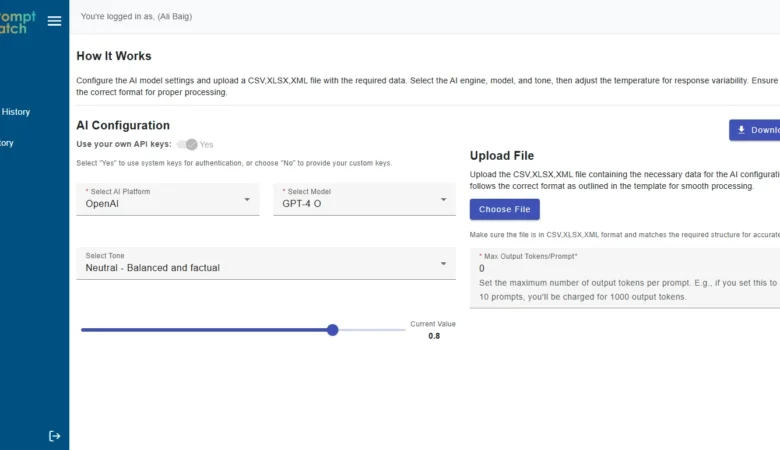
PromptBatch: Save 50% with AI
PromptBatch: The Best AI Batch Prompt Processing Web App | Orbilon Tech Project Overview PromptBatch Portal is a powerful AI
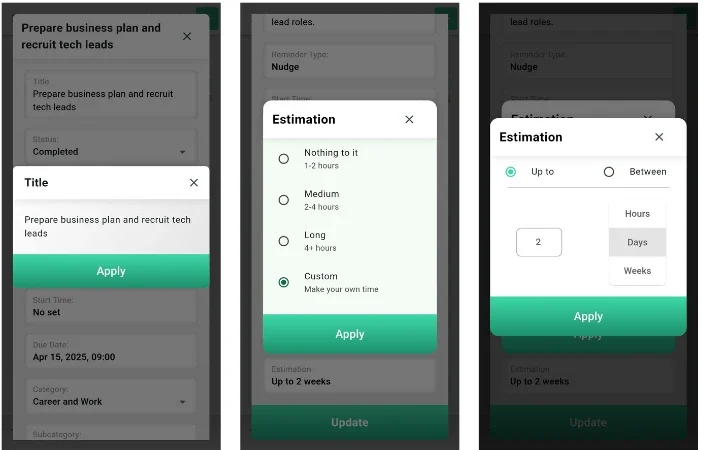
Spheres – The Revolutionary AI
Spheres – The Best AI Life Manager Mobile App That Actually Knows You Project Overview Spheres – Life Simplified is
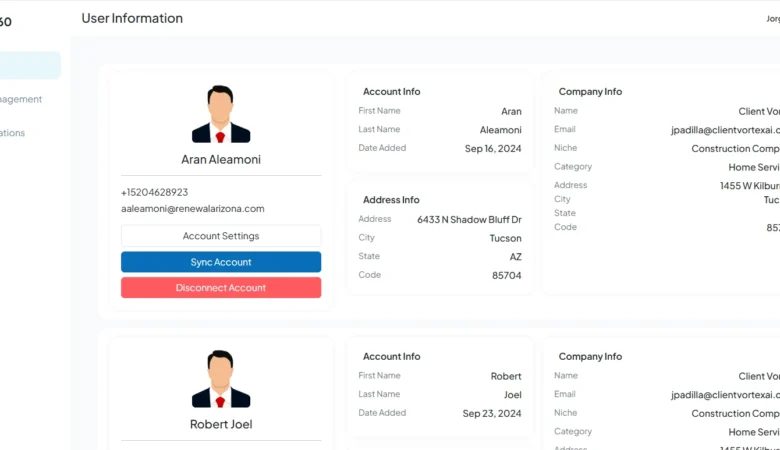
Rep360 AI – AI Bot
Rep360 AI – AI Bot Integration for GHL Workflows That Automates Sales Conversations Project Overview Rep360 AI is a fully
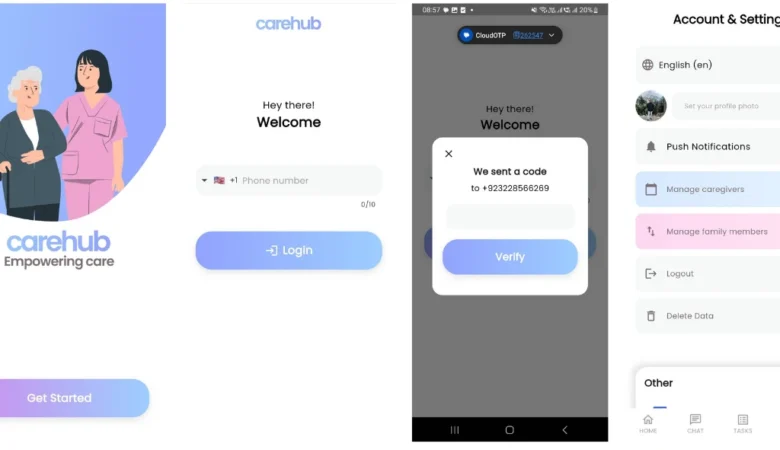
CareHub – Powerful Caregiver Communication
CareHub – Caregiver Communication App With Auto Translation CareHub App – Empowering Care CareHub is a powerful caregiver communication app
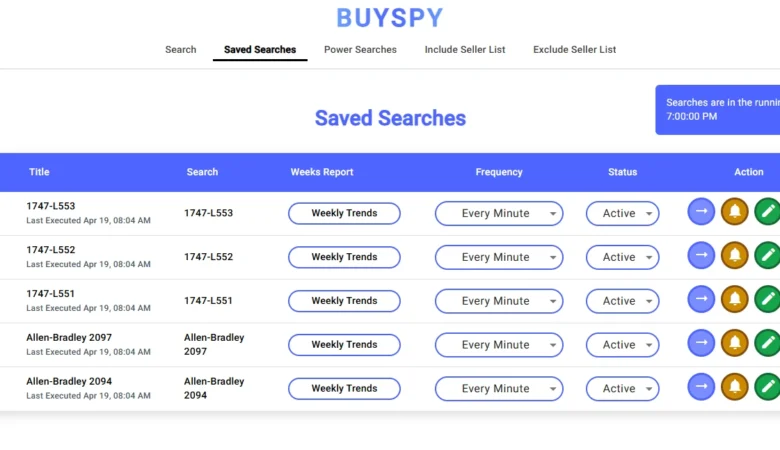
BuySpy – Ultimate Real-Time eBay
BuySpy — A Powerful Real-Time eBay Search Alerts App for Web & Mobile BuySpy is a real-time eBay search alerts
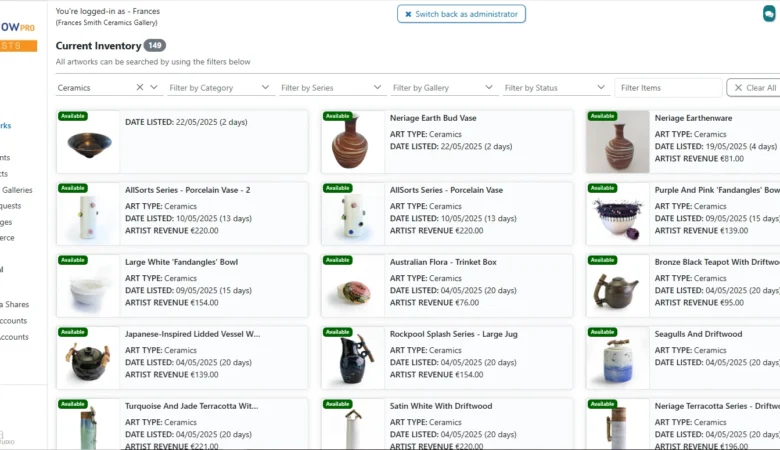
ArtFlow Pro — The Art
ArtFlow Pro — Full-Stack Art Gallery SaaS Platform for Artists & Galleries ArtFlow Pro – Streamline the Artwork Sales ArtFlow
Client Reviews, Verified Through Clutch
Here’s what some of our clients have to say:
Want to Hire Us?
Are you ready to turn your ideas into a reality? Hire Orbilon Technologies today and start working right away with qualified resources. We will take care of everything from design, development, security, quality assurance, and deployment. We are just a click away.