6 Memory Types in AI Agents: How Memory Makes AI Truly Intelligent
Introduction:
One thing that has changed over the years is AI, from simple chatbots that follow scripts. The secret behind an intelligent AI agent is memory, or the ability to recollect information and events from the past. Just like us, only with a better list, AI requires memory to learn, adapt, reason, and make future decisions based on context and prior experience.
In this article, we will cover the six key types of memory in AI agents — and how these change a chatbot into a knowledgeable digital agent.
The Importance of Memory in AI
Memory provides an AI system with the ability to think beyond the immediate input, and it can draw upon past conversations and experiences.
An AI agent must remember:
- To pull user preferences from memory
- To learn from the past
- To change behavior in association with that new learning
- To retain long-term goals and/or strategies
In essence, AI memory gives AI the ability to have a bridge between automation and intelligent behavior.
The Six Types of Memory in AI Agents
1. Short-Term Memory
Facilitates the capacity of AI to retain limited amounts of recent information during an active session.
Key Features: Maintains the context of information in the short run; is conversational, resetting after a session.
Example: Remembers what we are talking about in the moment, but forgets when the chat is over.
2. Long-Term Memory
The ability of an AI system to remember and recall information using assets across sessions, which enables AI to learn to personalize your interactions.
Key Features: Always available memory (if permission is granted), learns from previous session; builds a personality over time.
Example: Remembers that you like cats over dogs.
3. Semantic Memory
The repository of factual and conceptual knowledge associated with notions of how things work, or what they mean.
Key Features: Memory stores facts, rules, and meanings; powered by vector or semantic databases.
Example: Remembers that “Paris is the capital of France.”
4. Episodic Memory
The potential to recall past events and experiences to personalize a response to a future request or action.
Key Features: Memory stores experiences and allows for future contextual response to feedback or learning.
Example: Recalls that you asked for project updates last Monday.
5. Procedural Memory
The memory for skills and processes for executing tasks automatically.
Key Features: Stores the steps the AI processes automatically; enables task execution to allow for efficiency to reduce repetitive tasks; plain old consistency!
Example: The ability to process refunds or generate a report automatically.
6. Declarative Memory
Memory that contains explicit knowledge, or both recalls and can be explained in the moment.
Key Features: Support reasoning and interest, to provide transparency, and an explainer for the decision, making a difference as an up-to-date reasoning tool and extension of cognitive abilities.
Example: The ability to explain why a decision was made supports old facts.
How These Memories Function Together
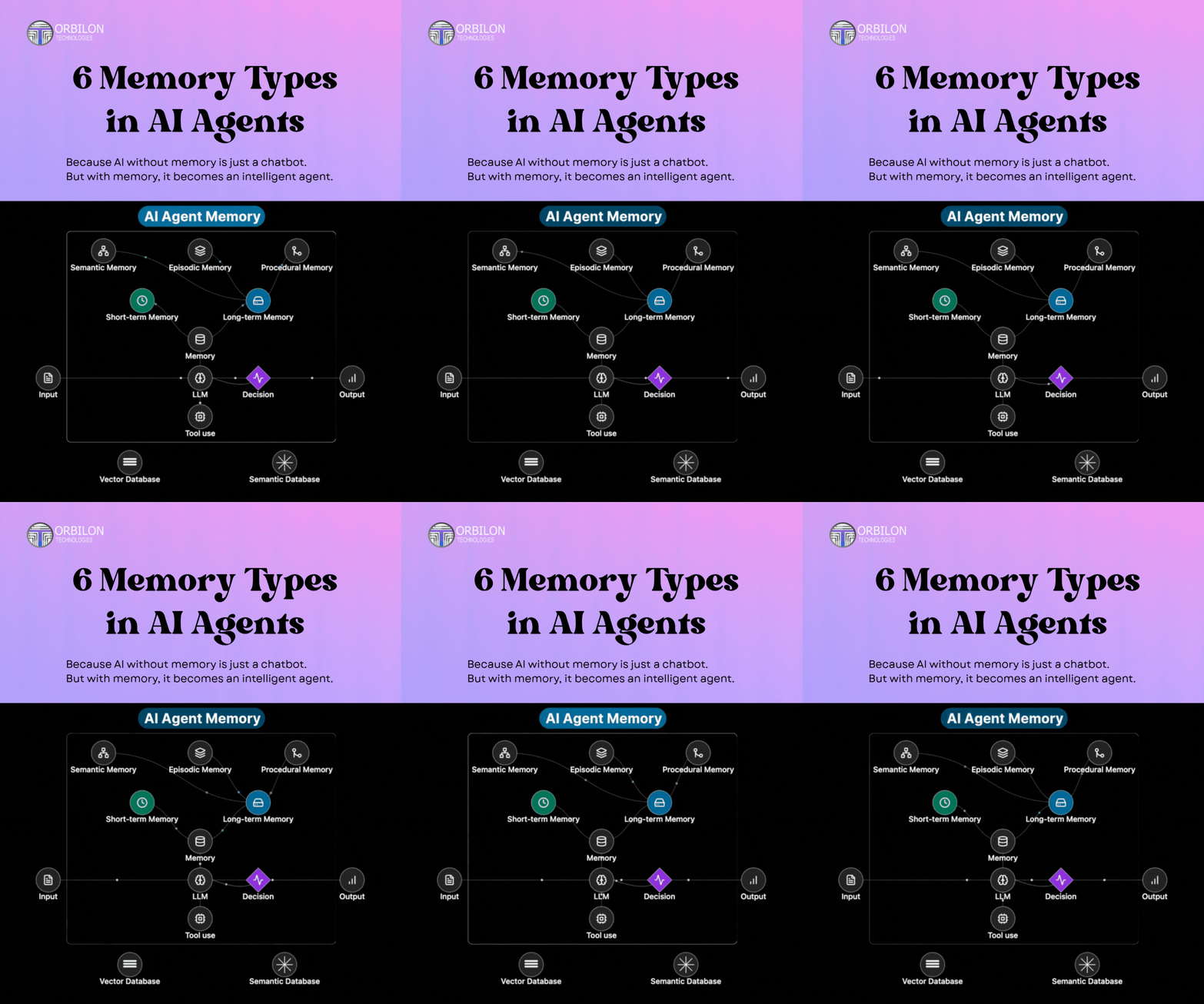
AI memory is layered from short- to long-term, connected by a database and LLMs.
In a simplified way, the flow is:
Input → Short-Term Memory → Long-Term Memory → Semantic/Episodic/Procedual Memory → LLM → Decision → Output
And there are a variety of supporting technologies:
- Vector Databases: Store semantic relationships between data.
- Semantic Databases: Support contextual reasoning.
- Tools: Enable AI to perform functions external to itself.
In addition, These factors together enable the agent to think, make decisions, and act intelligently.
Final Thoughts
An AI lacking memory is just a chatbot, typically reactive and unaware. Once memory is added to it, it turns into an intelligent agent, capable of learning, reasoning, and growing.
Moreover, the combination of different kinds of memory will drive or lead AI systems towards human-like abilities combined with digital precision, and will be part of the next generation of artificial thinking.
Want to Hire Us?
Are you ready to turn your ideas into a reality? Hire Orbilon Technologies today and start working right away with qualified resources. We will take care of everything from design, development, security, quality assurance and deployment. We are just a click away.