The 7 AI Agent Categories Billion Dollar Companies Are Built On — Pick Yours
Introduction
One in five new unicorns in 2026 is building AI agents. That’s not a trend — that’s a category shift. There are now 498 AI unicorns globally with a combined valuation of $2.7 trillion, and the fastest-growing segment within that group is agentic AI — autonomous systems that take action, not just generate text.
AI agent categories billion dollar companies aren’t evenly distributed. Some categories are minting unicorns every month. Others are wide open — still waiting for the team that combines the right domain expertise with the right model stack to dominate them. Every category has unicorn potential. The question — as your image puts it — is which one aligns with your competitive advantage.
This post breaks down the 7 most high-value AI agent categories in 2026, the real companies already building billion-dollar businesses in each, and what it takes to compete in each space.
Why AI Agents Are the Dominant Unicorn Factory of 2026?
The numbers tell the story clearly. AI startups raised $73.1 billion in a single quarter in late 2025 — nearly 58% of all global VC funding. The global AI agents market is forecast to reach $236 billion by 2034 at a 45.82% CAGR. In January 2026 alone, 31 companies crossed the billion-dollar threshold — the highest monthly count since June 2022.
Sam Altman of OpenAI and Dario Amodei of Anthropic have both publicly predicted that by 2026, advances in AI may enable a single individual to operate a billion-dollar company powered entirely by AI agents. That’s not a distant vision — it’s already being tested by early-stage founders using agentic stacks to build companies that would have required 50+ people three years ago.
The pattern is consistent across every AI agent categories billion dollar companies space: newer AI unicorns generate 83% more revenue per employee than older ones.
The 7 categories below represent where that advantage is compounding fastest.
Category 1: Customer Service & Support Agents
- Unicorn example: Parloa ($1B+) — Conversational AI for enterprise customer service.
- Market signal: 56% of customer support interactions will involve agentic AI by mid-2026.
- This is the most mature AI agent categories billion dollar companies example right now. The market is large, the ROI is immediate and measurable, and enterprises have clear budget lines for support operations. Customer service AI agents don’t just respond to tickets; they triage, resolve, escalate, and follow up autonomously across voice, chat, and email channels simultaneously.
- What separates the unicorns from the also-rans here: voice-first architecture. Text-only support agents are becoming commoditized. Parloa built its $1B+ valuation on voice AI for enterprise contact centers — a significantly harder technical problem that creates a real moat.
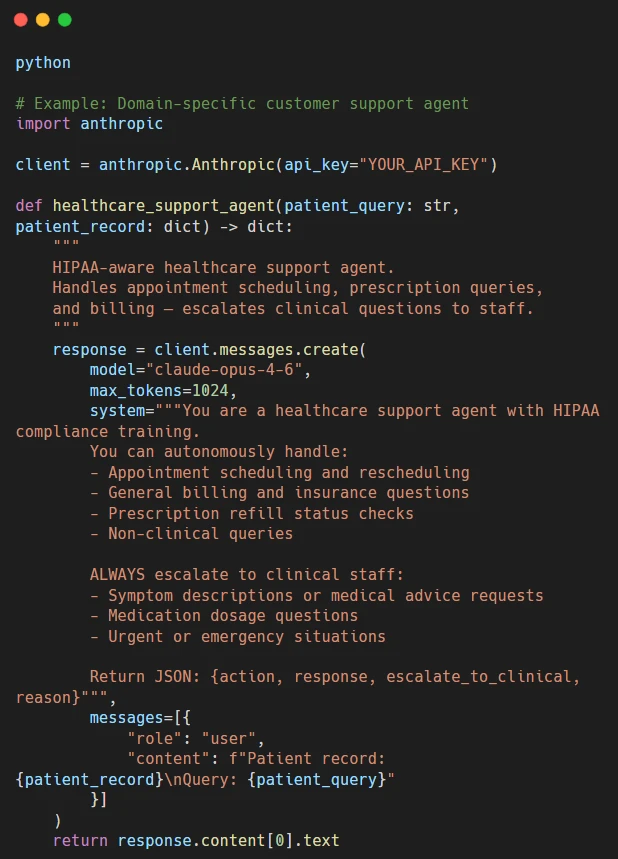
- The opportunity gap: Industry-specific support agents for healthcare, legal, and financial services — where generic agents can’t handle domain complexity and compliance requirements.
Category 2: Coding & Software Engineering Agents
- Unicorn examples: Anysphere/Cursor ($9.9B), Cognition AI ($2B+), GitHub Copilot (Microsoft).
- Market signal: 70% of enterprise software teams will use AI coding agents across the full SDLC by 2026.
- This is the fastest-moving AI agent categories billion dollar companies space in 2026. Anysphere, the company behind Cursor, reached a $9.9 billion valuation in under two years. Cognition AI, building the Devin autonomous software engineer, crossed $2 billion shortly after. Both are growing at rates that make traditional SaaS growth look slow.
- The category is splitting into two sub-segments: IDE-level coding assistants (Cursor, GitHub Copilot) and fully autonomous engineering agents (Devin, Claude Code, OpenAI Codex). The IDE segment is commoditizing fast. The autonomous agent segment — where the system reads the codebase, writes the feature, runs tests, and submits the PR without human instruction — is still wide open at the enterprise level.
- The opportunity gap: Vertical-specific coding agents for regulated industries — medical device software, financial systems, aerospace — where generic agents can’t handle the compliance and audit requirements that enterprise customers need.
Category 3: Healthcare & Clinical Agents
- Unicorn examples: Hippocratic AI ($500M+), Iterative Health ($1.4B), Midi Health ($1B).
- Market signal: AI agents expected to deliver $150 billion in annual savings to US healthcare by 2026
Healthcare is the highest-value AI agent categories billion dollar companies segment on a per-outcome basis. - Hippocratic AI — building AI agents specifically for healthcare communication and patient engagement reached unicorn status faster than almost any company in the sector’s history. Iterative Health ($1.4B) focuses on AI-powered digestive health research. Midi Health ($1B) runs telemedicine for women’s health.
- The common thread: narrow, deep vertical focus rather than broad horizontal platforms. The healthcare AI agents that are winning are not generic — they’re trained on domain-specific data, built with compliance requirements embedded from day one, and deployed in specific clinical pathways where the ROI is clear and measurable.
- The opportunity gap: Prior authorization automation, clinical documentation, and care coordination agents — three workflows that consume enormous clinician time and have well-defined inputs and outputs that AI agents handle well.
Category 4: Sales & Revenue Intelligence Agents
- Unicorn examples: Clay ($1B+, $1M revenue per employee), 11x.ai, Artisan.
- Market signal: AI in sales and marketing leads all enterprise functions with 42% adoption — more than twice the average.
- Clay became a unicorn with $1 million in revenue per employee, the highest ratio in CB Insights’ 2026 unicorn dataset. That number reflects what happens when an AI agent category removes the human labor that was previously the bottleneck in a workflow. Sales agents that research prospects, build contact lists, write personalized outreach, and sequence follow-ups autonomously are compressing what previously required 5-person SDR teams into a single workflow.
- This is an AI agent categories billion dollar companies at a remarkable speed because the ROI is directly measurable.
- The opportunity gap: Industry-specific outbound agents for enterprise B2B sales in sectors where generic personalization fails — manufacturing, government contracting, healthcare procurement — where domain knowledge is the differentiator.
Category 5: Legal & Compliance Agents
- Unicorn examples: Harvey ($3B), EvenUp ($1B+), Robin.
- AI Market signal: Global legal tech AI spending reaches $50 billion by 2027; the percentage of corporate legal AI users doubled from 23% to 52% within a year.
- Harvey, the AI legal research and drafting platform based on Claude, crossed the $3 billion valuation mark in 2025 and is now expanding rapidly into enterprise law firms and in-house legal teams. EvenUp creates AI agents for personal injury litigation purposes only, a narrow, high-value vertical that most horizontal legal AI platforms neglect.
- The legal AI agent categories billion dollar companies space are winning on specificity. Generic “AI for legal” platform builders are having a hard time differentiating themselves. Those building agents for specific practice areas, M&A due diligence, personal injury, employment law, and regulatory compliance are enjoying clear product-market fit and defensible moats.
- The opportunity gap: Compliance monitoring agents for heavily regulated industries such as financial services, healthcare, and manufacturing are a persistent high-value workflow due to continuously changing regulations that require so much attention and expertise.
Category 6: Data & Research Intelligence Agents
- Unicorn examples: Glean ($4.6B), Perplexity ($14B), Hebbia ($700M+).
- Market signal: Knowledge worker productivity is the #1 ROI driver for enterprise AI investment in 2026.
- Glean — the enterprise search and knowledge agent — crossed $4.6 billion by building a single valuable capability: finding information across an organization’s entire data stack. Perplexity built a $14 billion business on AI-powered research and answer generation. Hebbia targets financial services professionals with agents that analyze documents and synthesize investment research.
- What makes this AI agent categories billion dollar companies space unique is the universality of the problem. The companies winning here are those that connect to the widest range of enterprise data sources while maintaining the accuracy and citation standards that enterprise customers require.
- The opportunity gap: Domain-specific research agents for life sciences, investment research, and government intelligence — sectors where data complexity and accuracy requirements are highest and generic solutions consistently underperform.
Category 7: Autonomous Operations & Infrastructure
- Agents Unicorn examples: PaleBlueDot AI ($1B), Bedrock Robotics ($1.8B), Positron ($1B).
- Market signal: Manufacturing AI market jumps to $17.44 billion; physical AI agents breaking into production environments.
- This is the frontier category of AI agents where a segment of billion-dollar companies lies, the one with the longest timeline but the biggest total addressable market. PaleBlueDot AI ($1B) assists developers in managing GPU computing through AI agents. Bedrock Robotics ($1.8B) manufactures AI-based systems for construction equipment. Positron ($1B) develops AI chips.
- The operations and infrastructure agent category represents the point where AI transitions from the digital realm to the physical world, managing supply chains, operating factory machinery, orchestrating cloud infrastructure, and running logistics networks with little human input. The companies developing in this space are addressing more complex technical problems; this means higher entry barriers and more sustainable competitive advantages when they do achieve product-market fit.
- The opportunity gap: The industry-specific operations agents for complicated, high-risk physical workflow sectors, such as food manufacturing, pharmaceutical production, and energy grid management, where the mix of safety requirements and automation potential results in huge value for the first teams to solve it correctly.
How to Evaluate Which Category Aligns With Your Advantage
| Evaluation Factor | Questions to Ask |
|---|---|
| Domain expertise | Do you have 5+ years of experience in this vertical? |
| Data access | Can you access proprietary training data that competitors can’t? |
| Distribution | Do you have existing relationships in the target buyer segment? |
| Technical moat | Is your agent architecture hard to replicate in 6 months? |
| Regulatory clarity | Do you understand the compliance requirements in this space? |
| Buyer budget | Is there a clear, existing budget line your agent can capture? |
The Competitive Reality: Speed Is the Moat Right Now
Each vertical will likely produce 2–4 billion-dollar companies over the next 18 months as AI capabilities intersect with domain expertise. That’s a narrow window. In each of the 7 categories above, the market leaders are not yet fully established the category is still being defined. But the window is closing faster than most founders realize.
The January 2026 unicorn cohort is coming in at 15–25x ARR — rational valuations based on real business performance, not the 40–60x multiples of the 2022 peak. That means the market is rewarding real traction, not just vision. The teams that move from idea to deployed product to measurable enterprise traction in the next 6–12 months are the ones that will capture the remaining white space in each category.
The tools exist. The models are capable. The buyers have a budget. The only scarce resource is focused execution in the right vertical.
Conclusion: Every Category Has Unicorn Potential — But Only If You Move Now
The AI agent categories billion-dollar companies in 2026 share one thing: they were started by teams who moved early in a specific vertical, built deep domain expertise into their agent architecture, and found buyers who had a clear, measurable problem that the agent solved completely — not partially.
Your competitive advantage is not the model you use. GPT-5.4, Claude Opus 4.6, and Gemini 3 Pro are all accessible to anyone with an API key. Your advantage is the domain knowledge, data access, and distribution you bring to one of these 7 categories — combined with the speed to build and deploy before the window closes.
Pick your category. Build your agent. Ship to your first enterprise customer. That’s the playbook every unicorn in this list followed — just earlier than everyone else.
About Orbilon Technologies
Orbilon Technologies is a product engineering company that turns AI ideas into production-grade systems. From agentic workflow design to full-stack SaaS development, our team in Lahore, Pakistan — with a strong US client base — has shipped AI-powered products across healthcare, legal, fintech, and enterprise software.
If you’re building in one of these 7 AI agent categories and need a technical partner who understands both the product and the model layer, we’ve done it before — and we deliver fast.
- 4.96 rating on Clutch and GoodFirms.
- 30+ enterprise clients.
- Zero post-deployment breaches.
- Website: orbilontech.com
- Email: support@orbilontech.com
Building an AI Agent in One of These Categories?
Orbilon Technologies helps founders and enterprises design, build, and deploy production-grade AI agents — from architecture to the first enterprise customer. If you’re serious about moving fast in one of these 7 categories, let’s talk. Book a Free Strategy Call.
Want to Hire Us?
Are you ready to turn your ideas into a reality? Hire Orbilon Technologies today and start working right away with qualified resources. We will take care of everything from design, development, security, quality assurance, and deployment. We are just a click away.