
AI Development in Longmont - Colorado | Orbilon Tech Orbilon Tech
Here, AI Has to Run Where the Data Is Born, Not Just in a Cloud Somewhere
AI development in Longmont tends to live closer to the physical world than AI almost anywhere else. This is a town where a satellite company processes imagery captured in orbit, where a space-weather startup forecasts hypersonic and orbital conditions, where robots make decisions outdoors in real time, and where hardware engineers expect intelligence to run on the device, at the edge, in the field, not just on a distant server.
That orientation changes what artificial intelligence means here. The interesting AI problems in Longmont are rarely a chatbot bolted onto a website. They are models that have to perform under real-world constraints, on real hardware, with real consequences.
That is a different kind of AI market, and it rewards a different kind of engineering. Longmont sits in Boulder County, an area with one of the highest concentrations of software-related jobs in the country, where advanced industries make up nearly 30 percent of local employment.
The aerospace-intelligence layer runs deep: Vantor (formerly Maxar) fuses AI with the world’s highest-resolution satellite imagery and maintains Longmont operations, while space-weather venture Hale SWx earned a state Advanced Industries grant to build a physics-plus-AI forecasting platform for the orbital environment. Environmental-tech firm Biota won a grant to accelerate PFAS detection.
Robotics company Scythe builds autonomous outdoor machines that make perception decisions on the move. Data-storage leader Seagate engineers the infrastructure that AI workloads run on. All of it sits on NextLight, the community-owned gigabit fiber rated among the fastest networks in the nation.
For businesses seeking the best AI development company in Longmont, one capable of building AI that runs at the edge, withstands aerospace-grade engineering scrutiny, and operates reliably in production rather than in a notebook demo, Orbilon Technologies delivers custom AI solutions in Longmont with full lifecycle ownership. Production LLM systems, retrieval-augmented generation pipelines, computer vision models, edge-deployed machine learning, and the governance, observability, and cost-control infrastructure that turns AI from an experiment into dependable production capability.
Why an Engineering Town Judges AI by What It Does, Not What It Promises?
The defining feature of the Longmont AI market is an audience that builds real systems for a living, not just ideas on slides or half-working demos. Aerospace engineers, robotics builders, hardware R&D teams, and a deep software workforce evaluate AI the way they evaluate any engineered component, against measurable performance, real constraints, and demonstrable reliability. A convincing demo kind of slides off them. Proof that the model works under production conditions, that’s what moves this crowd.
These are the dimensions that basically decide whether your AI earns trust in this town.
- Edge and on-device performance are first-order concerns. In a market full of satellites, robots, and connected hardware, AI often has to run inside tight power, memory, and latency limits, sometimes even disconnected from the cloud entirely. Edge AI development in Longmont means you optimize models for on-device inference through quantization, pruning, and frameworks like Core ML, TensorFlow Lite, and ONNX Runtime, then you prove they hold accuracy under real constraints. This is engineering, not prompt-writing, even if folks wish it were.
- Computer vision is a core capability, not a side feature you can tack on later. Satellite imagery analysis, robotics perception, industrial inspection, and quality control all depend on vision models that handle the messy real world. Computer vision development in Longmont demands sturdy training pipelines, careful handling of edge cases and lighting conditions, and the kind of evaluation rigor an aerospace or robotics team brings to any safety-relevant system. You don’t get points for vibes here.
- Reliability is measured, not assumed. A model that looks great in a notebook but degrades quietly once it’s in production fails an engineering audience right away. Production AI in this area ships with documented accuracy on representative data, drift detection, continuous monitoring, and the reproducibility that lets an engineer trust that the same input produces the same output. If you hire AI engineers in Longmont who can’t show measured reliability, the project stalls at the first real technical review.
- Data efficiency matters because data is expensive, like seriously expensive. In aerospace, scientific, and hardware settings, labeled data is often scarce and costly. Serious AI work here leans on transfer learning, fine-tuning on small but high-quality datasets, synthetic data generation when it actually helps, and data-efficient techniques that can produce results without needing millions of labeled examples.
- Total cost of ownership is an engineering calculation, not a marketing line. An engineering audience thinks about inference cost at scale, the operational burden of model maintenance, retraining cadence, and infrastructure economics. Vendors who price honestly for the full lifecycle, including the unglamorous operational work, win the relationship in a town that appreciates durable engineering, not shortcuts.
The vendors who succeed in Longmont treat an engineering-literate audience as the ideal client for AI done correctly. The same scrutiny that exposes brittle models makes genuinely robust AI engineering visible and valued across a tightly connected technical community.
Edge, Vision, Retrieval: Picking the Right Build for a Hardware-First Problem
In a hardware town, the structure of an AI system kinda matters more than the model inside it, because the constraints are physical, not only computational, you know. Generative AI development in Longmont projects, and the broader machine learning work this town seems to demand, tend to succeed when the architecture actually matches the on-the-ground constraint. Several foundational patterns show up again and again in serious Longmont work, and the strongest systems mash them together on purpose, not by accident.
- Edge-deployed and on-device models. When the AI has to run on hardware, out in the field, or basically disconnected from the cloud, the whole system is built with the edge in mind from the beginning. That means quantized and pruned models, Core ML and TensorFlow Lite deployment, ONNX Runtime for cross-platform inference, plus the power-and-memory optimization that lets a model run on a robot, a sensor gateway, or some embedded system, not a data center. This whole vibe is like the signature Longmont AI pattern.
- Computer vision and perception pipelines. When the problem is images, video, satellite data, or sensor streams, the vision models become the anchor. The training pipelines lean hard on data handling that doesn’t fall apart, augmentation strategies tuned to real-world messiness, evaluation across nasty edge cases, and deployment that keeps accuracy once you leave the lab. Satellite-intelligence, robotics-perception, and industrial-inspection use cases mostly live here, in that same neighborhood.
- Knowledge-grounded answering through retrieval. If the AI must answer using the organization’s own technical documentation, engineering knowledge, scientific literature, or operational data, retrieval-augmented generation keeps it grounded. Vector stores like Pinecone, Weaviate, Qdrant, Chroma, or pgvector, plus hybrid search that mixes dense vectors with keyword retrieval, then reranking, document-aware chunking, and citation trails the user can actually verify. RAG development Longmont for technical knowledge bases and engineering documentation is a pretty common starting point for enterprises that want less hallucination, more traceability.
- Action-taking through agents. When AI needs to *do* things, not just respond, calling APIs, querying systems, orchestrating workflows, agentic architecture comes in. You’d typically see structured tool calling, sandboxed execution, authority boundaries that don’t get hand-wavy, human-in-the-loop oversight for consequential actions, and audit trails that are complete, like no missing pieces.
Production systems in Longmont rarely rely on one pattern by itself. A vision model perceives, an edge model makes the local decision, a cloud model handles the heavier reasoning, and retrieval keeps the whole thing tied to engineering knowledge. Teams that try to shove every problem into a single pattern usually end up rebuilding within about a year and a half, maybe less, because reality keeps interrupting.
Where the Model Runs Decides Everything Else in Longmont?
Model selection in Longmont adds this extra dimension most markets sort of ignore: where the model actually runs, not just what it can do. Machine learning development in Longmont balances reasoning quality, latency, cost, data residency, and the physical realities of edge deployment, before anyone commits. There is no one-size-fits-all answer, only the right answer for the specific problem and the hardware that has to carry it.
- Cloud LLMs (OpenAI, Anthropic) for the heavy reasoning part. If the job needs strong general reasoning, long context understanding, or more complex language work, and the timeline can tolerate a cloud round-trip, then the flagship OpenAI and Anthropic models usually win. Azure OpenAI and AWS Bedrock then come in for governed, enterprise-grade deployment, the kind aerospace and regulated buyers expect.
- Edge and on-device models for real-time behavior, disconnected operation, or private-only workflows. When the AI has to run on the hardware itself, out in the field, or where data cannot leave the device, smaller optimized models shoulder the burden. Those get shipped via Core ML, TensorFlow Lite, or ONNX Runtime. Quantized Llama and Mistral variants help too, and there are purpose-built vision models plus task-specific small models that fit the power and memory envelope of the target.
- Self-hosted open models for data-sensitive, high-volume workloads. When policies make external APIs a no-go, when contracts say on-premise deployment, or when inference volume makes self-hosting the most practical option, self-hosted Llama, Mistral, or Qwen deployments inside the organization’s own infrastructure is the move. Aerospace and defense-adjacent teams, especially, tend to prefer this path for sensitive technical data.
- Specialty vision and domain models. Think purpose-built computer vision architectures, embedding models for technical and scientific text, and smaller task-tuned models layered into systems where a general-purpose model would be overkill or just too slow for the constraints. Sometimes you don’t need “smartest,” you need “fast enough, accurate enough,” and aligned.
Honestly, the costliest mistake is picking a model before understanding where it has to run. The reliable approach is mapping the deployment constraint first, then benchmarking candidate models against the real conditions. That’s part of what we do during the engagement: we check the tradeoffs where they actually matter.
Documented, Monitored, Defensible: AI Held to an Engineering Standard
AI governance in Longmont is grounded in engineering accountability rather than checkbox compliance. An audience that builds safety-relevant systems expects AI to be documented, monitored, and defensible. Aerospace AI Longmont work in particular inherits the rigor of the industries it serves.
- Reliability documentation is the foundation. Measured accuracy on representative data, performance under real constraints, edge-case behavior, failure modes, and the model cards that document training data and known limitations. Engineering buyers expect the same documentation discipline they apply to any critical component.
- Risk-management-framework alignment carries weight in Colorado. Mapping AI systems to the NIST AI Risk Management Framework’s core functions, with the documentation Colorado’s broader AI-accountability environment increasingly expects. For aerospace and defense-adjacent work, this aligns with the security and validation posture those contracts already require.
- Edge security protects models in the field. When models run on devices that can be physically accessed, model protection, secure inference, tamper detection, and protection against model extraction become real concerns. Edge AI security is its own discipline, and one that a hardware town takes seriously.
- Privacy and data protection run in line. PII detection and redaction where personal data is involved, governed inference endpoints for sensitive data, and architectures that keep proprietary engineering and scientific data out of external training pipelines.
- Cost governance prevents runaway inference spend. Production AI at scale accumulates real cost. Our PromptBatch platform handles this layer, enforcing per-user, per-feature, and per-tenant ceilings, routing easy requests to cheaper or edge-deployed models, caching duplicate calls, and surfacing anomalies before they reach the invoice.
- Observability runs continuously in production. Drift detection, performance monitoring on representative inputs, regression testing as models update, and dashboards that surface quality decay before users feel it. For an engineering audience, this observability layer is simply how responsible systems are run.
How We Organize AI Work Across Longmont's Deep-Tech Sectors?
Longmont AI helps groups of buyers, including people who work with aerospace and satellite intelligence, hardware and robotics, advanced manufacturing, bioscience and environmental tech, and enterprise and local business. We figure out how to deliver what each group needs by looking at how they set their goals.
Core AI for Aerospace, Hardware, and Deep-Tech Teams
- We do AI development and integration. This means we create systems that use machine learning, computer vision, and other technologies to help teams make decisions. We make sure these systems are reliable and work well.
- We also build Agentive AI apps that can help with tasks like inspecting things, reviewing documents, and automating processes. These agents are designed to work with people and make sure everything runs smoothly.
Surfaces Where AI Reaches Users and Devices
- We develop apps that use machine learning and computer vision to help people do their jobs better. These apps work on iOS and Android devices.
- We also build web platforms that use AI to help people search for information, understand documents, and get the data they need.
- Additionally, we create SaaS platforms that use machine learning to drive the product engine. These platforms are designed for businesses. Have features like subscription billing and observability.
- We also develop custom CRM platforms that use AI to help with scoring, churn prediction, and pipeline forecasting.
- We build e-commerce platforms that use AI to help with product discovery, demand forecasting, and fraud prevention.
Infrastructure That Makes AI Defensible
- We set up cloud infrastructure and DevOps for AI systems. This includes things like model versioning, automated retraining, and audit logging. We make sure our infrastructure is secure and compliant with regulations like SOC 2 and HIPAA.
- We also design user interfaces that make it clear how AI systems are working and provide explanations for their decisions. This helps build trust with users. Longmont AI is used by aerospace and defense teams, so we make sure our infrastructure meets their needs.
AI Builds Running in the Wild, Not in a Slide Deck
An audience that ships satellites and robots is unmoved by diagrams, honestly. Two systems already humming in production basically speak the same language, like it’s nothing.
- PromptBatch: The Governance and Cost Layer Production AI Demands – A SaaS platform built for organizations running thousands of AI prompts daily across teams, with per-call cost tracking, dashboards that update in real time, role-based access, batch processing optimization, and semantic caching to eliminate duplicate inference. Plus, audit-ready logging that lands cleanly with enterprise procurement. What it signals for Longmont: the governance and cost-control layer that any aerospace contractor, hardware company, or deep-tech organization scaling AI across use cases eventually ends up needing. PromptBatch turns AI from an exciting pilot into a governed production setup that finance, compliance, and engineering leadership can actually approve, the accountable, monitored, cost-aware approach an engineering town tends to respect.
- Rep360 AI: An Agent Operating Inside a Live Sales CRM – An AI integration embedded into GoHighLevel CRM workflows that runs sales conversations end to end, qualifying inbound leads through natural dialogue, booking appointments against real availability, escalating to humans when the situation gets messy or complex, and writing clean, structured data back into the CRM. What it signals for Longmont: agent-shaped engineering with webhook reliability, idempotent retries, prompt-injection resistance, structured tool calling, and authority-bounded execution. the same kind of rigor that transfers to operational automation agents, inspection-workflow agents, and the human-in-the-loop systems where engineering-grade operations really matter. Rep360 shows the discipline this market expects when AI acts in the world rather than just describing it.
Work Highlights
A curated selection of our most successful projects and industry-leading implementations.
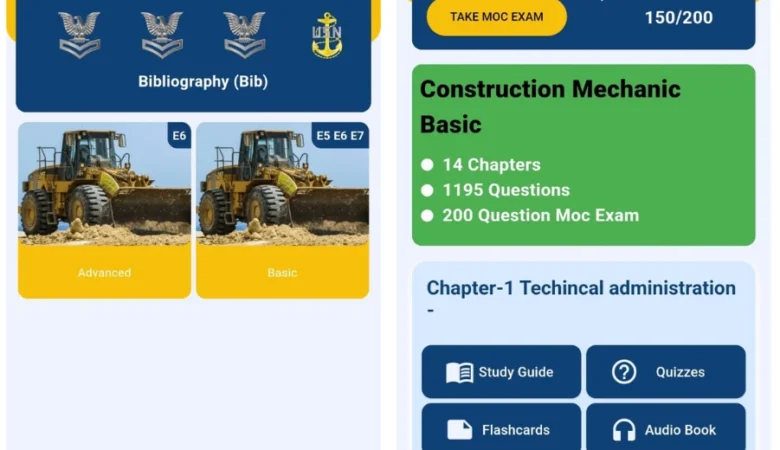
SeaBee – The Best Navy
SeaBee – The Best Navy Exam Study App Built for US Navy Seals Project Overview SeaBee is a free, comprehensive
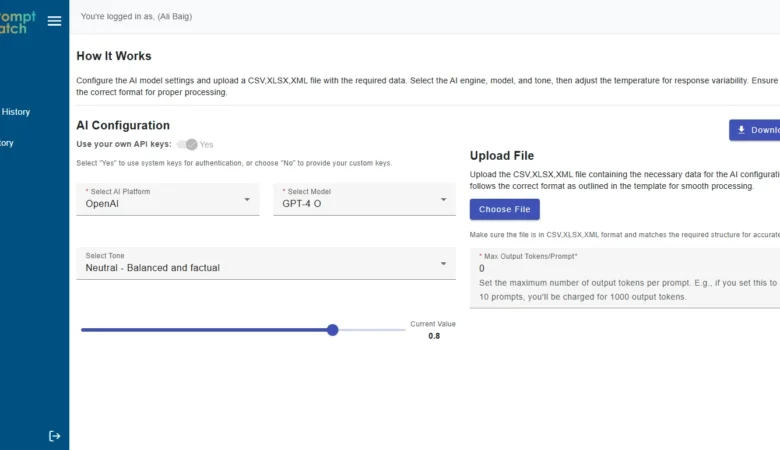
PromptBatch: Save 50% with AI
PromptBatch: The Best AI Batch Prompt Processing Web App | Orbilon Tech Project Overview PromptBatch Portal is a powerful AI
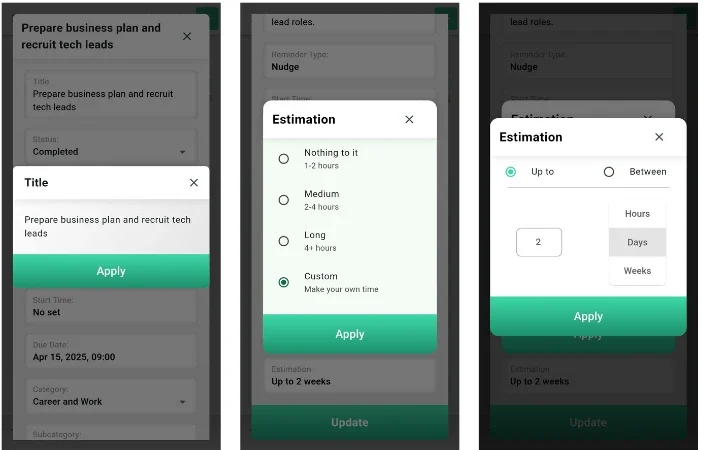
Spheres – The Revolutionary AI
Spheres – The Best AI Life Manager Mobile App That Actually Knows You Project Overview Spheres – Life Simplified is
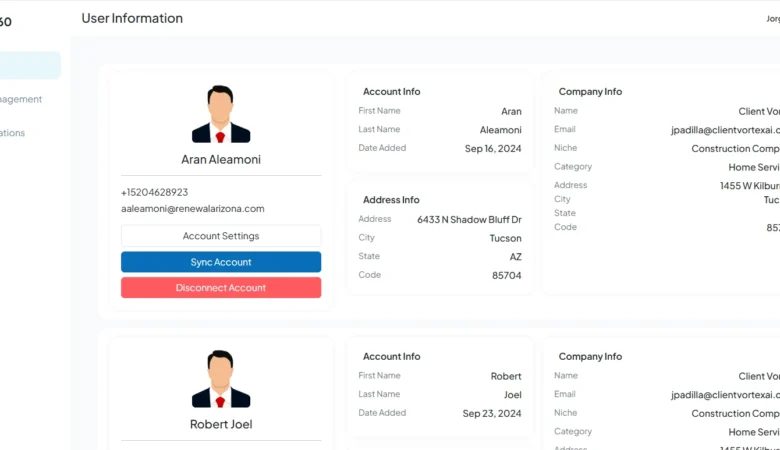
Rep360 AI – AI Bot
Rep360 AI – AI Bot Integration for GHL Workflows That Automates Sales Conversations Project Overview Rep360 AI is a fully
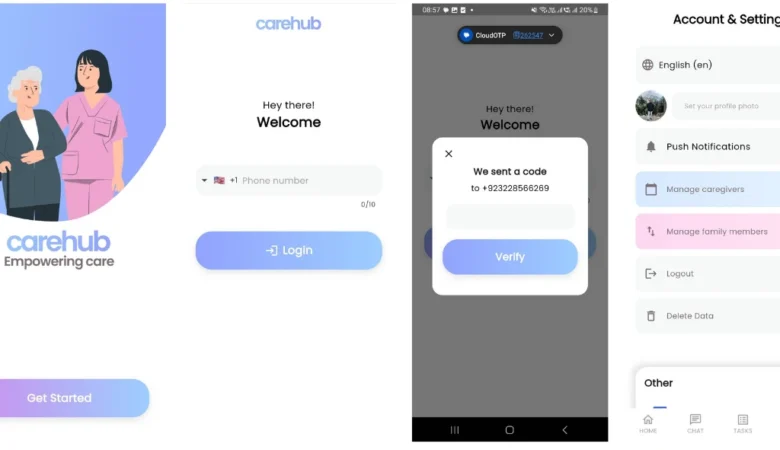
CareHub – Powerful Caregiver Communication
CareHub – Caregiver Communication App With Auto Translation CareHub App – Empowering Care CareHub is a powerful caregiver communication app
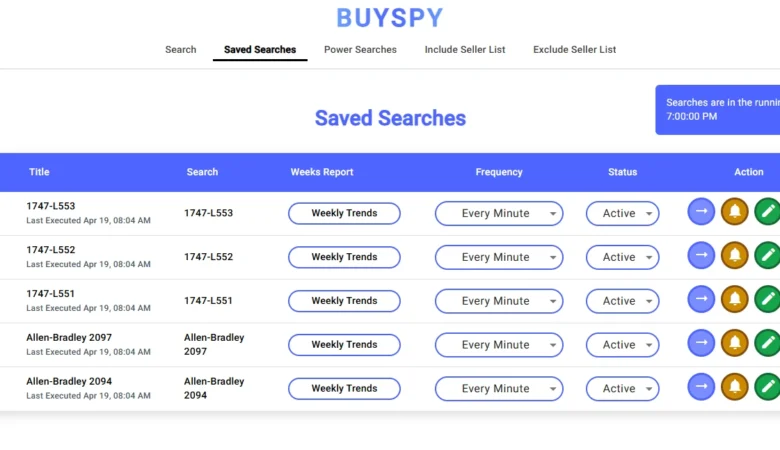
BuySpy – Ultimate Real-Time eBay
BuySpy — A Powerful Real-Time eBay Search Alerts App for Web & Mobile BuySpy is a real-time eBay search alerts
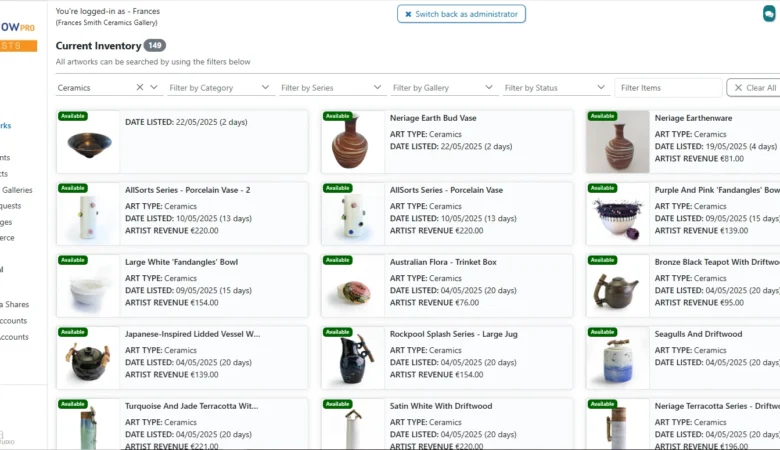
ArtFlow Pro — The Art
ArtFlow Pro — Full-Stack Art Gallery SaaS Platform for Artists & Galleries ArtFlow Pro – Streamline the Artwork Sales ArtFlow
Want to Hire Us?
Are you ready to turn your ideas into a reality? Hire Orbilon Technologies today and start working right away with qualified resources. We will take care of everything from design, development, security, quality assurance, and deployment. We are just a click away.