Mobile App Development in Tampa - Florida | Orbilon Tech
Tampa Bay's Mobile Economy Runs Through Defense Contracts, Hospital Networks, and Insurance Carriers — Three Industries That Don't Tolerate Mistakes
App development in Tampa serves a market shaped by industries where shipping a buggy app isn’t just embarrassing — it’s a compliance violation, a contract breach, or a patient safety issue. MacDill Air Force Base — home to US Central Command and US Special Operations Command — anchors a defense and dual-use technology ecosystem that flows through Tampa’s mobile sector. Defense contractors operating in the region build apps for military personnel, intelligence operations, and DoD-adjacent workflows where security failures have real consequences.
ReliaQuest leads Tampa Bay’s cybersecurity space with its AI-based threat detection platform serving global enterprises. KnowBe4 — the largest security awareness training platform in the world — operates from Clearwater. Abacode runs Managed Security Services. Digital Hands delivers managed security to enterprise clients. The mobile apps these companies ship have to meet security standards most cities never see.
The healthcare and life sciences ecosystem demands the same rigor. Tampa General Hospital and Moffitt Cancer Center together invested nearly $2 billion in life sciences and medtech districts. BayCare Health System runs dozens of hospitals and hundreds of ambulatory facilities. AdventHealth operates significant Tampa Bay campuses. Greenway Health builds electronic health records, practice management, and revenue cycle software from Tampa. Aspen RxHealth runs healthcare technology operations here. Bristol Myers Squibb, Johnson & Johnson, Amgen, and Pfizer all maintain regional operations, with Amgen recently announcing its $1.018 billion Capability Center on Westshore Boulevard.
Insurance and financial services concentrate just as heavily. Home — Tampa’s highest-funded fintech with $62.4 million raised — connects policyholders, insurance, and warranty companies through mobile claims management. Citi alone runs 25 different business units from Tampa with approximately 10,000 employees. JPMorgan Chase, MetLife, and PwC all maintain major operations.
Then there’s the consumer side. The NHL’s Tampa Bay Lightning, Visit Tampa Bay tourism operations, the Tampa Bay Buccaneers (whose official homeowners insurance partner is Tampa-based Slide Insurance), and the Synapse Summit at Raymond James Stadium all generate mobile audiences with sophisticated expectations. Tampa Bay houses 50,000+ tech professionals — a 30% jump in five years. Tampa Bay Wave has supported 600+ startups raising $1.1 billion and creating 6,000 jobs. Embarc Collective anchors 135+ early-stage tech companies with a 96% survival rate. The region is on track for 3,700 new tech jobs by 2027.
Orbilon Technologies delivers app development in Tampa for businesses building in this rigorous environment. We build native iOS and Android apps, cross-platform solutions with Flutter and React Native, and AI-integrated mobile platforms — from product strategy and UI/UX design through development, testing, and App Store deployment.
You Get Engineers Who Stay on Your Project Until It Ships — Not Whoever's Free This Sprint at the Other Tampa Agency
The highest hidden cost in Tampa app development isn’t hourly rates. It’s developer rotation. Most agencies along Westshore, downtown Tampa, and Hyde Park operate on a shared-resource model. Your “dedicated team” rotates between your project and five others. Sprint 3 finally has the engineer who built sprint 1 back on the project. By sprint 6, that engineer is on someone else’s launch, and a new developer is reading your codebase for the first time.
The cost shows up in everything. Bug rates increase. Architecture decisions made early get reversed by engineers who didn’t make them. Sprint velocity drops with every rotation. Your launch slips by weeks every quarter. We don’t share engineers across projects. When Orbilon assigns developers to your Tampa app, they stay through deployment and ongoing maintenance. They learn your codebase, your domain, and your users — building context that compounds with every sprint instead of resetting every Monday.
Our engineering team operates from Pakistan on US Eastern Time. Your developers are on Slack or Teams during Tampa business hours. Sprint demos happen biweekly with working software you can install on your actual phone — not a screen share of someone else’s device.
Our Clutch profile — 4.96 rating from verified client reviews — shows what consistent team engagement produces. Tampa businesses get senior Flutter, React Native, Swift, and Kotlin engineers at rates that keep your seed round, your enterprise contract budget, or your fintech MVP intact through launch — without the rotation tax that makes shared-resource agencies expensive in delays.
Why Tampa Bay's Defense, Healthcare, and Insurance Apps Need Engineering Built for Compliance — Not Compromise?
Tampa Bay isn’t a market where you ship an MVP and iterate on compliance later. The industries that drive this economy require compliance built into the architecture from sprint one, and the apps that succeed here understand specific patterns most agencies have never built for.
- Defense and dual-use apps need security controls that military buyers actually evaluate. MacDill Air Force Base contractors and dual-use defense startups operating through Tampa’s ecosystem build apps that face real security audits. FedRAMP awareness, FIPS-validated cryptography considerations, supply chain security documentation, and CMMC-readiness postures — these aren’t theoretical concerns. They determine whether your app can be considered for the contracts that drive Tampa Bay’s defense economy.
- Healthcare apps need HIPAA architecture, not HIPAA marketing. Tampa General, Moffitt, BayCare, and AdventHealth procurement teams know the difference between an app that says “HIPAA compliant” and one that actually has Business Associate Agreement-ready data handling, audit logging, breach notification workflows, and proper PHI segregation. Apps that retrofit HIPAA after launch ship 6 months late and triple their original budget. Apps that build for compliance from sprint one ship on time and pass audits.
- Insurance and claims apps need an offline-resilient architecture. Homee — Tampa’s flagship insurance technology platform — connects policyholders, insurance carriers, and warranty companies through mobile workflows that often happen at properties without reliable connectivity. Insurance claims, damage documentation, contractor coordination, and policyholder communication all require apps that work offline and sync intelligently when a connection returns. Building this is harder than building always-online apps. Most agencies skip it.
- Cybersecurity apps need defenses against the threats they’re protecting against. ReliaQuest, KnowBe4, Abacode, and Digital Hands all operate cybersecurity products from Tampa Bay. Mobile apps in this sector face active probing — security researchers, malicious actors, and competitors all reverse-engineer them. Code obfuscation, certificate pinning, runtime application self-protection (RASP), and anti-tampering measures aren’t paranoia. They’re table stakes.
- Sports and entertainment apps need to handle event-day traffic spikes. Tampa Bay Lightning game days, Tampa Bay Buccaneers home games, and the Synapse Summit at Raymond James Stadium all generate mobile audiences with concurrent usage 50-100x normal load. Apps architected for steady-state traffic collapse on game day. Building for elastic scale requires specific architecture decisions; most app developers never test against real event spikes.
This is what real app development in Tampa requires — engineering for the actual industries that drive Tampa Bay’s economy.
The Mobile Stack We Build With for Every Tampa Project — and the Decision Framework Behind Each Tool
Ways We Use Our Tech Layered Stack. We do not list a stack just to fill up space. Every level below has a distinct role in the applications we deliver to our Tampa Bay clients in defense, healthcare, fintech, and consumer sectors.
- Native development: Swift for iOS, Kotlin for Android. Usually, the option for a mobile application that needs the highest level of security, integration with hardware at a very deep level, or the use of platform-specific capabilities, such as those often required by defense and healthcare apps.
- Cross-platform development with Flutter and React Native. Chosen when you want to have iOS and Android covered with just one codebase, thereby speeding up the time-to-market of fintech MVPs and consumer products.
- Backend and APIs: Node.js, Python, FastAPI, and Firebase. Designed to meet the needs of multi-tenant secure audit-logged backends that are the standard in Tampa’s regulated industries.
- Data storage: PostgreSQL, MongoDB, Redis, and Firestore. Final selection depends on your transaction volume, query patterns, encryption requirements, and the regulatory environment in which your data resides.
- Cloud infrastructure: AWS, Azure, Google Cloud, Docker, Kubernetes, and CI/CD pipelines. Production deployments with monitoring, auto-scaling, and audit-ready logging that will pass compliance auditors.
- Specialized integrations: Stripe, Plaid, Twilio, Apple Pay, Google Pay, HealthKit biometric authentication, FHIR for healthcare interoperability, and defense-grade security libraries. These are the very integrations the regulated industry apps in Tampa depend on.
Mobile and Software Services Built for Tampa Bay's Real Industries
Tampa Bay’s economy is driven by key areas. These areas include defense and technology that can be used for purposes, healthcare and life sciences, financial services and insurance, cybersecurity, and software for businesses. Each of these areas needs mobile capabilities.
- Mobile App Development: We build apps for iOS and Android, as well as cross-platform apps using Flutter and React Native. These apps are designed with security in mind, including HIPAA compliance, defense-grade security, biometric authentication, and the ability to work offline. This is especially important for Tampa’s industries that are heavily regulated.
- Web Development: We create custom websites using React and Node.js. These websites serve as the backbone for your app with a focus on API architecture and analytics from the start.
- E-commerce Development: Our mobile commerce apps offer payment options, real-time inventory tracking, AI-driven product recommendations, and checkout flows that meet PCI compliance standards.
- AI Development & Integration: We integrate features into your app, such as predictive analytics, document scanning, fraud detection, and automation powered by large language models. We also ensure compliance logging for industries.
- Custom CRM Development: Our mobile CRM platforms provide pipeline visibility, automated follow-ups, and patient or client tracking. These features are accessible across the Tampa Bay metro area.
- Agentive AI Apps: Our AI agents can handle tasks such as claims routing, appointment scheduling, document extraction, and compliance workflows. They do so with oversight where regulations require it.
- UI/UX Design: We design interfaces for Tampa Bay’s regulated audience. Our goal is to create accessible and fast interfaces that are easy to use, even for users who can’t afford any friction.
- SaaS Product Development: We build companion apps for SaaS platforms, including features such as push notifications, offline sync, role-based dashboards, and seamless continuity between web and mobile.
- Cloud Infrastructure / DevOps: Our backend architecture is built on AWS or Azure with CI/CD pipelines, monitoring, auto-scaling, and hosting that meets HIPAA and SOC 2 standards. This ensures that Tampa Bay’s regulated workloads are handled securely.
Apps That Prove
We don’t share fictional Tampa healthcare clients. We don’t reference unnamed defense contractors with fabricated case studies. Every product below is in production right now, built by the engineers who will work on your project.
- CareHub — Caregiver Communication App: A cross-platform healthcare application where distributed care teams coordinate through encrypted real-time messaging with automatic language translation and role-based access controls across multiple facilities. Built on Flutter, Node.js, and AWS. The architecture matters specifically for Tampa Bay’s healthcare market. Tampa General, Moffitt, BayCare, and AdventHealth need exactly this — apps that handle sensitive medical data with compliance built in, multi-facility coordination at scale, and real-time communication with audit trails ready for inspection.
- SeaBee — Navy Exam Study App: A content-rich mobile platform with structured learning paths, chapter-based study materials, quizzes with persistent scoring, audiobook integration, and full offline access for environments where connectivity isn’t reliable. This proves we build content systems with structural depth. Tampa’s defense ecosystem — anchored by MacDill Air Force Base, US Central Command, and dual-use defense contractors — needs apps that work offline (training scenarios, field operations, secure facilities) and handle complex content hierarchies. SeaBee’s offline-first architecture demonstrates that we ship for those conditions.
Work Highlights
Some of our best works from many
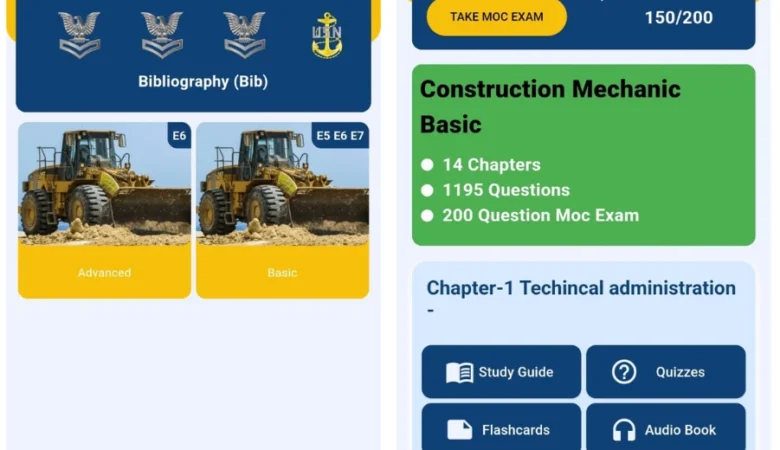
SeaBee – The Best Navy
SeaBee – The Best Navy Exam Study App Built for US Navy Seals Project Overview
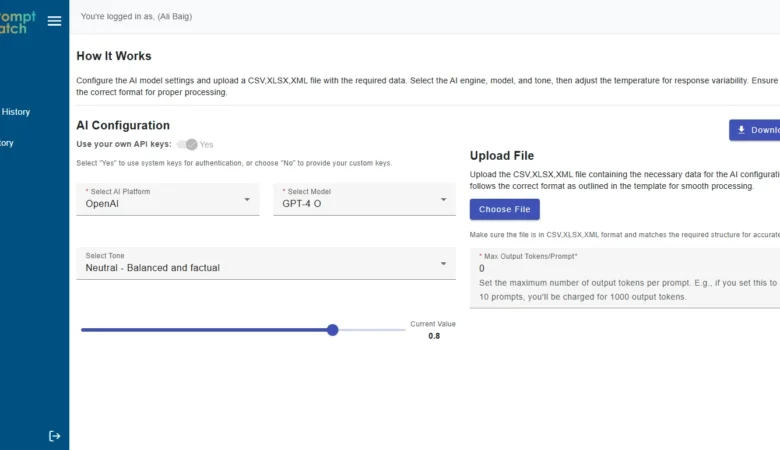
PromptBatch: Save 50% with AI
PromptBatch: The Best AI Batch Prompt Processing Web App | Orbilon Tech Project Overview PromptBatch
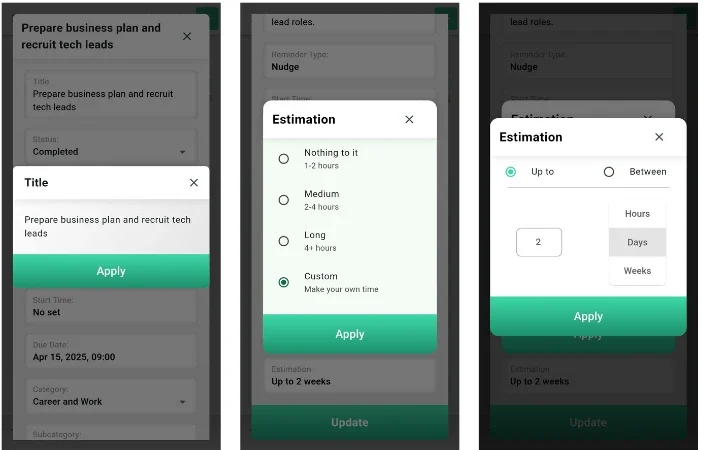
Spheres – The Revolutionary AI
Spheres – The Best AI Life Manager Mobile App That Actually Knows You Project Overview
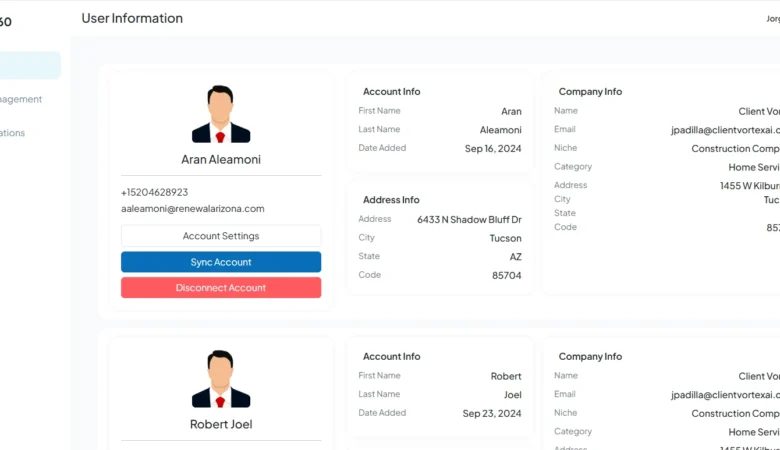
Rep360 AI – AI Bot
Rep360 AI – AI Bot Integration for GHL Workflows That Automates Sales Conversations Project Overview
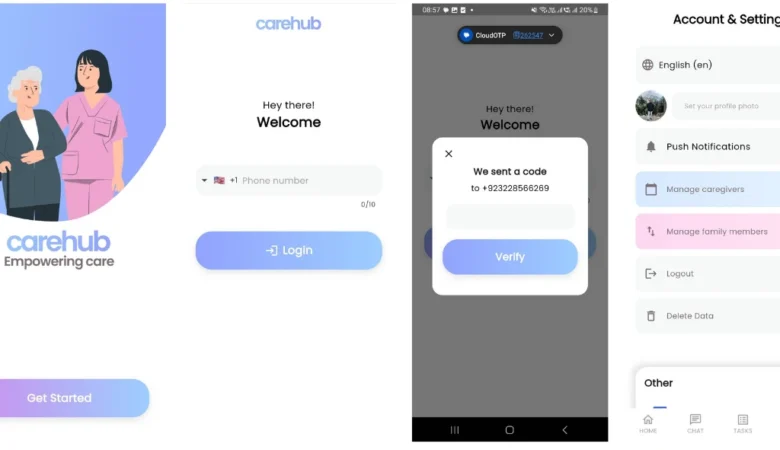
CareHub – Powerful Caregiver Communication
CareHub – Caregiver Communication App With Auto Translation CareHub App – Empowering Care CareHub is
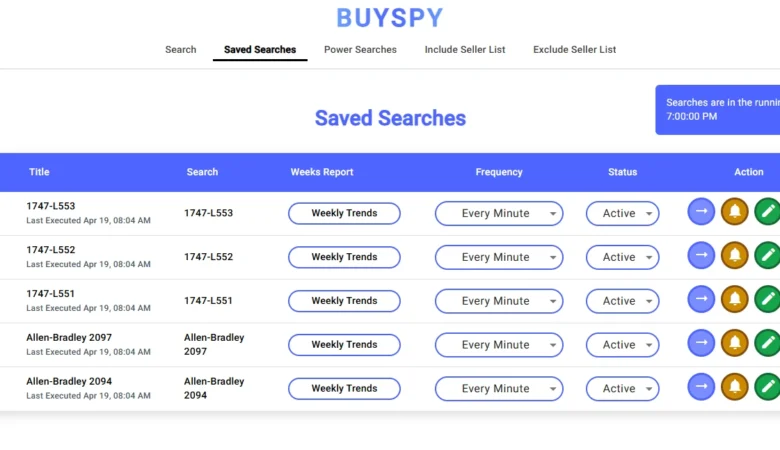
BuySpy – Ultimate Real-Time eBay
BuySpy — A Powerful Real-Time eBay Search Alerts App for Web & Mobile BuySpy is
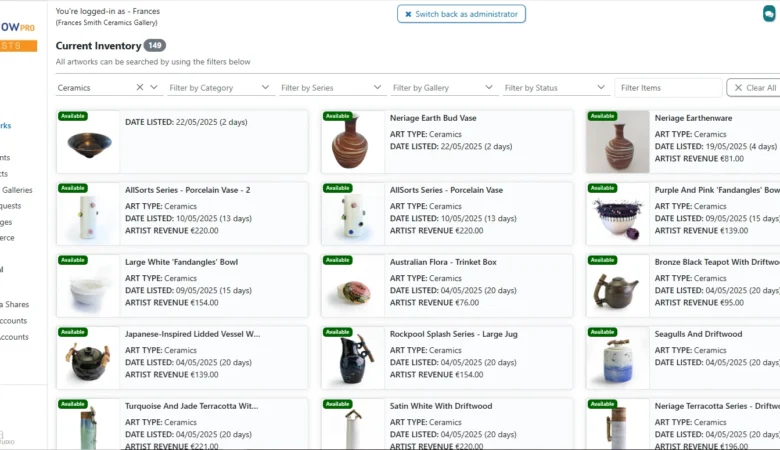
ArtFlow Pro — The Art
ArtFlow Pro — Full-Stack Art Gallery SaaS Platform for Artists & Galleries ArtFlow Pro –
Reviewed by Real Clients on Clutch
Here’s what some of our clients have said about us
Want to Hire Us?
Are you ready to turn your ideas into a reality? Hire Orbilon Technologies today and start working right away with qualified resources. We will take care of everything from design, development, security, quality assurance, and deployment. We are just a click away.