

The Businesses That Ignored AI in 2026 Won't Exist in 2027 — This Is Not a Warning Anymore
Introduction
This was a prediction a while back. Now it is a pattern.
Businesses ignoring AI in 2026, enterprises that brush AI aside will not be on a schedule of slow lagging; they will be, in fact, structurally outcompeted live. The figures don’t allow any doubt anymore. 88% of companies make use of AI in at least one business function. Private AI investments have already touched $109.1 billion in the US alone. And the gap between the companies sprinting ahead and the ones still mulling over pilots is growing ever wider every quarter.
The businesses understanding this properly are not increasing their budgetsthey are simply carrying out operations more cleverly. Organizations, on average, reveal a 3.7x ROI on every dollar put into generative AI. On the other hand, those still looking at AI as a mere experiment see their margins shrink, their labor costs climb, and their most skillful rivals functioning at a speed they simply cannot match with traditional staff.
This can no longer be considered a warning. The event is underway.
The Numbers That Should Make Every Business Owner Uncomfortable
Let’s start with the uncomfortable truth about where most businesses actually stand.
88% of organizations now use AI in at least one business function — yet only 6% of organizations report earnings impacts exceeding 5% from their AI initiatives. The majority see no financial return whatsoever. This isn’t a technology problem. It’s an execution problem. Nearly two-thirds of organizations remain stuck in pilot mode, unable to scale AI beyond isolated experiments.
So the problem isn’t awareness — it’s execution. And execution is a choice.
Here is what the 2026 data shows about the businesses ignoring AI in 2026 or using it poorly:
- Organizations falling behind in generative AI adoption share clear patterns: treating generative AI as a pilot project rather than an operating model change, building custom solutions that fail 75% of the time, and underinvesting in the people side, with 45% of organizations still citing talent shortages as their top barrier.
- Over 50% of companies report no measurable value from their AI investments to date — a stark reminder that adoption without strategic planning does not guarantee results.
- Only 34% of organizations are truly reimagining their businesses through AI, while the other two-thirds are simply layering it onto existing processes and capturing only surface-level efficiency gains.
- In the UK, only 16% of businesses currently deploy AI actively, with 80% having no concrete plans — while in the most AI-resistant sectors like construction, retail, and hospitality, 86–90% report no AI engagement at all.
The divide isn’t between companies using AI and those that aren’t. It’s between organizations deploying AI across multiple functions at speed — and those still running the same pilot they started 18 months ago.
What Happens to Businesses That Ignore AI: Real Examples?
This isn’t theoretical. The consequences are already visible.
- The Commonwealth Bank of Australia replaced its 45-person call center with AI voicebots to handle 2,000 calls per week. The AI couldn’t manage the calls, so the bank had to scramble — asking managers to answer calls and giving overtime to remaining staff. After just a month, the bank apologized and rehired displaced workers, admitting it hadn’t fully thought through the impact. The cost of moving too fast without a strategy. Now imagine the cost of not moving at all.
- Air Canada deployed a chatbot that gave passengers incorrect refund information. Air Canada tried to argue that the chatbot acted independently, but the court ruled that a chatbot is part of the company, making the airline responsible for all information it provides.
These aren’t arguments against AI. They’re arguments against deploying AI without governance, planning, and proper oversight. The businesses that ignore AI entirely face a different and worse outcome — they simply become irrelevant to customers who now expect AI-level speed, personalization, and service quality as the baseline.
The 6% That Are Actually Winning — What They Do Differently
McKinsey and Microsoft identify a distinct class of “AI High Performers” — organizations achieving material, enterprise-level impact. While 80% of companies focus AI on efficiency gains — doing existing work faster — high performers pursue growth and innovation. They’re not optimizing workflows; they’re enabling entirely new capabilities and business models.
The pattern is consistent across every major 2026 study. The 6% winning with AI share three specific behaviors:
- They deploy gen AI across multiple business functions rather than running isolated experiments. They buy AI from specialized vendors rather than building internally — succeeding at double the rate of builders. And they’re already preparing for the agentic shift, with 56% of customer support interactions projected to involve agentic AI by mid-2026.
- BCG calls this the “10–20–70 rule” — allocating 10% of efforts to algorithms, 20% to technology and data, and a substantial 70% to people and processes. Most companies get this backwards. They spend 70% on the technology and wonder why adoption fails.
Industries Where the Gap Is Already Irreversible
- Software Development: AI coding assistants now handle everything from debugging to full feature implementation and pull request creation. Teams not using AI coding tools are producing output at a fraction of the speed of teams that are, with no compensating cost advantage. McKinsey reports AI-enabled engineering teams improve productivity by 20–45%. In a hiring market where senior engineers cost $150K–$300K annually, that gap is not closable with headcount alone.
- Customer Service: 56% of customer support interactions are projected to involve agentic AI by mid-2026. Businesses still running fully human call centers at 2023 cost structures are not competing on service quality — they are competing on cost and losing. ServiceNow reported a 52% reduction in complex case handling time after deploying AI agents. AT&T cut operational expenses by 15%. BT Group automated 60,000 customer interactions per week.
- Marketing & Content: Marketing and sales lead all business functions in GenAI use, with 42% of companies adopting it — more than twice the overall average. Businesses not using AI in content production are spending 3–5x more time producing work that their AI-enabled competitors generate in hours. At scale, that difference is existential.
- Finance & Accounting: AI handles invoice processing, financial reporting, compliance monitoring, and anomaly detection faster and more accurately than manual workflows. Companies report 3.7x ROI for every dollar invested in generative AI — in finance, where error costs are directly measurable, the ROI case is among the clearest of any department.
- Legal & Compliance: Corporate legal AI adoption doubled in a single year — from 23% in 2024 to 52% in 2025. In-house legal teams using AI are handling more volume with the same headcount. 64% of in-house teams expect to rely less on outside counsel because of AI. Law firms and legal service providers not building AI into their workflows are pricing themselves out of the market.
The Real Cost of Waiting
This is the compounding math most business owners do not consider.
Each month that a company postpones a significant AI implementation, its competitors are getting hold of two things that cannot be acquired later: operational efficiency and a deep understanding of how to use AI effectively in their particular context.
The technology itself is not the moat. Anyone can access GPT, 5.4, Claude Opus 4.6, or Gemini 3 Pro today. Technology is no longer the issue. Almost all organizations are equipped with access to the same AI capabilities at the same price level. The question no longer is “Can we afford AI?” but “Can we transform our business model to use it effectively?”
The firms that have been developing AI workflows since January 2026 know what fails, what succeeds, and how to prompt, direct, and manage AI outputs in their specific area of expertise. When a competitor is only starting the learning process in Q3 2026, the early movers are already on the third version of their workflows, more precise, faster, and more cost-effective.
That difference is not a technological one. It is an organizational one. And it gets bigger each quarter.
A Practical Action Plan: How to Start This Week
You don’t need a $2 million AI transformation program. You need a workflow, a model, and a deployment in the next 30 days. Here’s the framework:
Step 1: Audit Your Highest Volume, Most Repetitive Tasks
Identify the top three processes in your business that take up the most time and, at the same time, have clearly defined inputs and outputs.
Typical examples are customer support inquiries, content creation, report writing, invoice processing, and code review. It is better not to begin with complicated, unclear processes; instead, focus on the routine ones.
Step 2: Pick the Right Model for Your Task
| Task Type | Best Model | Why |
|---|---|---|
| Complex reasoning, legal, research | Claude Opus 4.6 | #1 on knowledge work benchmarks |
| Coding, spreadsheets, tool orchestration | GPT-5.4 | Best coding + computer use |
| High-volume, fast responses | Claude Sonnet 4.6 / GPT-5.4 mini | Speed + cost efficiency |
| No-code automation across apps | Zapier AI / n8n | Low barrier to start |
Step 3: Build One Real Workflow — Not a Demo
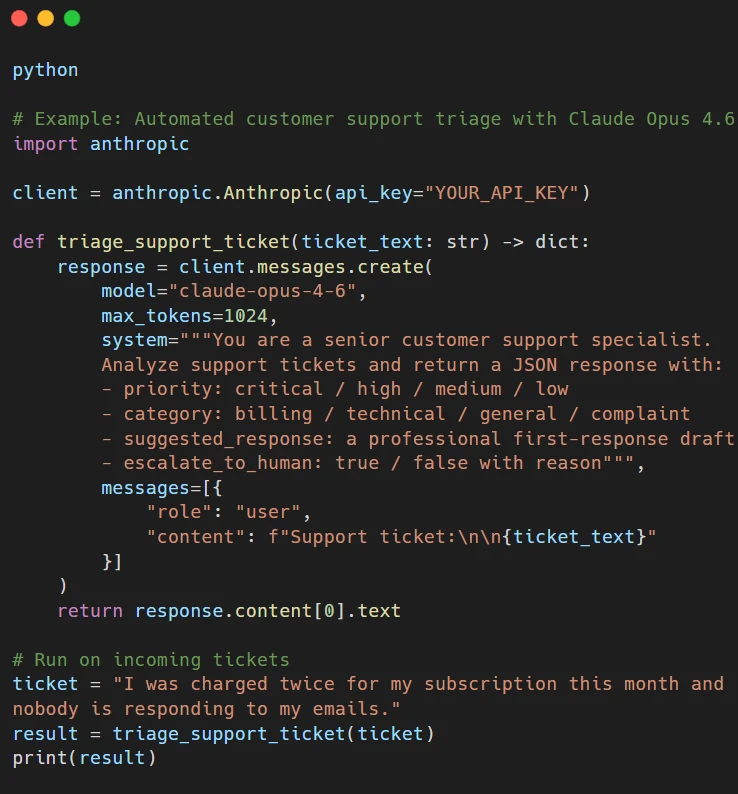
Step 4: Measure Before You Scale
It is a good idea to measure at least 3 points before you go rolling out the whole team: time saved per task, error rate compared to the manual baseline, and cost per task. After all, if you cannot measure it, then you will not be able to justify a budget for the next phase.
Step 5: Establish Governance — Before You Hit a Problem
Only 27% of organizations review 100% of AI outputs before using them. Define which outputs require human review before going live — especially anything customer-facing, legal, or financial. Set up a simple audit log. Define your escalation path. This takes one day to set up and prevents the kind of reputational incidents that set AI programs back by months.
Conclusion: The Businesses Ignoring AI in 2026 Are Already Losing
The title of this post is blunt because the data is blunt. Businesses ignoring AI in 2026 are not making a neutral decision — they are actively choosing to fall behind in speed, cost efficiency, output volume, and customer experience against competitors who are not standing still.
The good news is that it is still not too late to start — but the window is narrowing fast. The gap between organizations preparing for the agentic AI shift and those still evaluating generative AI implementations is widening every quarter.
The technology is accessible. The pricing is competitive. The ROI is documented. The implementation path is clear. The only thing standing between your business and meaningful AI adoption is the decision to stop evaluating and start building.
Make that decision this week. Not next quarter.
About Orbilon Technologies
At Orbilon Technologies, we build AI-powered web apps, mobile applications, SaaS platforms, and custom software for startups and enterprises worldwide. Based in Lahore, Pakistan, with a US presence, our team brings hands-on production experience integrating AI into real business workflows — not pilot programs, but live systems that deliver measurable ROI.
With a 4.96 rating on Clutch and GoodFirms and clients across the US, UK, and beyond, we help businesses move from AI evaluation to AI execution — fast.
Website: orbilontech.com
Email: support@orbilontech.com
Stop Evaluating. Start Building.
If your business is still in AI pilot mode, Orbilon Technologies can help you design and deploy a production-ready AI workflow in weeks — with clear ROI targets from day one. Book a Free Consultation
Want to Hire Us?
Are you ready to turn your ideas into a reality? Hire Orbilon Technologies today and start working right away with qualified resources. We will take care of everything from design, development, security, quality assurance, and deployment. We are just a click away.