GPT-5 Just Built a Full React App From One Sentence
From Boilerplate to Breakthrough: How AI Is Redefining Developer Productivity
Introduction
GPT-5 has taken React app development into a realm that most developers thought was far away in the future: full, production-grade React applications generated from a single English sentence.
Not small pieces of code. Not boilerplate. Complete applications with routing, state management, responsive design, and production-ready code.
It is not a talk about the future. This is going on now, February 2026.
What Just Changed: The One-Shot Revolution
Here’s the thing about a “one-shot” during GPT-5 React app development:
i. Traditional AI Coding (GPT-3.5/GPT-4):
- You: “Create a React component for user login.”
- AI: Generatesa single component.
- You: Manually integrate, add routing, state, and styling.
Repeat 50+ times to build an app.
ii. GPT-5 One-Shot Development:
- You: “Build a Twitter clone with explore, DMs, notifications, follow buttons, and modern black and white UI.”
- GPT-5: Generates a complete multi-file React application.
- You: Review 800+ lines of production, ready code.
The obstacle between a thought and the implementation has just eliminated.
The Numbers: GPT-5's Coding Dominance
Let’s take a look at the verified benchmark scores in February 2026:
- SWE-bench Verified: 74.9% (real GitHub coding problems).
- JavaScript Accuracy: 92%.
- TypeScript Accuracy: 90%.
- React/Next.js Full Stack: 91%.
- Hallucination Reduction: 45% vs GPT-4o.
- Speed: 30-50% faster than GPT-4o.
- Code Generation Time: 15-20 seconds (vs 45-60s for GPT-4o).
These are not minor upgrades, but a completely different level.
Real Example: Twitter Clone in One Prompt
Let’s see what GPT-5 React app development actually produces.
The Prompt:
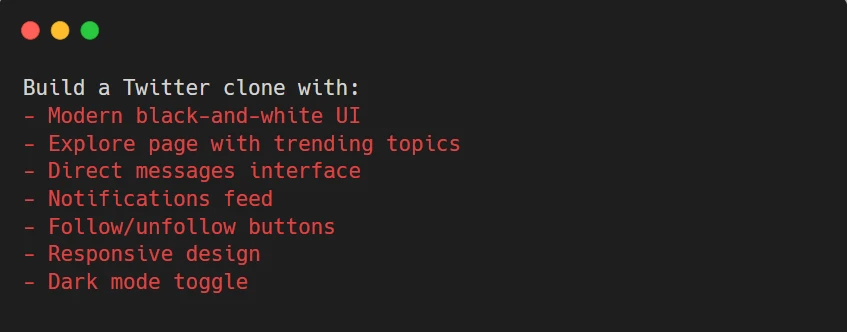
What GPT-5 Generated (in under 30 seconds):
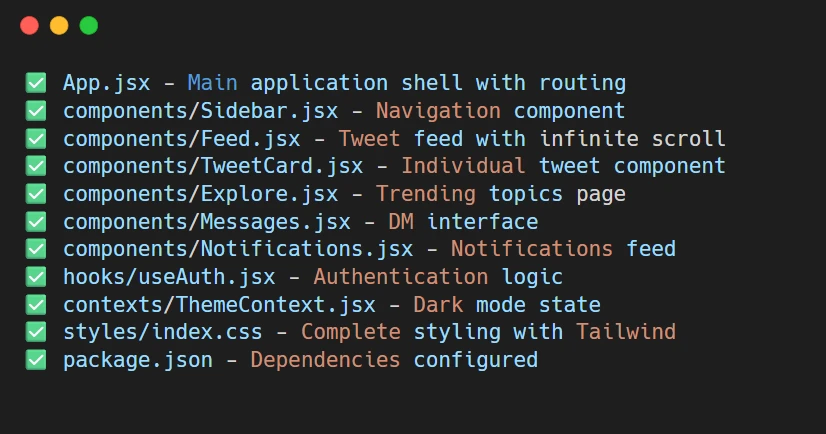
- Total Lines of Code: 847.
- Time to Generate: 18 seconds.
- Manual Edits Required: Minimal (mostly API integration).
This is production-grade code that early testers are deploying with minor tweaks.
How GPT-5 React App Development Really Works
Step 1: The Unified Model Architecture
GPT-5 is the first unified model from OpenAI that combines:
- High-level reasoning (o-series intelligence).
- Quickness (GPT, series responsiveness)
- Intelligent, time routing (decides whether to think fast or slow).
In other words, GPT-5 can identify when your React application needs to be rapidly developed with instant scaffolding, and when it requires complex architectural planning.
Step 2: Multimodal Understanding
GPT-5, unlike GPT-4, is inherently multimodal:
- Text prompts: Natural language descriptions.
- Image inputs: Screenshots, Figma designs, wireframes.
- Code context: Existing codebases.
You can actually just drop a Figma screenshot and say, “Build this in React with Tailwind,” and GPT-5 will produce visually exact components.
Step 3: Contextual Code Generation
GPT-5 is not limited to outputting the isolated components. It is aware of:
- How components interrelate: How various parts connect.
- Data state flow: Where data resides and how it changes.
- Routing structure: Navigation and URL patterns.
- Styling consistency: Keeps the design system uniform across files.
Thus, the parchment is as if a human architect drafted it.
Step 4: Aesthetic Sensibility
This is remarkable: GPT-5 has true artistic taste.
The early testers noticed the following improvements:
- Better use of space and white space.
- Lettering selections.
- The color palette is kept consistent.
- Responsive breakpoints.
- Animation timing.
The model is no longer merely producing functional code; it is also making aesthetically pleasing user interfaces.
The Recommended Tech Stack for GPT-5
OpenAI gave whole guidance as to what suits best with GPT-5 for React app development:
Frameworks:
- Next.js (with TypeScript) – Optimal.
- React – Excellent.
- Plain HTML – Supported.
Styling:
- Tailwind CSS – Most of all
- shadcn/ui – Very Good
- Radix Themes – Okay
Icons:
- Lucide – Best.
- Heroicons – Excellent.
- Material Symbols – Good.
Animation:
- Motion (Framer Motion) – Recommended.
Fonts:
- Inter, Geist, Manrope (San Serif) – Optimal.
Example Prompt Enhancement:
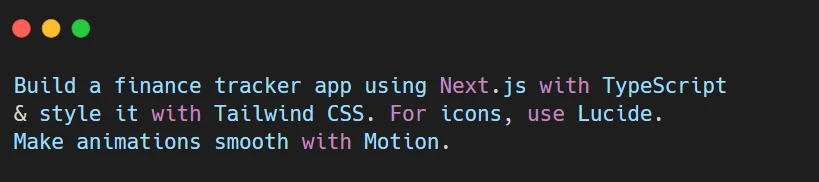
This gives GPT-5 clear technical direction and yields better results.
Real-World Applications: What Developers Are Building?
1. Complete Twitter Clone
- Prompt: “Twitter clone with modern black and white UI”.
- Generated: Full social media app with feed, DMs, notifications, and follow system.
- Time: 30 seconds.
- Lines of Code: 800+.
2. Futuristic Snake Game
- Prompt: “Snake game with futuristic, neon, cyberpunk style. Cool typography. Sound effects.”
- Generated: Playable HTML5 game with custom graphics, audio, and score tracking.
- Time: 20 seconds.
Result: Production, ready game.
3. Marketing Dashboard
- Prompt: “Marketing dashboard in React with Tailwind, mobile-first, integrates Chart.js, accessible, follows color palette [provided]”.
Generated:
- Fully responsive dashboard.
- Styled, reusable components.
- Pre-wired charts with placeholder data.
- Accessibility notes in comments.
- Time: 25 seconds.
4. Personal Wellness Journal
- Prompt: “Wellness journal app with mood tracking, daily entries, analytics dashboard, dark mode”.
- Generated: Complete CRUD app with local storage, charts, and mood visualization.
- Time: 35 seconds.
5. Photobooth Application
- Prompt: “Simple photobooth app with camera access in a single HTML file”.
- Generated: Working camera app with capture, filters, and download functionality.
- Time: 12 seconds.
GPT-5 vs Claude Opus 4: The Coding Showdown
Here is the comparison of GPT-5 and Claude Opus 4, the coding showdown:
1. GPT-5 strengths
- Speed: production of lines of code is 30-50% faster.
- Frontend Design: Has a higher level of visual creativity.
- One-Shot Completeness: Can produce more complete programs.
- Multimodal: Has built-in visual capabilities.
- Tech Stack Integration: Tailored for the React ecosystem.
SWE-bench Score: 74.9%.
2. Claude Opus 4.1 Strengths
- Accuracy: Slightly higher at 77.2% SWE-bench.
- Reasoning: Deeper architectural thinking.
- Code Quality: More maintainable patterns.
- Context Windows: Handles larger codebases.
- Privacy: Better enterprise data handling.
SWE-bench Score: 77.2%.
The Verdict
Choose GPT-5 for:
- Rapid prototyping.
- Frontend-heavy applications.
- Design-sensitive projects.
- When speed matters.
- Learning and exploration.
Choose Claude for:
- Complex backend architecture.
- Mission-critical code.
- Large codebase refactoring.
- Enterprise security requirements.
- When accuracy > speed.
Many developers use both: GPT-5 for scaffolding, Claude for refinement.
The Complete Workflow: Idea to Deployment
Phase 1: Prompt Engineering (2 to 5 minutes)
Bad Prompt: “Make me an app.”
Good Prompt: “Build a task management app with:.”
- Next.js 14 with TypeScript.
- Drag and drop task reordering.
- Priority levels (high, medium, low).
- Due date calendar integration.
- Dark mode with Tailwind.
- Local storage persistence.
- Responsive mobile design.
- Use Lucide icons and
- Motion for animations.
Pro Tip: Be very clear about tech stack, features, design, and constraints.
Phase 2: Generation (15 to 60 seconds)
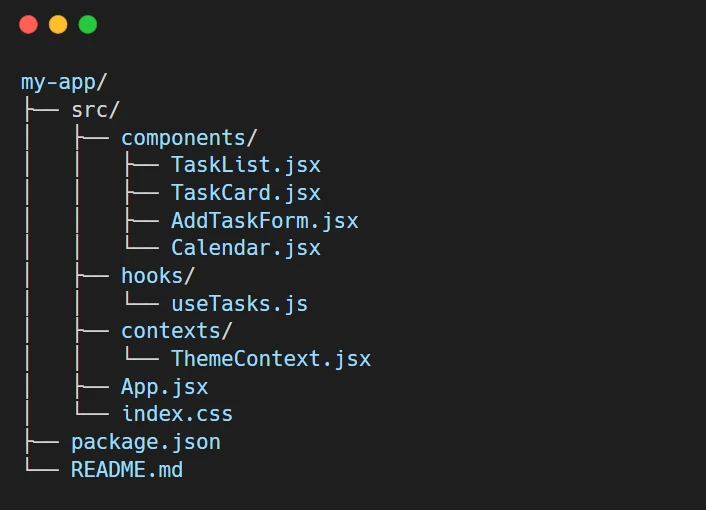
GPT-5 comes up with:
- Complete file structure.
- All components.
- Routing configured.
- Styling applied.
- Dependencies listed.
What You Get:
Phase 3: Review and Refine (5 to 15 minutes)
- Component logic is understandable.
- State management is efficient.
- The routing structure is accurate.
- Styling is uniform.
- Accessibility features are available.
- Error handling is present.
- Use live API for integration.
- Set up authentication.
- Fine-tune performance.
- Add tests.
- Deployment configuration.
Phase 4: Iterations (if required)
If there’s an issue, tell GPT 5 right away:
- “Drag and drop doesn’t function. The tasks are returning to the original position automatically.”
GPT-5 will look for the bug and correct the problem, also explaining the error.
Phase 5: Deployment (5 to 10 minutes)
Choices:
- Vercel: vercel deploy (most suitable for Next.js)
- Netlify: Upload files manually via drag and drop.
- GitHub Pages: Suitable for static sites.
- Railway: Use for full-stack apps.
- Total Time: 30-45 minutes from idea to live app.
- Compare this to traditional development: 2-4 weeks.
Advanced Techniques for GPT-5 React App Development
1. Figma to Code Workflow
Upload Figma screenshot:
- GPT-5 analyzes design -> Generates matching React components.
- “Convert this Figma design to responsive React components with Tailwind CSS. Match spacing, colors, and typography exactly.”
- Result: Pixel-perfect implementation in seconds.
2. Code Refactoring from Images
Screenshot your chaotic code:
- Upload to GPT-5 -> “Refactor this into clean Redux Toolkit slices.”
- GPT-5 reads the code visually, understands the structure, and rewrites it properly.
3. Multi-Platform Generation
Same prompt, different platforms:
“Build a meditation timer app.”
Then ask: “Generate the same app for:
- React web app.
- React Native mobile app.
- Single HTML file for offline use.”
- GPT-5 creates all three versions from one description.
4. Prompt Improvement Meta-Prompting
If your first attempt fails:
- “The app you generated had some bugs. How can I improve my prompt to get better results?”
- GPT-5 will teach you how to prompt it more effectively.
5. Progressive Enhancement
Start simple, add complexity:
- “Build a basic todo app”.
- “Add drag, and drop reordering.”
- “Add categories and filtering”.
- “Add cloud sync”.
- “Add team collaboration.”
Each successive version is a development of the previous one.
Limitations and reality check:
We need to be candid about what GPT-5 is capable of and what it is not:
What GPT-5 is really good at:
- Frontend generation: 90%+ success rate.
- Complete apps: From description to deployment.
- Design aesthetics: Genuinely good taste.
- Rapid prototyping: Minutes instead of weeks.
- Learning tool: Explains every decision.
Where GPT-5 has difficulties:
- Very complex multi-layer apps: Success rate drops on ambitious requests.
- Novel architecture: Prefers established patterns.
- Performance optimization: Generated code isn’t always optimal.
- Security hardening: Doesn’t implement advanced security by default.
- Testing: Doesn’t generate comprehensive test suites automatically.
The 80/20 rule:
- With GPT-5, you can reach 80% of your goal within 5% of the time.
- The last 20%, API integration, security, testing, and optimization, still requires human expertise.
However, that 80% is what used to take weeks.
Cost Analysis: Is It Worth It?
a. API Pricing (February 2026)
GPT-5:
- Input: $0.10 per 1M tokens.
- Output: $0.30 per 1M tokens.
GPT-5-mini (faster, cheaper):
- Input: $0.03 per 1M tokens.
- Output: $0.10 per 1M tokens.
GPT-5-nano (ultra-efficient):
- Input: $0.01 per 1M tokens.
- Output: $0.03 per 1M tokens.
b. Real-World Cost
Generating a complete React app:
- Average prompt: 500 tokens.
- Average generation: 5,000 tokens.
- Cost: ~$0.15 per app with GPT-5.
- Cost: ~$0.05 per app with GPT-5-mini.
Monthly estimate for active developer:
- 50 app generations.
- 200 component iterations.
- 100 debugging sessions.
- Total: $15-30/month.
c. ROI Calculation
Traditional development:
- Simple app: 40 hours at $100/hour = $4,000
- With GPT-5: 2 hours at $100/hour = $200
- Savings: $3,800 per app
Break-even: You save more than the API cost after generating your first app.
Access Options: How to Use GPT-5
1. ChatGPT (simplest)
- Free tier: Access to GPT-5 is limited.
- Plus ($20/month): Increased usage.
- Pro ($200/month): Unlimited + GPT, 5 Pro with extended reasoning.
Great for: People who are not developers, quick prototyping, and learning.
2. OpenAI API (Most Flexible)
- Pricing: Pay per token (see above).
- Integration: Use in any tool or workflow.
- Control: Usage can be controlled in a fine-grained manner.
Great for: Developers who create AI tooling, automation, and custom workflows.
3. IDEs and Coding Tools
- Cursor IDE: GPT-5 deeply integrated.
- Continue.dev: Open, source, self-hosted solution.
- Codex CLI: Terminal-based coding agent.
- GitHub Copilot: Not GPT-5 yet, but coming.
Great for: Professional developers, existing workflows.
4. Specialized Platforms
- Vercel: AI app generation with deployment.
- Replit: GPT, 5, powered coding environment.
- StackBlitz: Web-based development with AI.
Perfect for: Teams, education, collaborative development.
The Future: What's Coming in 2026 to 2027
Looking at the OpenAI trajectory and the overall industry trends:
Near-Term (Q2 to Q3 2026)
- Mobile-First Generation: Enhanced React Native and mobile web.
- State Management: More intelligent integration of Redux, Zustand, Jotai.
- Testing: Automated generation of test suites.
- Performance: Optimization advice provided automatically.
- Accessibility: Compliance with WCAG standards is a feature.
Medium-Term (Q4 2026)
- Full Stack Completeness: Backend + frontend with one prompt.
- Database Design: Schema generation and migrations.
- DevOps Integration: Inclusion of CI/CD pipelines.
- Multi Framework: Same app for React, Vue, Svelte, Angular.
Long-Term (2027+)
- Autonomous Development: Apps that build themselves.
- Continuous Iteration: Apps that evolve based on usage.
- Natural Language Maintenance: “Fix the bug users reported.” → Done.
- AI Pair Programming: Real-time collaboration with AI.
Conclusion: From Boilerplate to Breakthrough
The development of a GPT-5 React app is not just about quicker coding; it’s a radical change of the development paradigm.
We’ve evolved from:
- Code-first to idea- first.
- Implementation details to high-level intent.
- Weeks of development to minutes of generation.
- Coding skills as a barrier to imagination as a catalyst.
It is not a matter of whether AI will replace developers. It just won’t.
The point is: Will you leverage AI to multiply your abilities tenfold as a developer, or will you be in the race with those who don’t?
Because in 2026, the developers scoring the points will not be those who write the most code.
They are the ones having the best ideas and the talent to convey them to AI.
Natural language is becoming the programming language.
Are you ready to master it?
About Orbilon Technologies
Orbilon Technologies is an expert in AI-powered application development using state of the art tools such as GPT-5 and Claude. Our solutions enable businesses to speed up their development cycles, save money, and launch their products more rapidly through intelligent automation and efficient implementation by experts.
Contact: support@orbilontech.com
Website: https://orbilontech.com
Additional Resources Official:
- OpenAI GPT-5 Announcement: https://openai.com/index/introducing-gpt-5/
- GPT-5 Coding Examples (GitHub): https://github.com/openai/gpt-5-coding-examples
- OpenAI Cookbook – Frontend: https://cookbook.openai.com/examples/gpt-5/gpt-5_frontend
AI SDK for GPT-5: https://ai-sdk.dev/cookbook/guides/gpt-5
Orbilon Technologies:
- GPT-5 Development Services: https://orbilontech.com/gpt-5-react-app-development-one-sentence-2026/
- Contact: support@orbilontech.com
Want to Hire Us?
Are you ready to turn your ideas into a reality? Hire Orbilon Technologies today and start working right away with qualified resources. We will take care of everything from design, development, security, quality assurance and deployment. We are just a click away.